

When it comes to linear actuators, one of the most commonly used types in various applications is the 12V linear actuator. As a supplier of 12V linear actuators, I often receive inquiries about different technical aspects of these devices, and one question that frequently comes up is: What is the maximum deceleration of a 12V linear actuator?
Understanding Linear Actuators and Deceleration
Before delving into the maximum deceleration of a 12V linear actuator, it's essential to understand what a linear actuator is and the concept of deceleration in this context. A linear actuator is a device that converts rotational motion into linear motion. It can be powered by various means, including electric motors, hydraulic systems, or pneumatic systems. In the case of a 12V linear actuator, it is powered by a 12 - volt DC power source, which makes it suitable for many low - voltage applications.
Deceleration, in the context of a linear actuator, refers to the rate at which the actuator slows down its linear motion. In other words, it is the negative acceleration of the actuator's movement. When an actuator is in motion and needs to stop or change its direction, it must decelerate. The maximum deceleration is the highest rate at which the actuator can safely slow down without causing damage to its internal components or the connected load.
Factors Affecting the Maximum Deceleration
Several factors influence the maximum deceleration of a 12V linear actuator.
1. Motor Characteristics
The motor is the heart of a 12V linear actuator. The type of motor, its power rating, and its torque - speed characteristics play a crucial role in determining the maximum deceleration. For example, a high - torque motor can generally provide a higher deceleration rate because it can generate more force to slow down the actuator's movement. However, if the deceleration is too high, it may cause the motor to stall or overheat, which can lead to premature failure.
2. Gearbox Design
Most 12V linear actuators use a gearbox to convert the high - speed, low - torque output of the motor into a low - speed, high - torque output suitable for linear motion. The gear ratio and the quality of the gearbox components affect the deceleration. A gearbox with a higher gear ratio can provide more torque, which can potentially result in a higher deceleration rate. However, a poorly designed or low - quality gearbox may not be able to handle high deceleration forces, leading to gear wear and failure.
3. Load Conditions
The load connected to the actuator also has a significant impact on the maximum deceleration. A heavier load requires more force to decelerate compared to a lighter load. If the load is too heavy and the deceleration rate is too high, the actuator may not be able to slow down the load effectively, or it may cause excessive stress on the actuator's internal components. Additionally, the type of load (e.g., inertial load, frictional load) can affect the deceleration characteristics.
4. Mechanical Design and Construction
The overall mechanical design and construction of the actuator, such as the quality of the bearings, the stiffness of the housing, and the type of screw or belt drive used, can influence the maximum deceleration. A well - designed actuator with high - quality components can generally withstand higher deceleration forces without damage.
Calculating the Maximum Deceleration
Calculating the exact maximum deceleration of a 12V linear actuator is a complex process that requires a detailed understanding of the actuator's specifications and the load conditions. However, a simplified approach can be used to estimate the maximum deceleration.
The basic equation for linear motion is (v = v_0+at), where (v) is the final velocity, (v_0) is the initial velocity, (a) is the acceleration (or deceleration in this case), and (t) is the time. When the actuator comes to a stop, (v = 0). So, (a=\frac{-v_0}{t}).
To determine the maximum deceleration, we need to consider the maximum force the actuator can generate during deceleration. The force (F) required to decelerate a load (m) is given by Newton's second law (F = ma). The maximum force the actuator can generate is limited by the motor's torque and the gearbox's mechanical advantage.
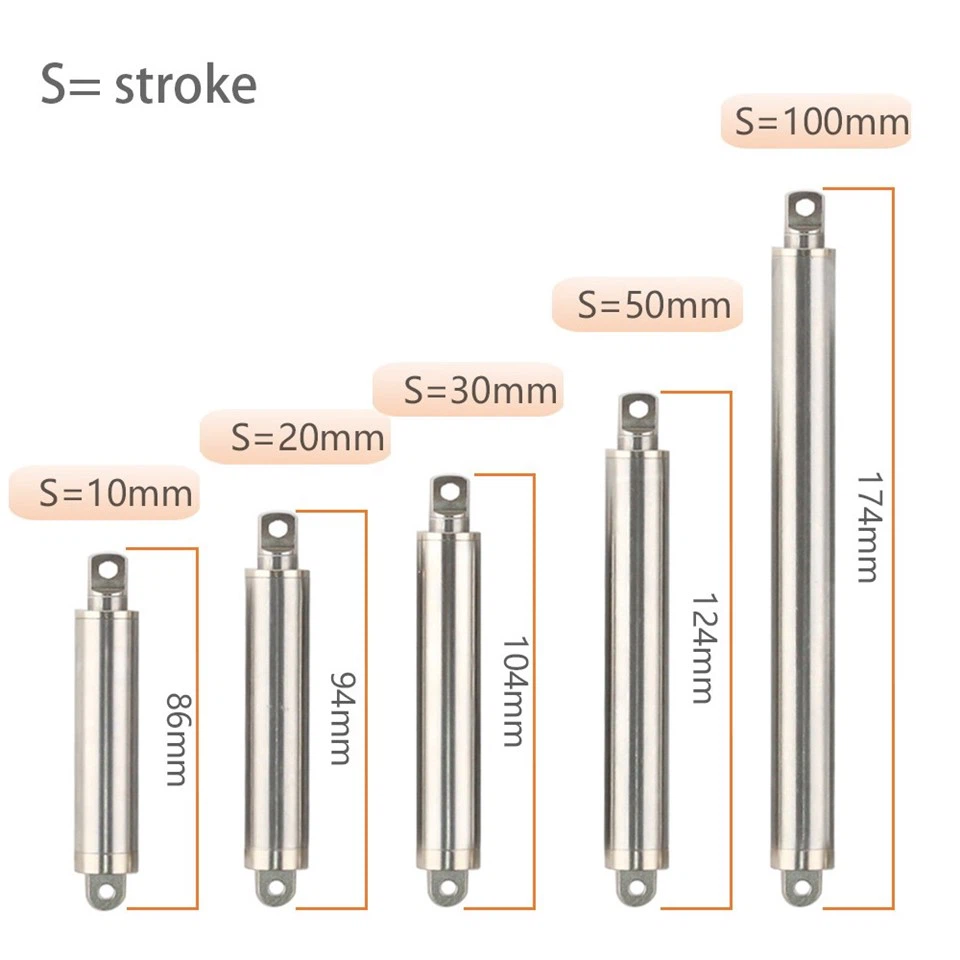
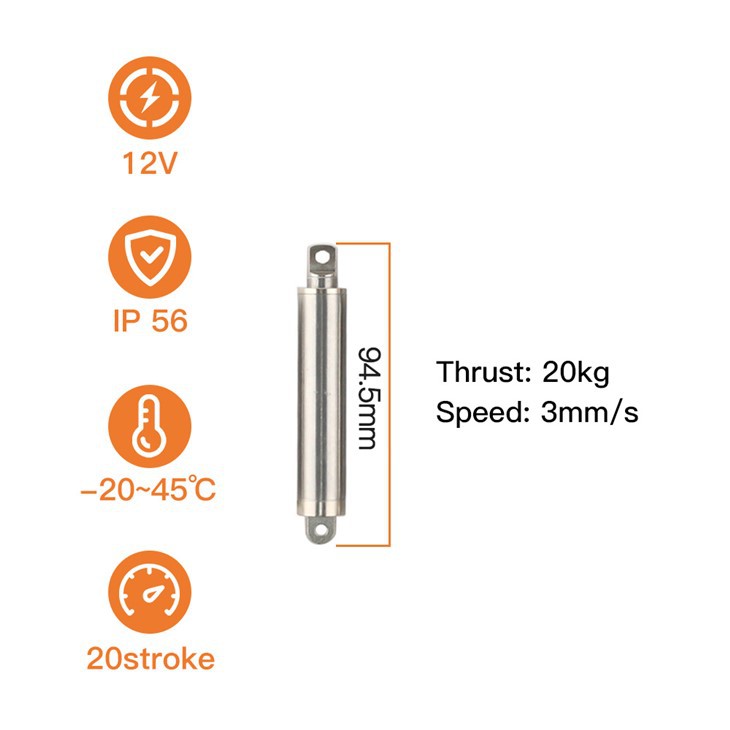
Let's assume we know the maximum force (F_{max}) the actuator can generate and the mass (m) of the load. Then, the maximum deceleration (a_{max}=\frac{F_{max}}{m}).
However, this calculation is a simplification, and in real - world applications, other factors such as friction, inertia of the actuator's internal components, and the dynamic behavior of the load need to be considered.
Importance of Knowing the Maximum Deceleration
Understanding the maximum deceleration of a 12V linear actuator is crucial for several reasons.
1. Safety
If the deceleration rate exceeds the maximum limit, it can cause damage to the actuator or the connected load. This can lead to safety hazards, especially in applications where the actuator is used in a critical system, such as in medical equipment or automotive applications.
2. Performance
Properly controlling the deceleration rate can improve the overall performance of the system. For example, in a robotic arm application, a smooth and controlled deceleration can ensure accurate positioning and reduce wear on the actuator and the robotic joints.
3. Lifespan
Excessive deceleration can cause premature wear and tear on the actuator's internal components, such as the motor, gearbox, and bearings. By operating within the maximum deceleration limit, the lifespan of the actuator can be significantly extended.
Applications and Deceleration Requirements
Different applications have different deceleration requirements for 12V linear actuators.
1. Home Automation
In home automation applications, such as opening and closing curtains or adjusting the position of a TV lift, a relatively low deceleration rate is usually sufficient. This is because the loads are generally light, and a smooth and gentle movement is preferred.
2. Industrial Automation
In industrial automation, where the actuator may be used to move heavy machinery or perform precise positioning tasks, a higher deceleration rate may be required. However, it is essential to ensure that the actuator can handle the deceleration forces without damage.
3. Automotive Applications
In automotive applications, such as adjusting the position of seats or mirrors, the deceleration rate needs to be carefully controlled to ensure passenger comfort and safety. A sudden or excessive deceleration can cause discomfort or even injury to the passengers.
Our 12V Linear Actuators
As a supplier of 12V linear actuators, we offer a wide range of products to meet the diverse needs of our customers. Our 12V Dc Linear Actuator is designed with high - quality components and advanced technology to ensure reliable performance and long lifespan. We also offer 12 Volt Linear Actuator with Remote, which provides convenient control options for various applications.
In addition to our 12V linear actuators, we also supply 24Vdc Linear Actuator for applications that require higher power and performance. Our technical team is always ready to assist customers in selecting the right actuator for their specific needs and providing guidance on installation, operation, and maintenance.
Contact Us for Procurement
If you are interested in our 12V linear actuators or have any questions about the maximum deceleration or other technical aspects, please feel free to contact us. We welcome the opportunity to discuss your requirements and provide you with the best solutions for your applications. Whether you are a small business looking for a single actuator or a large - scale manufacturer in need of bulk orders, we are committed to providing you with high - quality products and excellent customer service.
References
- "Linear Actuator Handbook" by an industry expert.
- Technical documentation of various linear actuator manufacturers.
- Engineering textbooks on mechanics and motion control.






