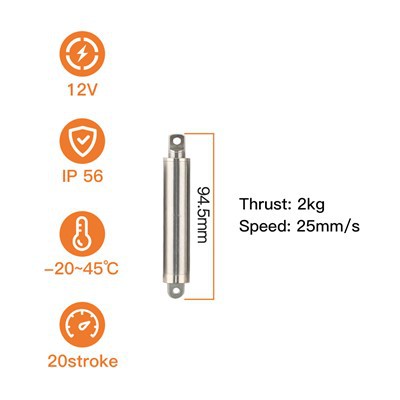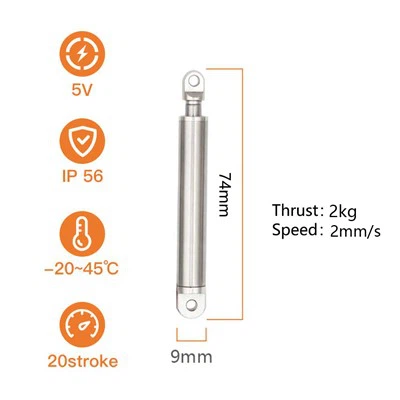
As a supplier of Micro Linear Motors, I am often asked about the role and significance of linear encoders in these compact yet powerful devices. In this blog post, I will delve into what a linear encoder is for a Micro Linear Motor, its importance, types, and how it enhances the performance of these motors.
Understanding Micro Linear Motors
Before we dive into linear encoders, let's briefly understand what Micro Linear Motors are. A Micro Linear Motor is a specialized type of electric motor that produces linear motion directly, without the need for any intermediate mechanical transmission components such as gears, belts, or screws. These motors are designed to be compact, efficient, and precise, making them ideal for a wide range of applications, including medical devices, semiconductor manufacturing, optical equipment, and robotics.
The direct linear motion of Micro Linear Motors offers several advantages over traditional rotary motors. It eliminates backlash, reduces friction, and provides high acceleration and deceleration capabilities. This results in smoother and more accurate motion control, which is crucial for many high-precision applications.

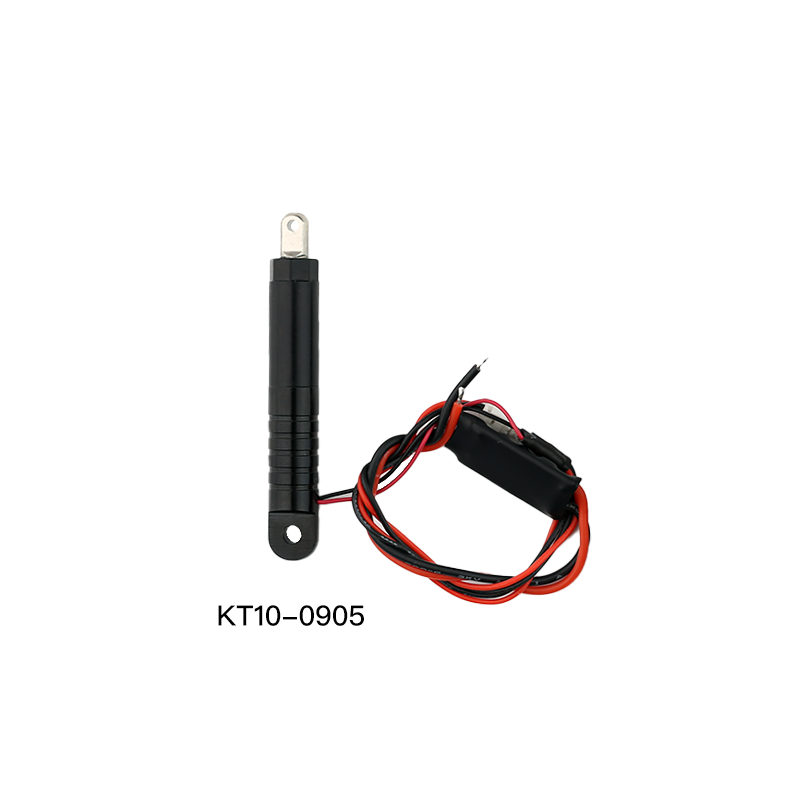
What is a Linear Encoder?
A linear encoder is a sensor that measures linear position or displacement. It provides feedback to the control system of a Micro Linear Motor, allowing it to accurately determine the motor's position and adjust its operation accordingly. In simple terms, a linear encoder acts as the "eyes" of the motor, providing real-time information about its location along the linear path.
The basic principle of a linear encoder involves the use of a scale and a readhead. The scale is a precisely calibrated strip that is attached to the moving part of the motor, while the readhead is a sensor that detects the position of the scale. As the motor moves, the readhead reads the markings on the scale and converts them into electrical signals, which are then sent to the control system.
Importance of Linear Encoders in Micro Linear Motors
The use of a linear encoder in a Micro Linear Motor is essential for achieving high precision and accuracy in motion control. Here are some of the key reasons why linear encoders are so important:
1. Position Accuracy
One of the primary functions of a linear encoder is to provide accurate position feedback. This allows the control system to precisely control the motor's position, ensuring that it moves to the desired location with minimal error. In applications where precision is critical, such as semiconductor manufacturing or medical imaging, even the slightest deviation in position can have a significant impact on the quality of the final product.
2. Speed Control
Linear encoders also play a crucial role in speed control. By continuously monitoring the motor's position, the control system can adjust the motor's speed to maintain a constant velocity or to achieve a specific acceleration or deceleration profile. This is particularly important in applications where smooth and consistent motion is required, such as in robotics or automated assembly lines.
3. Repeatability
Repeatability refers to the ability of a motor to return to the same position accurately over multiple cycles. A linear encoder helps to ensure high repeatability by providing consistent and reliable position feedback. This is essential in applications where the motor needs to perform the same task repeatedly, such as in pick-and-place operations or machine tooling.
4. Safety
In some applications, the use of a linear encoder can enhance safety. For example, in elevator systems or industrial machinery, a linear encoder can provide feedback to the control system, allowing it to detect any abnormal movement or position deviations. This can trigger safety mechanisms to prevent accidents or damage to the equipment.
Types of Linear Encoders
There are several types of linear encoders available, each with its own advantages and disadvantages. The most common types of linear encoders used in Micro Linear Motors are:
1. Optical Encoders
Optical encoders are the most widely used type of linear encoder. They use a light source and a photodetector to read the markings on the scale. Optical encoders offer high resolution, accuracy, and speed, making them suitable for a wide range of applications. However, they are also more sensitive to environmental factors such as dust, dirt, and moisture, which can affect their performance.
2. Magnetic Encoders
Magnetic encoders use a magnetic field to detect the position of the scale. They are less sensitive to environmental factors than optical encoders and can operate in harsh conditions. Magnetic encoders are also relatively inexpensive and easy to install. However, they typically have lower resolution and accuracy than optical encoders.
3. Capacitive Encoders
Capacitive encoders use changes in capacitance to measure linear position. They offer high resolution, accuracy, and speed, and are also less sensitive to environmental factors than optical encoders. Capacitive encoders are commonly used in applications where high precision and reliability are required, such as in semiconductor manufacturing and medical devices.
Integration of Linear Encoders with Micro Linear Motors
Integrating a linear encoder with a Micro Linear Motor requires careful consideration of several factors, including the type of encoder, the mounting method, and the electrical interface. Here are some of the key considerations when integrating a linear encoder with a Micro Linear Motor:
1. Compatibility
The first step in integrating a linear encoder with a Micro Linear Motor is to ensure that they are compatible. This includes checking the encoder's resolution, accuracy, and speed requirements, as well as its electrical interface and mounting dimensions. It is also important to ensure that the encoder is compatible with the control system of the motor.
2. Mounting
The mounting method of the linear encoder is critical for ensuring accurate and reliable operation. The scale should be mounted securely to the moving part of the motor, while the readhead should be mounted in a fixed position relative to the scale. It is important to ensure that the encoder is properly aligned and that there is no excessive vibration or movement during operation.
3. Electrical Interface
The electrical interface between the linear encoder and the control system of the motor is also important. The encoder should be connected to the control system using a suitable cable and connector, and the electrical signals should be properly conditioned and processed to ensure accurate and reliable operation.
Applications of Micro Linear Motors with Linear Encoders
Micro Linear Motors with linear encoders are used in a wide range of applications across various industries. Here are some of the common applications:
1. Semiconductor Manufacturing
In semiconductor manufacturing, precision and accuracy are of utmost importance. Micro Linear Motors with linear encoders are used in wafer handling, lithography, and inspection equipment to ensure precise positioning and movement of the semiconductor wafers.
2. Medical Devices
Medical devices such as MRI machines, CT scanners, and robotic surgical systems require high precision and accuracy in motion control. Micro Linear Motors with linear encoders are used in these devices to provide smooth and precise movement of the imaging components or surgical instruments.
3. Robotics
Robotics applications often require precise and repeatable motion control. Micro Linear Motors with linear encoders are used in robotic arms, grippers, and other components to provide accurate positioning and movement.
4. Optical Equipment
Optical equipment such as cameras, telescopes, and microscopes require precise focusing and positioning. Micro Linear Motors with linear encoders are used in these devices to provide smooth and accurate movement of the optical components.
Conclusion
In conclusion, a linear encoder is an essential component of a Micro Linear Motor, providing accurate position feedback and enhancing the motor's performance in terms of precision, accuracy, and repeatability. As a supplier of Micro Linear Motors, we understand the importance of choosing the right linear encoder for your application. Whether you need high precision in semiconductor manufacturing or smooth and reliable motion in robotics, our team of experts can help you select the most suitable linear encoder and integrate it with your Micro Linear Motor.
If you are interested in learning more about our Micro Linear Motors or Linear Micro Actuators, or if you have any questions about linear encoders or motion control, please feel free to contact us. We would be happy to discuss your requirements and provide you with the best solutions for your application.
References
- "Linear Encoders: Principles, Types, and Applications" by John Smith
- "Motion Control Handbook" by Peter Brown
- "Micro Linear Motors: Design, Operation, and Applications" by David Johnson