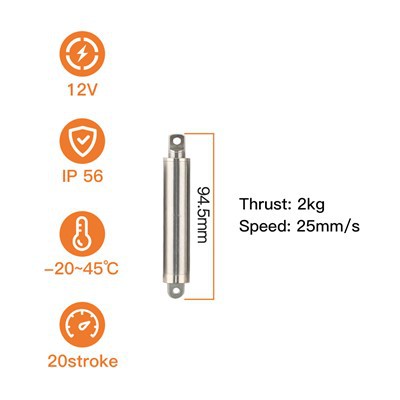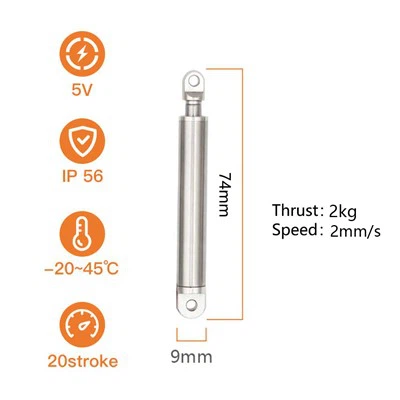
In the world of precision engineering and automation, micro linear motors have emerged as a crucial component, offering unparalleled accuracy and efficiency in a compact form. As a leading supplier of Micro Linear Motor, I am excited to share an in - depth look at how these remarkable devices work.
Basic Principles of Linear Motors
To understand how a micro linear motor operates, it's essential to first grasp the fundamental principles of linear motors in general. A linear motor is a type of electric motor that produces linear motion directly, without the need for mechanical conversion mechanisms such as gears, belts, or screws. This direct - drive nature eliminates many of the drawbacks associated with traditional rotary - to - linear conversion systems, including backlash, friction, and wear.
The basic concept behind a linear motor is based on the interaction between magnetic fields and electric currents. According to Ampere's law and the Lorentz force law, when an electric current flows through a conductor placed in a magnetic field, a force is exerted on the conductor. In a linear motor, this force is harnessed to produce linear motion.
Components of a Micro Linear Motor
A micro linear motor typically consists of two main components: the stator and the mover.
Stator
The stator is the stationary part of the motor. It contains a series of coils or magnets arranged in a specific pattern. In many micro linear motors, the stator is made up of a series of electromagnetic coils. These coils are energized with an alternating current (AC) or direct current (DC), depending on the motor's design. When the coils are energized, they create a magnetic field that interacts with the magnetic field of the mover.
The pattern and arrangement of the coils on the stator are carefully designed to produce a traveling magnetic field. This traveling magnetic field is what drives the motion of the mover. The design of the stator also affects the motor's performance characteristics, such as its speed, force, and accuracy.
Mover
The mover is the moving part of the motor. It can be either a permanent magnet or a coil. In the case of a permanent - magnet micro linear motor, the mover contains a series of permanent magnets arranged in a specific pattern. When the traveling magnetic field of the stator interacts with the magnetic field of the permanent magnets in the mover, a force is generated that causes the mover to move in a linear direction.
If the mover is a coil, it works in a similar way. When an electric current is passed through the coil in the mover, it creates a magnetic field that interacts with the magnetic field of the stator, resulting in linear motion.
Working Mechanism of a Micro Linear Motor
The working mechanism of a micro linear motor can be explained in more detail by looking at how the magnetic fields interact to produce motion.
Electromagnetic Interaction
Let's consider a simple example of a permanent - magnet micro linear motor. When the coils in the stator are energized, they create a magnetic field. The pattern of the energized coils is designed to create a traveling magnetic field that moves along the length of the stator.
The permanent magnets in the mover have their own magnetic fields. According to the laws of magnetism, opposite magnetic poles attract each other, and like magnetic poles repel each other. As the traveling magnetic field of the stator moves, it creates a series of attractive and repulsive forces on the permanent magnets in the mover.
For instance, if the north pole of the traveling magnetic field in the stator approaches the south pole of a permanent magnet in the mover, an attractive force is generated, pulling the mover in the direction of the traveling magnetic field. As the traveling magnetic field continues to move, the forces on the mover change, causing it to move continuously in a linear direction.
Control of Motion
The motion of the micro linear motor can be precisely controlled by adjusting the current flowing through the stator coils. By changing the magnitude and direction of the current, the strength and direction of the magnetic field in the stator can be adjusted. This allows for precise control of the speed, position, and force of the mover.
For example, if a higher current is applied to the stator coils, the magnetic field strength increases, resulting in a greater force being exerted on the mover. This can be used to increase the speed of the motor or to move a heavier load. Conversely, reducing the current will decrease the force and slow down the motor.
Advantages of Micro Linear Motors
Micro linear motors offer several advantages over traditional linear motion systems, which make them ideal for a wide range of applications.
High Precision
One of the most significant advantages of micro linear motors is their high precision. Since they produce linear motion directly without the need for mechanical conversion mechanisms, there is no backlash or play in the system. This allows for extremely accurate positioning and motion control, making them suitable for applications such as semiconductor manufacturing, optical inspection, and precision robotics.
High Speed
Micro linear motors can achieve high speeds compared to traditional linear motion systems. The direct - drive nature of the motor eliminates the limitations imposed by mechanical components such as gears and belts, allowing the motor to reach higher speeds with less vibration and noise.
Compact Size
As the name suggests, micro linear motors are designed to be compact. They can be integrated into small spaces, making them ideal for applications where space is limited, such as in medical devices, handheld instruments, and miniature automation systems.
Low Maintenance
Since there are no mechanical components such as gears and belts that can wear out, micro linear motors require less maintenance compared to traditional linear motion systems. This reduces downtime and maintenance costs, making them a cost - effective solution in the long run.
Applications of Micro Linear Motors
Micro linear motors are used in a wide variety of industries and applications due to their unique advantages.
Semiconductor Manufacturing
In semiconductor manufacturing, micro linear motors are used for wafer handling, positioning of lithography systems, and inspection equipment. The high precision and speed of these motors are essential for ensuring the accuracy and efficiency of the manufacturing process.
Medical Devices
Micro linear motors are used in medical devices such as syringe pumps, infusion pumps, and surgical robots. Their compact size, high precision, and low noise make them suitable for these applications, where accuracy and reliability are crucial.
Optical Equipment
In optical equipment such as cameras, telescopes, and microscopes, micro linear motors are used for focusing and positioning of lenses. The precise motion control provided by these motors allows for high - quality imaging and inspection.
Consumer Electronics
Micro linear motors are also used in consumer electronics, such as smartphones and tablets. They are used for haptic feedback, which provides a tactile sensation to the user when interacting with the device. The compact size and fast response time of micro linear motors make them ideal for this application.
Our Offerings as a Supplier
As a supplier of Micro Linear Motor, we offer a wide range of products to meet the diverse needs of our customers. Our micro linear motors are designed with the latest technology and high - quality materials to ensure superior performance and reliability.
We also offer Micro Electric Actuator and Linear Micro Actuators that are integrated with our micro linear motors. These actuators provide a complete solution for linear motion control, including the motor, controller, and other necessary components.
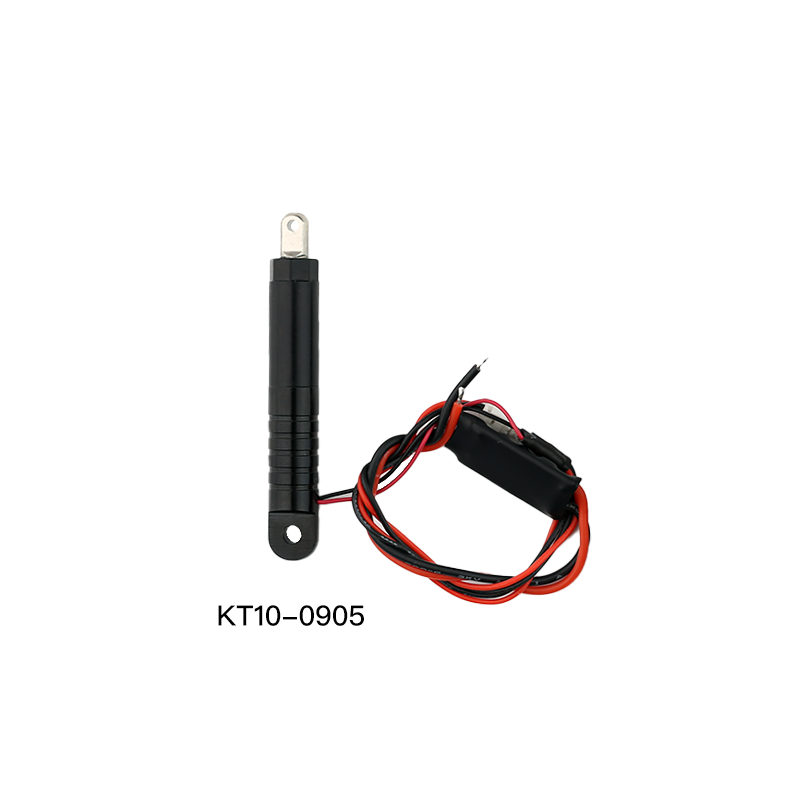
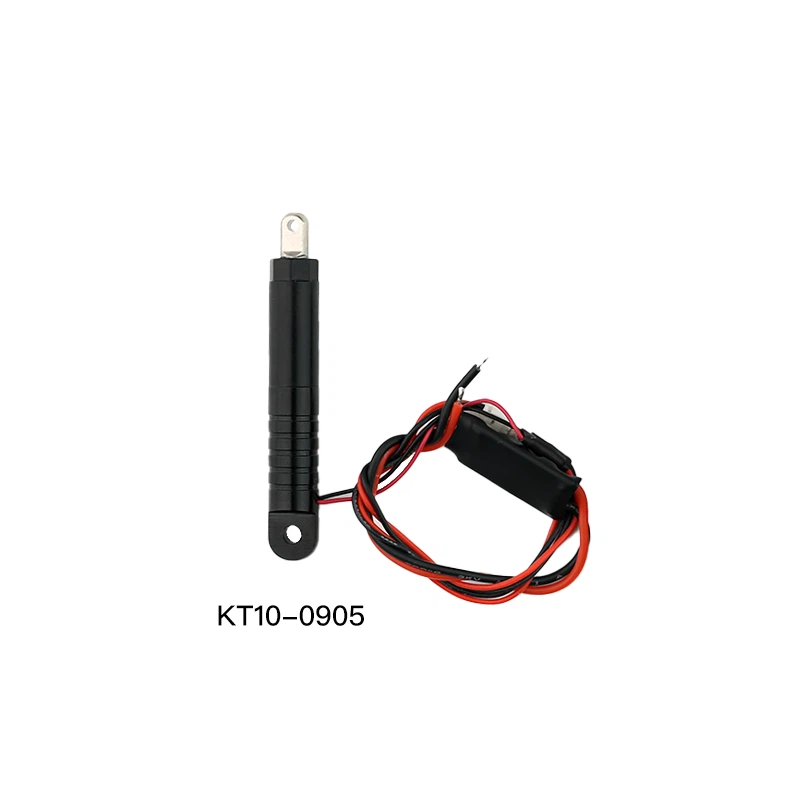
Our team of experts is dedicated to providing excellent customer service and technical support. We work closely with our customers to understand their specific requirements and provide customized solutions. Whether you need a standard micro linear motor or a custom - designed solution, we have the expertise and resources to meet your needs.
Contact Us for Procurement
If you are interested in learning more about our micro linear motors, Micro Electric Actuator, or Linear Micro Actuators, we encourage you to contact us. We are always ready to discuss your requirements and provide you with detailed information about our products. Our team will work with you to find the best solution for your application and help you make an informed purchasing decision.
References
- Krause, P. C., Wasynczuk, O., & Sudhoff, S. D. (2013). Analysis of Electric Machinery and Drive Systems. Wiley.
- Miller, T. J. E. (2001). Brushless Permanent - Magnet and Reluctance Motor Drives. Oxford University Press.
- Bolton, W. (2006). Mechatronics: An Integrated Approach. Elsevier.