Hey there! As a supplier of 6V electric actuators, I often get asked about the dynamic response characteristic of these nifty little devices. So, let's dive right in and break it down.
First off, what exactly is a 6V electric actuator? Well, it's a device that converts electrical energy into mechanical motion. In simple terms, it takes electricity and uses it to move something. These actuators are super handy in a whole bunch of applications, from small robotics projects to automotive parts.


Now, let's talk about the dynamic response characteristic. This is all about how quickly and accurately the actuator can respond to changes in the input signal. When you send a command to the actuator, you want it to start moving right away and stop precisely where you want it to. That's what we mean by dynamic response.
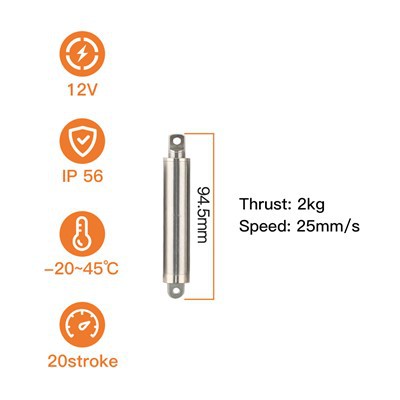
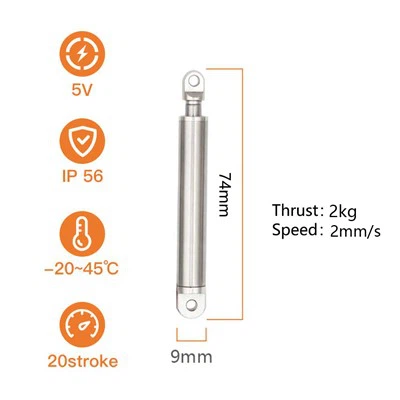
One of the key factors that affect the dynamic response of a 6V electric actuator is its speed. How fast can it move? A fast - moving actuator can quickly reach its target position, which is crucial in applications where time is of the essence. For example, in a robotic arm that needs to pick and place objects rapidly, a Fast Electric Actuator is a must - have. These actuators are designed to have a high speed of operation, allowing them to respond quickly to commands.
Another important aspect is the acceleration and deceleration capabilities. A good 6V electric actuator should be able to accelerate smoothly from a standstill and decelerate gently when it reaches its destination. This not only ensures a more accurate movement but also reduces wear and tear on the actuator and any connected components.
The stroke length also plays a role in the dynamic response. A Long Stroke Electric Linear Actuator has a longer distance to cover. While it might take a bit more time to complete a full stroke compared to a shorter - stroke actuator, it offers the advantage of being able to move objects over a greater distance. However, proper control is needed to ensure that the actuator can still respond well to commands during this longer movement.
The type of motor used in the actuator is also a major determinant of its dynamic response. For instance, a Dc Brush Electric Actuator has its own set of characteristics. DC brush motors are known for their relatively simple design and good torque characteristics. They can provide a quick start - up and can be easily controlled to achieve the desired speed and direction of movement.
Now, let's talk about some real - world implications of these dynamic response characteristics. In an automated manufacturing process, a 6V electric actuator with a poor dynamic response can lead to production delays. If the actuator takes too long to move into position or doesn't stop accurately, it can cause misalignments in the assembly process, leading to defective products. On the other hand, an actuator with excellent dynamic response can improve the overall efficiency and quality of the manufacturing process.
In the field of home automation, a 6V electric actuator can be used to control things like window blinds or curtains. A fast - responding actuator can quickly open or close the blinds in response to changes in light or temperature, providing a more comfortable living environment.
So, how do we measure the dynamic response of a 6V electric actuator? There are a few key metrics. One is the settling time, which is the time it takes for the actuator to reach and stay within a certain tolerance of its final position after a command is issued. A shorter settling time indicates a better dynamic response.
The rise time is another important metric. It measures how long it takes for the actuator to go from a specified initial value (usually zero) to a specified final value (like the maximum stroke length). A fast rise time means the actuator can start moving quickly in response to a command.
As a supplier of 6V electric actuators, we understand the importance of these dynamic response characteristics. We work hard to ensure that our actuators meet the highest standards in terms of speed, acceleration, and accuracy. Our team of experts is constantly researching and developing new technologies to improve the performance of our products.
If you're in the market for a 6V electric actuator, whether it's for a small DIY project or a large - scale industrial application, we've got you covered. We offer a wide range of actuators with different dynamic response characteristics to suit your specific needs.
So, if you're interested in learning more about our products or want to discuss your requirements, don't hesitate to reach out. We're here to help you find the perfect 6V electric actuator for your project. Contact us to start a procurement discussion, and let's work together to make your project a success.
References:
- Textbooks on electric actuators and motion control
- Industry research papers on actuator performance
- Internal product development and testing reports