What is the acceleration and deceleration performance of a tiny linear actuator?
As a supplier of tiny linear actuators, I often get asked about the acceleration and deceleration performance of these compact yet powerful devices. In this blog post, I'll delve into the details of what acceleration and deceleration mean for tiny linear actuators, how they are measured, and what factors can influence their performance.
Understanding Acceleration and Deceleration in Linear Actuators
Acceleration in a linear actuator refers to the rate at which the actuator's speed increases from rest or from a lower speed to a higher one. It is typically measured in units of distance per time squared, such as millimeters per second squared (mm/s²). A high acceleration means that the actuator can quickly reach its desired operating speed, which is crucial in applications where rapid movement is required.
Deceleration, on the other hand, is the rate at which the actuator slows down from a higher speed to a lower one or to a complete stop. Similar to acceleration, it is also measured in distance per time squared. Proper deceleration is essential to ensure smooth and controlled stops, preventing damage to the actuator and the connected components.
Measuring Acceleration and Deceleration
To measure the acceleration and deceleration of a tiny linear actuator, specialized equipment is often used. One common method is to use a linear encoder, which can accurately measure the position of the actuator's rod over time. By analyzing the change in position at different time intervals, the speed and acceleration can be calculated.
Another approach is to use a force sensor in combination with the actuator. As the actuator accelerates or decelerates, the force exerted on the sensor changes. By measuring these force changes, the acceleration and deceleration can be inferred.
Factors Affecting Acceleration and Deceleration Performance
Several factors can influence the acceleration and deceleration performance of a tiny linear actuator. Here are some of the most significant ones:
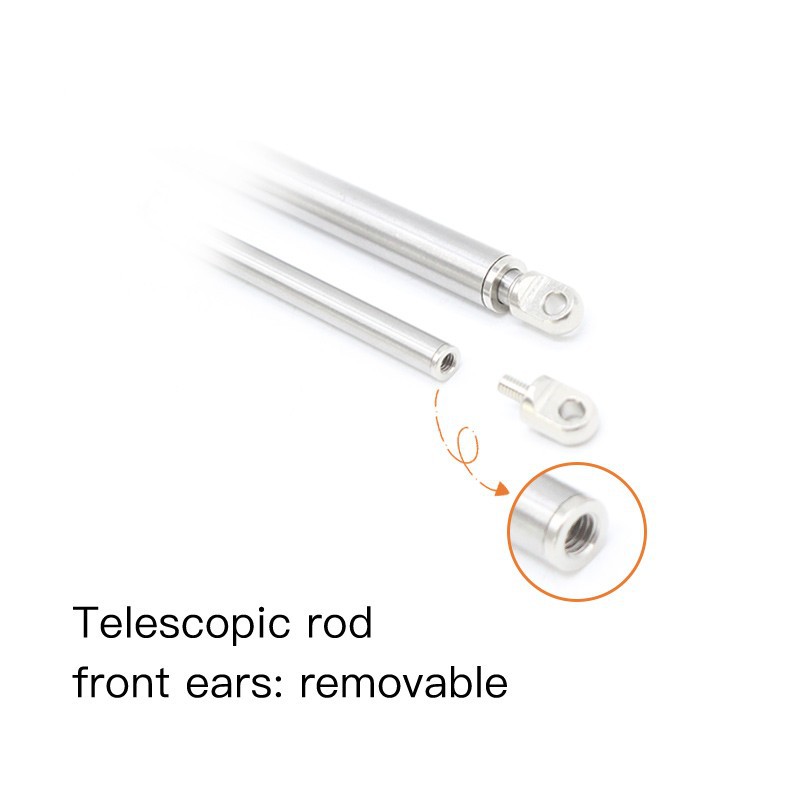

- Motor Power: The power of the motor used in the actuator plays a crucial role in determining its acceleration and deceleration capabilities. A more powerful motor can provide greater torque, allowing the actuator to accelerate and decelerate more quickly.
- Load Weight: The weight of the load that the actuator needs to move also affects its performance. A heavier load requires more force to accelerate and decelerate, which can slow down the actuator's response time.
- Friction: Friction within the actuator, such as between the rod and the housing or in the gears, can reduce the efficiency of the actuator and limit its acceleration and deceleration capabilities. Minimizing friction through proper lubrication and design is essential for optimal performance.
- Control System: The control system used to operate the actuator can also impact its acceleration and deceleration performance. A well-designed control system can provide precise and timely signals to the motor, allowing for smooth and efficient acceleration and deceleration.
Applications and the Importance of Acceleration and Deceleration
The acceleration and deceleration performance of a tiny linear actuator is critical in many applications. Here are a few examples:
- Robotics: In robotic systems, rapid and precise movement is often required. Tiny linear actuators with high acceleration and deceleration capabilities can enable robots to perform tasks quickly and accurately, improving their overall efficiency.
- Medical Devices: In medical devices such as surgical robots and diagnostic equipment, smooth and controlled movement is essential. Proper acceleration and deceleration can ensure that the devices operate safely and effectively, minimizing the risk of damage to the patient.
- Automotive Industry: In automotive applications, tiny linear actuators are used in various systems, such as seat adjustment and engine control. Good acceleration and deceleration performance can enhance the comfort and performance of the vehicle.
Our Tiny Linear Actuators and Their Performance
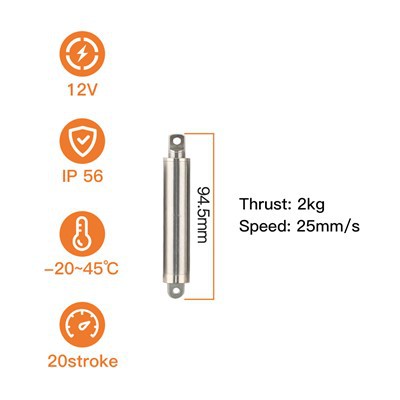
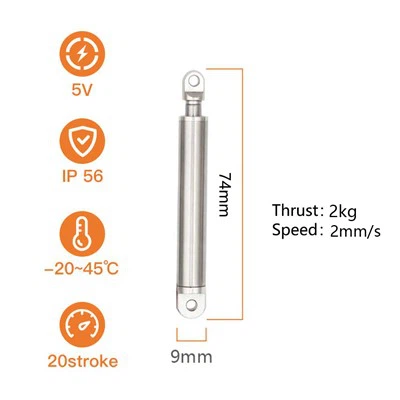
At our company, we offer a wide range of tiny linear actuators with excellent acceleration and deceleration performance. Our actuators are designed with high-quality motors and precision components to ensure smooth and efficient operation.
For example, our Dc Linear Actuator is a popular choice for many applications. It features a powerful DC motor that provides high torque, allowing for rapid acceleration and deceleration. The actuator is also designed with low friction components, which further enhances its performance.
Our 6 Volt Linear Actuator with Remoteactuators is another great option. It is powered by a 6-volt battery, making it suitable for applications where a low-voltage power source is required. Despite its compact size, this actuator offers excellent acceleration and deceleration capabilities, making it ideal for use in small-scale robotic and automation systems.
If you need an actuator that can withstand harsh environments, our Stainless Steel Linear Actuator is the perfect choice. It is made of high-quality stainless steel, which provides excellent corrosion resistance. The actuator also features a powerful motor and precision gears, ensuring reliable and efficient operation with good acceleration and deceleration performance.
Contact Us for Your Linear Actuator Needs
If you are interested in learning more about our tiny linear actuators or have specific requirements for your application, please feel free to contact us. Our team of experts is always ready to help you find the right actuator for your needs and provide you with technical support and advice.
We understand that every application is unique, and we are committed to providing customized solutions to meet your specific requirements. Whether you need an actuator with high acceleration and deceleration performance or one that is designed for a particular environment or load, we can work with you to develop the perfect solution.
Don't hesitate to reach out to us today to start discussing your linear actuator needs. We look forward to working with you and helping you achieve your goals.
References
- "Linear Actuator Handbook" by Motion Control & Motor Association
- "Fundamentals of Mechatronics" by David G. Alciatore and Michael B. Histand