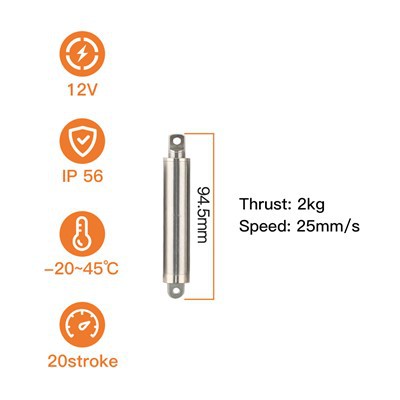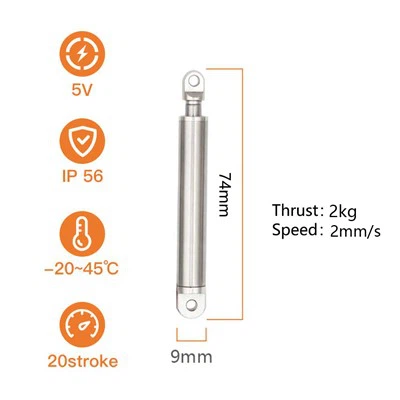
Selecting the right driver for a 12V linear motor is a crucial decision that can significantly impact the performance, efficiency, and longevity of your linear motion system. As a 12V linear motor supplier, I understand the complexities involved in this selection process. In this blog post, I'll share some key considerations to help you make an informed choice.
Understanding the Basics of 12V Linear Motors
Before delving into driver selection, it's essential to have a solid understanding of 12V linear motors. These motors are designed to convert electrical energy into linear motion, making them ideal for a wide range of applications, from small-scale automation projects to precision positioning systems. They offer several advantages, including high precision, compact size, and smooth operation.
Key Considerations for Driver Selection
Power Requirements
The first step in selecting a driver for a 12V linear motor is to determine the power requirements of your motor. This includes factors such as the motor's voltage, current, and power rating. The driver must be capable of providing the necessary power to the motor without overheating or causing damage.
For a 12V linear motor, the driver should be rated for 12V operation. Additionally, you need to consider the motor's current requirements. Some motors may have a high inrush current when starting, which the driver must be able to handle. Make sure to check the motor's datasheet for detailed power specifications.
Control Method
There are several control methods available for linear motors, including open-loop and closed-loop control. Open-loop control is simpler and more cost-effective, but it may not provide the same level of precision as closed-loop control. Closed-loop control uses feedback sensors to monitor the motor's position and adjust the drive signal accordingly, resulting in more accurate and repeatable motion.
When selecting a driver, consider the control method that best suits your application. If you require high precision and accuracy, a closed-loop driver may be the better choice. However, if cost is a major factor and your application does not require extreme precision, an open-loop driver may be sufficient.
Speed and Torque Requirements
The speed and torque requirements of your application will also influence your driver selection. Different drivers are designed to handle different speed and torque ranges. Make sure to choose a driver that can provide the necessary speed and torque for your motor to operate effectively.
For example, if your application requires high-speed operation, you'll need a driver that can deliver a high-frequency drive signal. On the other hand, if your application requires high torque, the driver must be able to supply the necessary current to the motor.
Compatibility with Motor Type
Not all drivers are compatible with all types of 12V linear motors. There are different types of linear motors, such as voice coil motors, stepper motors, and servo motors, each with its own unique characteristics and requirements. Make sure to choose a driver that is specifically designed for the type of motor you are using.
For instance, voice coil motors require a driver that can provide a continuous current to the motor, while stepper motors require a driver that can control the motor's step angle. Using an incompatible driver can lead to poor performance, increased energy consumption, and even motor damage.
Protection Features
A good driver should have built-in protection features to safeguard the motor and the driver itself from damage. Some common protection features include overcurrent protection, overvoltage protection, and thermal protection.
Overcurrent protection prevents the driver from supplying too much current to the motor, which can cause overheating and damage. Overvoltage protection protects the driver and the motor from voltage spikes, which can occur due to power surges or other electrical disturbances. Thermal protection ensures that the driver does not overheat, which can lead to component failure.
Comparing Different Driver Options
Integrated Drivers
Integrated drivers combine the motor driver and the control electronics into a single unit. They are easy to install and use, making them a popular choice for many applications. Integrated drivers often come with built-in protection features and support various control methods.
However, integrated drivers may have limited flexibility compared to standalone drivers. They may not be suitable for applications that require custom control algorithms or advanced features.


Standalone Drivers
Standalone drivers are separate units that can be paired with different types of motors. They offer more flexibility and customization options compared to integrated drivers. Standalone drivers can be configured to meet the specific requirements of your application, such as adjusting the drive signal frequency, current limit, and control parameters.
However, standalone drivers may require more technical expertise to install and configure. They also tend to be more expensive than integrated drivers.
Case Studies
Let's take a look at a couple of case studies to illustrate the importance of proper driver selection for 12V linear motors.
Case Study 1: A Small-Scale Automation Project
A customer was working on a small-scale automation project that required a 12V linear motor to move a small load with moderate precision. The customer initially selected an open-loop driver based on cost considerations. However, they found that the motor's performance was not satisfactory, and the position accuracy was poor.
After consulting with us, we recommended a closed-loop driver that was specifically designed for the type of motor they were using. The new driver provided better control and feedback, resulting in improved position accuracy and smoother operation. The customer was very satisfied with the results and was able to complete their project successfully.
Case Study 2: A Precision Positioning System
Another customer was developing a precision positioning system that required a high level of accuracy and repeatability. They were using a 12V linear motor and were struggling to find a driver that could meet their requirements.
We recommended a high-performance closed-loop driver with advanced control algorithms and built-in protection features. The driver was able to provide the necessary precision and stability for the application. The customer was impressed with the performance of the driver and was able to achieve their desired positioning accuracy.
Where to Find the Right Driver
As a 12V linear motor supplier, we offer a wide range of drivers that are compatible with our motors. Our drivers are designed to provide high performance, reliability, and ease of use. We also provide technical support and guidance to help you select the right driver for your application.
If you are looking for a 12V linear motor driver, you can explore our product offerings at 12V Actuator Linear and 12V Dc Linear Actuator. We also have a range of 24V drivers available at Actuator 24V.
Conclusion
Selecting the right driver for a 12V linear motor is a critical step in ensuring the success of your linear motion system. By considering factors such as power requirements, control method, speed and torque requirements, compatibility with motor type, and protection features, you can make an informed decision.
If you have any questions or need further assistance with driver selection, please don't hesitate to contact us. We are here to help you find the best solution for your application. Whether you are a small-scale hobbyist or a large-scale industrial manufacturer, we have the expertise and products to meet your needs. Start exploring our product range today and take your linear motion system to the next level.
References
- "Linear Motor Handbook" by Linear Motor Manufacturer Association
- "Motion Control Technology" by Motion Control Society