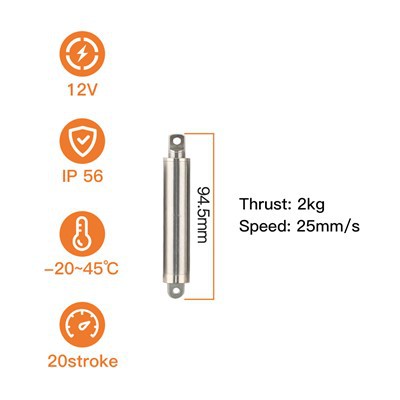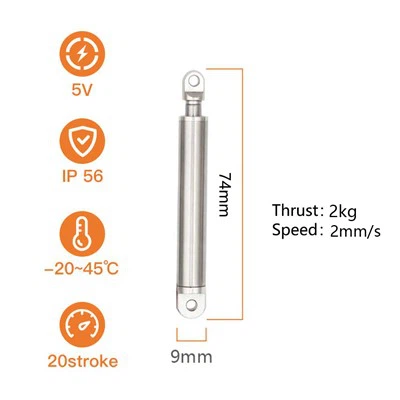
As a trusted supplier of 24V actuators, I'm often asked about how these devices work. In this blog post, I'll delve into the inner workings of a 24V solenoid actuator, explaining the principles behind its operation and highlighting its applications.
Understanding the Basics of a Solenoid Actuator
A solenoid actuator is an electromechanical device that converts electrical energy into linear mechanical motion. At its core, a solenoid consists of a coil of wire wound around a cylindrical core, typically made of a ferromagnetic material such as iron or steel. When an electric current flows through the coil, it creates a magnetic field around the core. This magnetic field interacts with the ferromagnetic material, causing it to move in a linear direction.
Components of a 24V Solenoid Actuator
A 24V solenoid actuator is designed to operate on a 24V DC power supply. It typically consists of the following components:
- Coil: The coil is the heart of the solenoid actuator. It is made of a copper wire wound around a core, and when an electric current passes through it, it generates a magnetic field.
- Core: The core is a ferromagnetic material that is placed inside the coil. When the magnetic field is generated, the core is attracted to the center of the coil, causing it to move linearly.
- Plunger: The plunger is a rod that is attached to the core. It moves in and out of the coil as the core moves, and it is used to transfer the linear motion to the load.
- Spring: A spring is often used to return the plunger to its original position when the electric current is turned off.
- Housing: The housing encloses the coil, core, plunger, and spring, providing protection and support for the components.
How a 24V Solenoid Actuator Works
The operation of a 24V solenoid actuator can be explained in the following steps:
- Power Supply: When a 24V DC power supply is connected to the solenoid actuator, an electric current flows through the coil.
- Magnetic Field Generation: The electric current flowing through the coil creates a magnetic field around the core. The strength of the magnetic field is proportional to the amount of current flowing through the coil.
- Core Movement: The magnetic field attracts the ferromagnetic core towards the center of the coil. As the core moves, it pulls the plunger along with it, causing linear motion.
- Load Activation: The linear motion of the plunger is transferred to the load, which can be a valve, a switch, or any other device that requires linear movement.
- Power Off: When the power supply is turned off, the electric current stops flowing through the coil, and the magnetic field collapses. The spring then returns the plunger and the core to their original positions.
Advantages of 24V Solenoid Actuators
24V solenoid actuators offer several advantages over other types of actuators, including:
- High Force Output: Solenoid actuators can generate a relatively high force output for their size, making them suitable for applications that require a significant amount of force.
- Fast Response Time: Solenoid actuators can operate very quickly, with response times in the milliseconds range. This makes them ideal for applications that require rapid actuation.
- Simple Design: Solenoid actuators have a simple design, with few moving parts. This makes them reliable and easy to maintain.
- Low Cost: Solenoid actuators are generally less expensive than other types of actuators, making them a cost-effective solution for many applications.
Applications of 24V Solenoid Actuators
24V solenoid actuators are used in a wide range of applications, including:
- Automotive Industry: Solenoid actuators are used in automotive applications such as fuel injectors, transmission shifting, and engine valve control.
- Industrial Automation: In industrial automation, solenoid actuators are used to control valves, switches, and other devices in manufacturing processes.
- Medical Equipment: Solenoid actuators are used in medical equipment such as infusion pumps, ventilators, and surgical instruments.
- Home Appliances: Many home appliances, such as washing machines, dishwashers, and refrigerators, use solenoid actuators to control water flow and other functions.
Comparison with 12V Actuators
While 24V solenoid actuators offer several advantages, it's also worth considering 12V actuators for certain applications. You can learn more about 12 Volt Dc Actuator, 12V Actuator Motor, and Linear Actuator 12V on our website. 12V actuators are typically used in applications where lower power consumption is required, such as in battery-powered devices. However, they generally have a lower force output and slower response time compared to 24V actuators.
Conclusion
In conclusion, 24V solenoid actuators are versatile and reliable devices that convert electrical energy into linear mechanical motion. Their simple design, high force output, fast response time, and low cost make them suitable for a wide range of applications in various industries. Whether you're in the automotive, industrial automation, medical, or home appliance sector, a 24V solenoid actuator can provide an effective solution for your actuation needs.
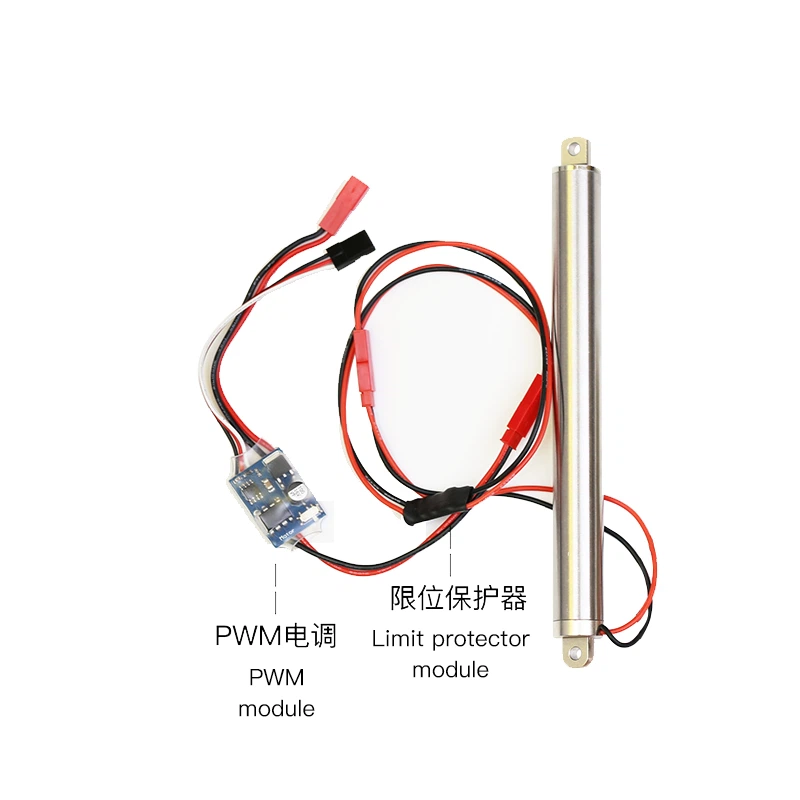

If you're interested in learning more about our 24V actuators or have specific requirements for your application, please don't hesitate to contact us. Our team of experts is ready to assist you in finding the right actuator for your project and to provide you with the support you need throughout the procurement process.
References
- "Electromechanical Actuators: Design, Modeling, and Control" by Peter C. Senneff
- "Solenoid Valves: Principles, Operation, and Selection" by David W. Spitzer