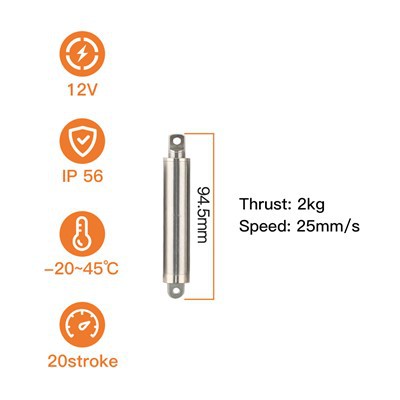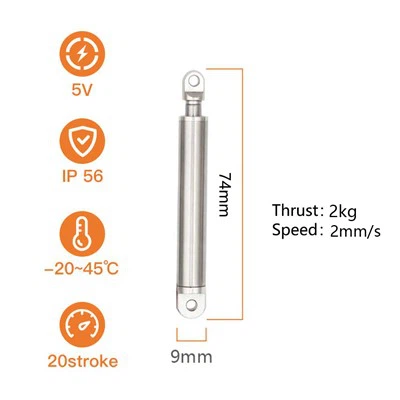
Hey there! As a supplier of 12 Volt DC Actuators, I've seen firsthand the importance of ensuring their stability. In this blog, I'll share some tips and tricks on how to keep your 12 Volt DC Actuator running smoothly and reliably.
Understanding the Basics of a 12 Volt DC Actuator
Before we dive into the details of ensuring stability, let's quickly go over what a 12 Volt DC Actuator is. Simply put, it's a device that converts electrical energy into mechanical motion. These actuators are commonly used in a variety of applications, from automotive and industrial equipment to home automation systems.
The key components of a 12 Volt DC Actuator include a motor, a gearbox, and a lead screw or a rack and pinion mechanism. The motor provides the power, the gearbox reduces the speed and increases the torque, and the lead screw or rack and pinion converts the rotational motion of the motor into linear motion.
Power Supply Stability
One of the most important factors in ensuring the stability of a 12 Volt DC Actuator is a stable power supply. Fluctuations in voltage can cause the actuator to operate erratically, leading to premature wear and tear or even failure.
- Use a Regulated Power Supply: A regulated power supply ensures that the voltage supplied to the actuator remains constant, regardless of any changes in the input voltage. This helps to protect the actuator from voltage spikes and dips, which can damage the motor and other components.
- Check the Power Source: Make sure that the power source you're using is capable of providing the required current. If the power source is underpowered, the actuator may not operate properly or may overheat. You can use a multimeter to measure the voltage and current at the power source and at the actuator terminals.
- Avoid Voltage Drops: Long cables or high resistance connections can cause voltage drops, which can affect the performance of the actuator. Use high-quality cables with low resistance and keep the cable length as short as possible. Additionally, make sure that all connections are clean and tight to minimize resistance.
Environmental Conditions
The environment in which the 12 Volt DC Actuator operates can also have a significant impact on its stability. Extreme temperatures, humidity, dust, and vibration can all cause problems for the actuator.
- Temperature Control: Most 12 Volt DC Actuators are designed to operate within a specific temperature range. Excessive heat can cause the motor to overheat and reduce its lifespan, while extreme cold can make the lubricants in the gearbox thicken, increasing friction and reducing efficiency. If the actuator is operating in a high-temperature environment, consider using a heat sink or a cooling fan to keep it cool. In cold environments, you may need to use a heater or insulation to maintain the proper operating temperature.
- Humidity and Moisture Protection: Moisture can cause corrosion and damage to the electrical components of the actuator. If the actuator is exposed to high humidity or moisture, make sure it is properly sealed to prevent water from entering. You can also use a moisture-resistant coating or a desiccant to absorb any moisture that may accumulate inside the actuator.
- Dust and Debris Prevention: Dust and debris can enter the actuator and cause wear and tear on the moving parts. Use a dust cover or a filter to protect the actuator from dust and debris. Regularly clean the actuator to remove any accumulated dust or dirt.
- Vibration Isolation: Vibration can cause the actuator to loosen its mounting or damage its internal components. If the actuator is exposed to vibration, use vibration isolation mounts or pads to reduce the impact of the vibration on the actuator.
Proper Installation and Mounting
Proper installation and mounting of the 12 Volt DC Actuator are crucial for its stability and performance.
- Correct Alignment: Make sure that the actuator is properly aligned with the load. Misalignment can cause excessive stress on the actuator, leading to premature wear and tear or even failure. Use a alignment tool or a laser alignment system to ensure that the actuator is aligned correctly.
- Secure Mounting: The actuator should be securely mounted to prevent it from moving or vibrating during operation. Use the appropriate mounting hardware and follow the manufacturer's instructions for mounting the actuator. Make sure that the mounting surface is flat and stable to provide a solid foundation for the actuator.
- Load Capacity: Do not exceed the rated load capacity of the actuator. Overloading the actuator can cause it to overheat, stall, or even break. Make sure that the load you're applying to the actuator is within its specified load capacity.
Regular Maintenance
Regular maintenance is essential for ensuring the long-term stability and performance of a 12 Volt DC Actuator.
- Lubrication: The moving parts of the actuator, such as the gearbox and the lead screw, need to be properly lubricated to reduce friction and wear. Follow the manufacturer's recommendations for lubrication intervals and use the recommended lubricant.
- Inspection: Regularly inspect the actuator for any signs of wear, damage, or loose connections. Check the motor, gearbox, lead screw, and other components for any signs of overheating, corrosion, or mechanical damage. Replace any worn or damaged parts immediately.
- Testing: Periodically test the actuator to ensure that it is operating properly. You can use a test bench or a diagnostic tool to check the actuator's performance, including its speed, force, and position accuracy.
Choosing the Right Actuator
Selecting the right 12 Volt DC Actuator for your application is also important for ensuring its stability.


- Load Requirements: Consider the load requirements of your application, including the weight, size, and movement of the load. Choose an actuator with a sufficient load capacity and speed to meet your needs.
- Stroke Length: The stroke length is the distance that the actuator can move. Make sure that the stroke length of the actuator is sufficient for your application.
- Duty Cycle: The duty cycle is the percentage of time that the actuator is in operation. Choose an actuator with a duty cycle that is appropriate for your application. If the actuator will be operating continuously, you may need to choose an actuator with a higher duty cycle.
Additional Resources
If you're interested in learning more about actuators, here are some useful links:
- Linear Actuator 24V: This link provides information about 24V linear actuators, which may be suitable for applications that require a higher voltage.
- 12V Linear Actuator: Here you can find more details about 12V linear actuators, including different models and specifications.
- Miniature Linear Motor: This link offers information on miniature linear motors, which are ideal for applications where space is limited.
Contact Us for Purchasing
If you're in the market for a 12 Volt DC Actuator or have any questions about ensuring their stability, feel free to reach out to us. We're here to help you find the right actuator for your application and provide you with all the support you need. Whether you're a small business owner or a large industrial manufacturer, we can offer you high-quality 12 Volt DC Actuators at competitive prices. Contact us today to start the purchasing process and let's work together to ensure the success of your project.
References
- "Actuator Handbook" - A comprehensive guide to actuators, covering various types, applications, and maintenance tips.
- Manufacturer's documentation for 12 Volt DC Actuators, which provides detailed information on installation, operation, and troubleshooting.