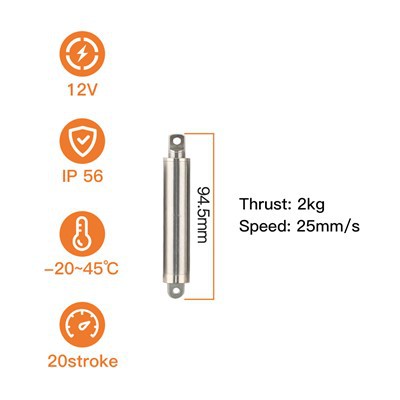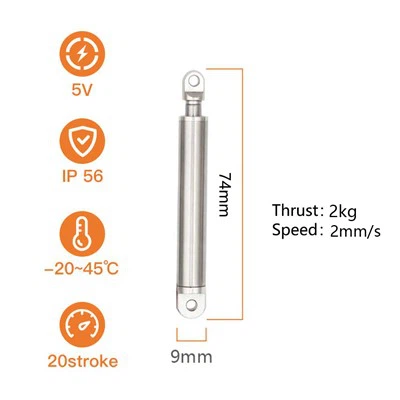
Hey there! As a supplier of Miniature Linear Motors, I've been getting a lot of questions lately about how the size of these motors impacts their performance. So, I thought I'd take a deep dive into this topic and share some insights with you all.
First off, let's talk about what a Miniature Linear Motor is. In simple terms, it's a type of motor that produces linear motion, as opposed to the rotational motion you'd get from a traditional motor. These motors are super handy in a bunch of applications, like in medical devices, robotics, and even in some consumer electronics.
Now, onto the main question: how does the size of a Miniature Linear Motor affect its performance? Well, there are a few key aspects to consider.
Force Output
One of the most obvious ways size impacts performance is in terms of force output. Generally speaking, larger Miniature Linear Motors can generate more force than their smaller counterparts. This is because a larger motor usually has more space to house the components that generate the magnetic fields responsible for the motor's motion.
For example, if you're working on a project that requires moving a heavy object, you'd probably want to go for a bigger motor. On the other hand, if you're dealing with a lightweight application, like a small robotic arm that only needs to move delicate objects, a smaller motor would be sufficient.
Let's say you're looking for an actuator to power a small robotic gripper. You might be interested in our 12V Dc Linear Actuator, which is relatively small but can still provide enough force for the job.
Speed
Size also plays a role in the speed at which the motor can operate. Smaller motors tend to be faster than larger ones. This is because they have less mass to move, so they can accelerate and decelerate more quickly.
In applications where speed is crucial, like in high-speed sorting machines or some types of medical imaging equipment, a smaller Miniature Linear Motor would be the way to go. However, it's important to note that the speed of a motor also depends on other factors, such as the power supply and the load it's carrying.
If you need a fast-acting actuator for your project, you might want to check out our Actuator 24V. It's designed to provide quick and precise motion.
Precision
When it comes to precision, the size of the motor can have a significant impact. Smaller motors are often more precise than larger ones. This is because they have less mechanical backlash and can be more easily controlled.
In applications where precision is key, like in semiconductor manufacturing or in some types of scientific instruments, a smaller Miniature Linear Motor is usually preferred. These motors can provide very accurate positioning, which is essential for tasks that require high levels of precision.
Our 24V Actuator is known for its high precision and can be a great choice for applications that demand accurate motion control.
Power Consumption
Another important factor to consider is power consumption. Generally, larger motors consume more power than smaller ones. This is because they have more components and need more energy to operate.
In applications where power efficiency is a concern, like in battery-powered devices or in energy-conscious industrial settings, a smaller Miniature Linear Motor would be a better option. By using a smaller motor, you can reduce the overall power consumption of your system and save on energy costs.
Heat Generation
Size also affects heat generation. Larger motors tend to generate more heat than smaller ones. This is because they have more electrical resistance and more components that can dissipate heat.
Excessive heat can be a problem for the motor's performance and lifespan. It can cause the motor to overheat, which can lead to reduced efficiency and even damage to the motor. In applications where heat management is important, like in enclosed spaces or in high-temperature environments, a smaller Miniature Linear Motor would be a better choice.
Cost
Finally, let's talk about cost. Generally, larger motors are more expensive than smaller ones. This is because they require more materials and more complex manufacturing processes.
If you're on a tight budget, a smaller Miniature Linear Motor might be the way to go. However, it's important to balance cost with performance. Sometimes, it might be worth investing in a larger motor if it can provide the performance you need for your project.

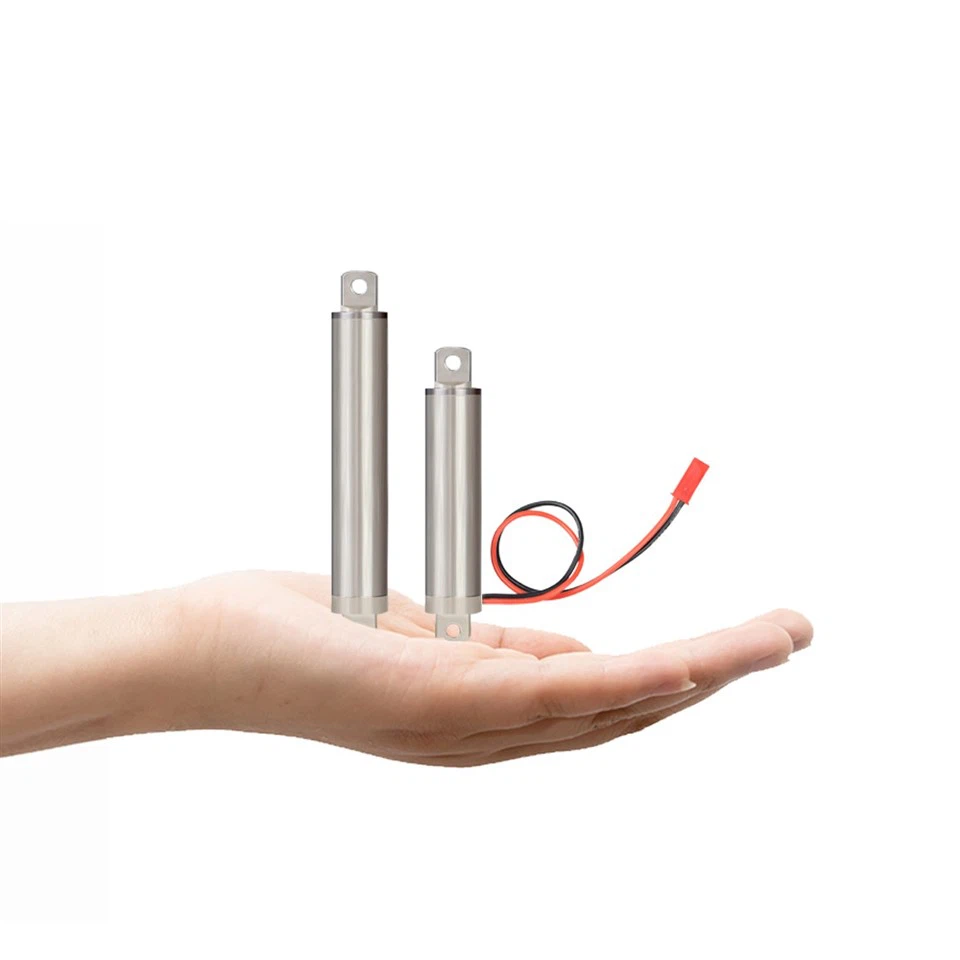
So, as you can see, the size of a Miniature Linear Motor can have a big impact on its performance. When choosing a motor for your application, it's important to consider all of these factors and find the right balance between size, force output, speed, precision, power consumption, heat generation, and cost.
If you're still not sure which Miniature Linear Motor is right for your project, don't hesitate to reach out to us. We have a team of experts who can help you select the best motor for your specific needs. Whether you're working on a small DIY project or a large industrial application, we're here to assist you.
Let's start a conversation about your requirements and see how we can help you find the perfect Miniature Linear Motor for your project. We're looking forward to hearing from you!
References
- "Linear Motors: Principles, Design, and Applications" by Thomas Kenjo
- "Motion Control Handbook" by Peter Nachtwey