

Hey there! I'm a supplier of 12V linear actuators, and I often get asked about how to test these nifty devices. So, I thought I'd share my knowledge and experience on this topic. In this blog, I'll walk you through the process of testing a 12V linear actuator step by step.
Why Test a 12V Linear Actuator?
Before we dive into the testing process, let's talk about why it's important to test a 12V linear actuator. Testing helps you ensure that the actuator is working properly and meets your requirements. It can also help you identify any potential issues or problems early on, so you can address them before they become major headaches. Whether you're using the actuator for a DIY project, industrial application, or any other purpose, testing is a crucial step to guarantee its performance and reliability.
Tools You'll Need
To test a 12V linear actuator, you'll need a few basic tools. Here's what you'll need:
- Power Supply: You'll need a 12V power supply to provide the necessary voltage to the actuator. You can use a battery, a power adapter, or a bench power supply. Make sure the power supply can deliver enough current to the actuator.
- Multimeter: A multimeter is a handy tool for measuring voltage, current, and resistance. You'll use it to check the voltage across the actuator and measure the current draw.
- Wires and Connectors: You'll need some wires and connectors to connect the power supply to the actuator. Make sure the wires are rated for the voltage and current you'll be using.
- Safety Gear: It's always a good idea to wear safety gear, such as gloves and safety glasses, when working with electrical components.
Step 1: Inspect the Actuator
Before you start testing the actuator, it's a good idea to inspect it for any visible damage or defects. Check the actuator for any signs of physical damage, such as cracks, dents, or bent parts. Make sure the actuator is clean and free of debris. Also, check the wiring and connectors for any loose connections or frayed wires.
Step 2: Connect the Power Supply
Once you've inspected the actuator, it's time to connect the power supply. Connect the positive terminal of the power supply to the positive terminal of the actuator, and connect the negative terminal of the power supply to the negative terminal of the actuator. Make sure the connections are secure and there are no loose wires.
Step 3: Check the Voltage
Now that the power supply is connected, use your multimeter to check the voltage across the actuator. Set your multimeter to the DC voltage setting and place the probes across the actuator terminals. The voltage should read close to 12V. If the voltage is significantly lower or higher than 12V, there may be a problem with the power supply or the actuator.
Step 4: Measure the Current Draw
Next, use your multimeter to measure the current draw of the actuator. Set your multimeter to the DC current setting and place the probes in series with the actuator. The current draw should be within the specifications of the actuator. If the current draw is too high, it may indicate a problem with the actuator, such as a short circuit or a mechanical issue.

Step 5: Test the Actuator's Movement
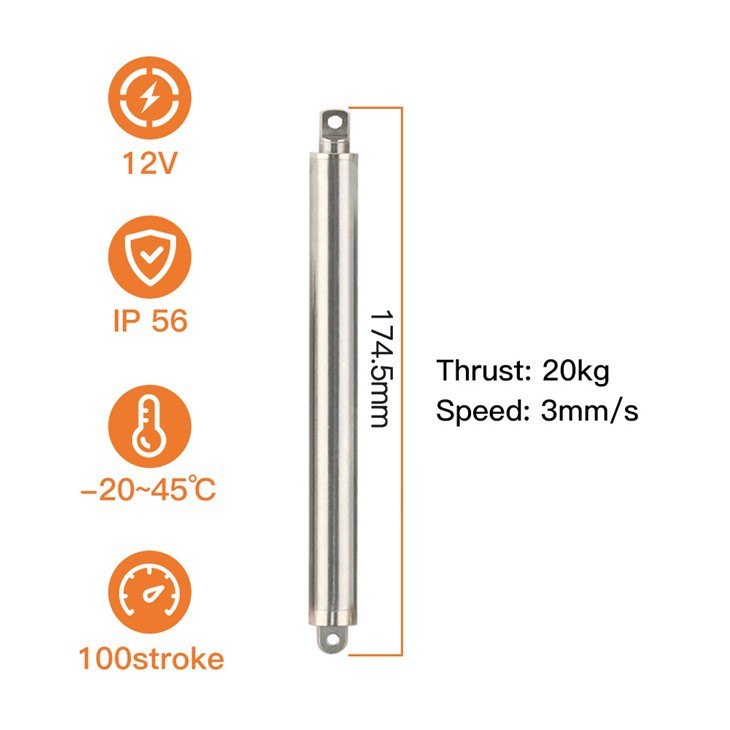
Now that you've checked the voltage and current draw, it's time to test the actuator's movement. Apply power to the actuator and observe its movement. The actuator should extend and retract smoothly and without any hesitation. If the actuator doesn't move or moves erratically, there may be a problem with the actuator or the power supply.
Step 6: Check the Stroke Length
The stroke length is the distance the actuator can extend and retract. To check the stroke length, measure the distance between the fully extended and fully retracted positions of the actuator. The stroke length should be within the specifications of the actuator. If the stroke length is too short or too long, there may be a problem with the actuator or the mounting.
Step 7: Test the Force Output
The force output is the amount of force the actuator can exert. To test the force output, you'll need a force gauge. Attach the force gauge to the end of the actuator and apply power to the actuator. The force gauge will measure the force exerted by the actuator. The force output should be within the specifications of the actuator. If the force output is too low or too high, there may be a problem with the actuator or the power supply.
Step 8: Check the Speed
The speed is the rate at which the actuator extends and retracts. To check the speed, measure the time it takes for the actuator to extend and retract fully. The speed should be within the specifications of the actuator. If the speed is too slow or too fast, there may be a problem with the actuator or the power supply.
Step 9: Test the Endurance
The endurance is the ability of the actuator to operate continuously without failure. To test the endurance, run the actuator through a series of cycles, extending and retracting it repeatedly. Monitor the actuator for any signs of wear or damage. The actuator should be able to operate continuously for a specified number of cycles without failure. If the actuator fails during the endurance test, there may be a problem with the actuator or the power supply.
Step 10: Document the Results
Once you've completed the testing process, it's important to document the results. Record the voltage, current draw, stroke length, force output, speed, and endurance of the actuator. This documentation will be useful for future reference and for troubleshooting any issues that may arise.
Conclusion
Testing a 12V linear actuator is a relatively simple process that can help you ensure its performance and reliability. By following the steps outlined in this blog, you can test your actuator and identify any potential issues or problems early on. If you have any questions or need further assistance, don't hesitate to contact us. We're here to help you find the right 12V linear actuator for your application.
If you're in the market for a high-quality 12V linear actuator, check out our 12V Actuator Motor and Linear Motor 12V. We also offer a wide range of Linear Actuator 24V for applications that require a higher voltage.
If you're interested in purchasing our products or have any questions about our 12V linear actuators, feel free to reach out. We're always happy to discuss your specific needs and provide you with the best solutions.






