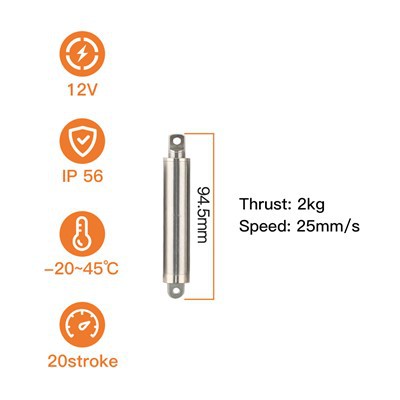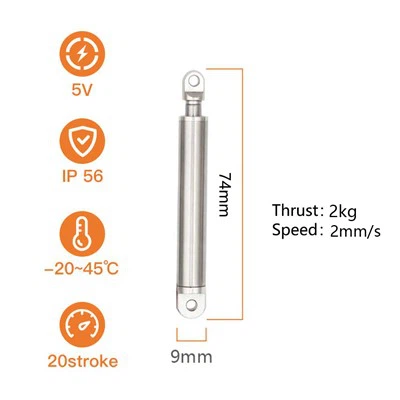
In recent years, the concept of smart homes has evolved from a futuristic vision to a tangible reality, revolutionizing the way we interact with our living spaces. At the heart of this transformation lies the integration of various advanced technologies, among which micro actuators have emerged as a key component. As a micro actuator supplier, I am excited to explore the potential of these tiny yet powerful devices in smart home applications.
Understanding Micro Actuators
Micro actuators are small - scale devices that convert various forms of energy into mechanical motion. They come in different types, including Micro Electric Actuator, Micro Linear Motor, and Linear Micro Actuators. These actuators are characterized by their compact size, high precision, and energy - efficient operation.
The energy sources for micro actuators can be electrical, thermal, pneumatic, or hydraulic. Electrical micro actuators, for example, use electrical signals to generate motion. They are widely used due to their ease of control and compatibility with electronic systems. Micro linear motors, on the other hand, provide linear motion directly, eliminating the need for complex mechanical linkages. Linear micro actuators are designed to produce linear displacement and are suitable for applications where precise linear movement is required.
Advantages of Using Micro Actuators in Smart Home Devices
1. Space - Saving Design
One of the most significant advantages of micro actuators is their small size. In smart home devices, space is often a premium. Micro actuators can be easily integrated into compact devices such as smart locks, window blinds, and small - scale robotic cleaners. For instance, a smart lock can use a micro actuator to control the locking and unlocking mechanism without taking up much space inside the lock housing. This allows for more streamlined and aesthetically pleasing designs of smart home devices.
2. High Precision
Smart home devices often require precise control over movement. Micro actuators can provide accurate positioning and movement control, which is crucial for functions like adjusting the angle of smart blinds or the position of a robotic arm in a home - based security system. Their high precision ensures that the devices operate smoothly and efficiently, enhancing the overall user experience.
3. Energy Efficiency
With the growing emphasis on energy conservation, energy - efficient components are highly desirable in smart home devices. Micro actuators consume relatively low amounts of energy compared to larger actuators. They can be designed to operate only when necessary, reducing standby power consumption. For example, a micro actuator in a smart window opener can be programmed to open and close the window at specific times or in response to environmental conditions, minimizing energy waste.
4. Quiet Operation
In a home environment, noise can be a nuisance. Micro actuators are generally designed to operate quietly, which is an important factor for smart home devices. Whether it is a smart curtain system or a hidden ventilation flap, the quiet operation of micro actuators ensures that they do not disrupt the peaceful atmosphere of the home.
Applications of Micro Actuators in Smart Home Devices
1. Smart Lighting Systems
Micro actuators can be used in smart lighting systems to control the direction and intensity of light. For example, a ceiling - mounted smart light fixture can use a micro actuator to adjust the angle of the light beam. This allows users to customize the lighting according to their needs, such as creating a spotlight effect for reading or a soft ambient light for relaxation. Additionally, micro actuators can be used to control the opening and closing of light diffusers, further enhancing the lighting control capabilities of the system.
2. Smart Window and Door Systems
Smart windows and doors are becoming increasingly popular in modern homes. Micro actuators can be used to automate the opening and closing of windows and doors. They can be integrated with sensors to respond to environmental factors such as temperature, humidity, and air quality. For example, if the indoor air quality is poor, the micro actuator in a window can open the window to allow fresh air to enter. In the case of smart doors, micro actuators can be used for automatic locking and unlocking, as well as for controlling the door's movement speed and position.
3. Home Automation Robots
Home automation robots, such as robotic vacuum cleaners and lawn mowers, rely on micro actuators for their movement and operation. Micro linear motors can be used to drive the wheels of the robot, providing precise control over its speed and direction. Actuators can also be used to control the movement of the robot's cleaning brushes or cutting blades. These tiny yet powerful devices enable the robots to perform their tasks efficiently and accurately.
4. Smart Furniture
Micro actuators are also finding applications in smart furniture. For example, a smart sofa can use micro actuators to adjust the position of the backrest and footrest. This allows users to customize the comfort level of the sofa with the touch of a button. Similarly, a smart bed can use micro actuators to adjust the height and angle of the mattress, providing better sleep support.
Challenges and Considerations
1. Cost
The cost of micro actuators can be a significant factor in their widespread adoption in smart home devices. Developing and manufacturing high - precision micro actuators requires advanced technology and specialized equipment, which can drive up the cost. However, as the demand for smart home devices continues to grow, economies of scale may help to reduce the cost of micro actuators in the future.
2. Durability
Smart home devices are expected to have a long lifespan. Micro actuators need to be designed to withstand repeated use and environmental factors such as temperature, humidity, and dust. Ensuring the durability of micro actuators is crucial to the long - term reliability of smart home devices.


3. Compatibility
Micro actuators need to be compatible with the existing electronic systems in smart home devices. This requires careful design and integration to ensure seamless communication between the actuator and other components of the device. Compatibility issues can lead to malfunctions and reduced performance of the smart home device.
Conclusion
Micro actuators have great potential in smart home devices. Their space - saving design, high precision, energy efficiency, and quiet operation make them an ideal choice for a wide range of applications. From smart lighting systems to home automation robots, micro actuators can enhance the functionality and user experience of smart home devices.
Although there are some challenges such as cost, durability, and compatibility, the benefits of using micro actuators in smart home devices far outweigh the drawbacks. As technology continues to advance, we can expect to see more innovative applications of micro actuators in the smart home market.
If you are interested in incorporating micro actuators into your smart home device projects, I invite you to contact us for procurement and further technical discussions. Our team of experts is ready to provide you with high - quality micro actuators and professional support.
References
- Smith, J. (2020). "Advances in Micro Actuator Technology for Home Automation". Journal of Smart Home Technology, 15(2), 34 - 45.
- Johnson, A. (2021). "Energy - Efficient Micro Actuators for Smart Home Devices". International Journal of Energy and Home Systems, 22(3), 56 - 67.
- Brown, C. (2019). "Design and Application of Micro Actuators in Smart Furniture". Furniture Design Review, 12(4), 78 - 89.