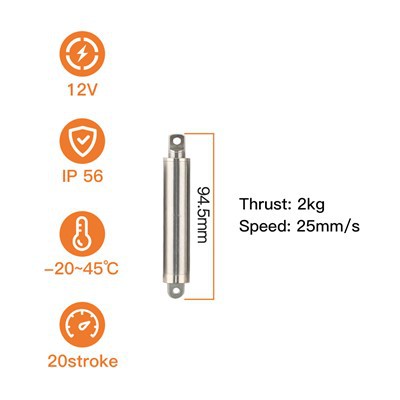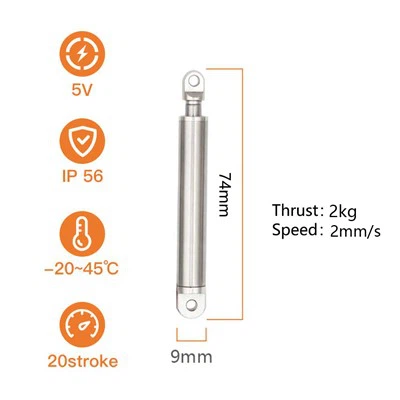
Hey there! As a supplier of Miniature Linear Motors, I often get asked a bunch of questions from customers. One question that pops up quite a bit is, "Can a Miniature Linear Motor be used in high - temperature environments?" Well, let's dig into this topic and find out.
First off, let's understand what a Miniature Linear Motor is. A Miniature Linear Motor is a compact device that can convert electrical energy directly into linear motion. It's super handy in a lot of applications where space is limited, like in medical devices, precision manufacturing, and even some consumer electronics. You can learn more about it on our Miniature Linear Motor page.
Now, when it comes to high - temperature environments, things get a bit tricky. High temperatures can have a significant impact on the performance and lifespan of a Miniature Linear Motor. Most of these motors are designed to operate within a certain temperature range. If the temperature goes beyond that range, several issues can arise.
One of the main problems is the effect on the motor's electrical components. The windings in the motor are made of conductive materials, usually copper. When exposed to high temperatures, the resistance of the copper increases. This means that for the same amount of current, the motor will generate more heat due to the increased resistance. And if the heat can't be dissipated properly, it can lead to a vicious cycle where the temperature keeps rising, potentially causing damage to the insulation of the windings. Once the insulation is damaged, it can result in short - circuits, which will completely ruin the motor.
Another aspect to consider is the impact on the magnetic materials used in the motor. Many Miniature Linear Motors use permanent magnets to generate the magnetic field required for operation. High temperatures can cause a phenomenon called demagnetization. When a magnet is heated above its Curie temperature, it loses its magnetic properties. This means that the motor will lose its ability to generate the necessary force to move, and its performance will degrade significantly.
The mechanical components of the motor are also affected by high temperatures. The lubricants used in the bearings and other moving parts can break down at high temperatures. This leads to increased friction, which not only reduces the efficiency of the motor but also causes more wear and tear on the components. Over time, this can lead to mechanical failures, such as bearing seizure or excessive play in the moving parts.
However, that doesn't mean that Miniature Linear Motors can't be used in high - temperature environments at all. There are ways to make them more suitable for such conditions.
One approach is to use high - temperature resistant materials. For the windings, instead of regular copper, we can use copper alloys that have better high - temperature performance. These alloys have a lower increase in resistance at high temperatures, which helps to reduce the heat generated. For the magnetic materials, there are high - temperature permanent magnets available that have a higher Curie temperature. These magnets can maintain their magnetic properties at higher temperatures, ensuring that the motor can still operate effectively.
We can also improve the cooling system of the motor. There are various cooling methods, such as air cooling and liquid cooling. Air cooling involves using fans or natural convection to remove heat from the motor. Liquid cooling, on the other hand, is more efficient. It uses a coolant, like water or a special coolant fluid, to absorb the heat from the motor and transfer it away. By implementing an effective cooling system, we can keep the temperature of the motor within its safe operating range even in high - temperature environments.
Let's take a look at some real - world applications where Miniature Linear Motors might need to operate in high - temperature environments. In the aerospace industry, there are certain components that are exposed to high temperatures during flight, such as in the engine compartment. Miniature Linear Motors can be used in actuators for controlling valves or other moving parts in these areas. Another example is in industrial furnaces. These furnaces can reach extremely high temperatures, and Miniature Linear Motors can be used for tasks like adjusting the position of heating elements or controlling the flow of materials.
If you're in the market for a Miniature Linear Motor for a high - temperature application, we have some great options. Our motors are designed with high - temperature resistant materials and advanced cooling features. We also offer 24 Volt Actuator and 24V Actuator models that are suitable for a wide range of applications, including those in high - temperature environments.


If you're interested in learning more about our Miniature Linear Motors or have specific requirements for your high - temperature application, don't hesitate to get in touch. We're here to help you find the right solution for your needs. Whether you're a small - scale manufacturer or a large - scale industrial company, we can provide you with the high - quality Miniature Linear Motors you need.
In conclusion, while Miniature Linear Motors face challenges in high - temperature environments, with the right design and materials, they can be made to work effectively. By understanding the effects of high temperatures on the motor's components and taking appropriate measures to mitigate them, we can ensure that these motors perform reliably in even the most demanding conditions.
References
- "Electric Motors and Drives: Fundamentals, Types and Applications" by Austin Hughes
- "Permanent Magnet Linear Motors: Technology and Applications" by various authors