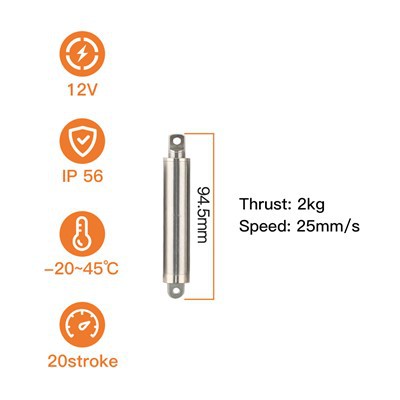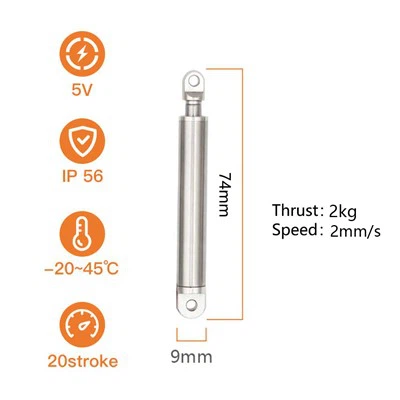
Hey there, fellow home theater enthusiasts! As a supplier of 12V DC linear actuators, I often get asked if these nifty little devices can be used in home theater seats. Well, you bet they can! In this blog post, I'm gonna dive deep into the world of 12V DC linear actuators and how they can transform your home theater experience.
First off, let's talk about what a 12V DC linear actuator is. Simply put, it's a device that converts electrical energy into linear motion. It's like a little muscle that can push or pull things in a straight line. These actuators are commonly used in a wide range of applications, from industrial machinery to automotive systems. But what about home theater seats?
One of the main advantages of using a 12V DC linear actuator in a home theater seat is its low voltage requirement. Most home theater systems operate on 12V DC power, which means you can easily integrate the actuator into your existing setup without the need for additional power supplies or complex wiring. This makes installation a breeze and reduces the risk of electrical hazards.


Another great thing about 12V DC linear actuators is their compact size and lightweight design. They're small enough to fit inside the frame of a home theater seat without taking up too much space, and they won't add a significant amount of weight to the seat. This is important because you want your seat to be comfortable and easy to move around, especially if you have limited space in your home theater.
In addition to their low voltage and compact size, 12V DC linear actuators offer precise and smooth motion control. You can adjust the speed and force of the actuator to suit your specific needs, allowing you to create a customized seating experience. Whether you want to recline your seat slowly and gently or adjust it quickly and forcefully, a 12V DC linear actuator can do the job.
Now, let's take a look at some of the specific ways you can use a 12V DC linear actuator in a home theater seat. One popular application is for seat reclining. By installing a linear actuator under the seat, you can easily adjust the angle of the seat back to your desired position. This is great for watching movies or TV shows, as it allows you to find the most comfortable viewing angle and reduces strain on your neck and back.
Another common use for 12V DC linear actuators in home theater seats is for leg rest adjustment. Many home theater seats come with built-in leg rests that can be extended or retracted using a manual lever or a motorized system. By using a linear actuator, you can automate the leg rest adjustment process and make it more convenient and comfortable. You can even program the actuator to adjust the leg rest to a specific position based on your preferences.
In addition to seat reclining and leg rest adjustment, 12V DC linear actuators can also be used for other functions in a home theater seat, such as headrest adjustment, lumbar support adjustment, and even seat massage. By integrating multiple actuators into your seat, you can create a fully customizable seating experience that meets your specific needs and preferences.
So, now that you know all about the benefits of using a 12V DC linear actuator in a home theater seat, you're probably wondering where you can find one. Well, look no further! As a supplier of 12V DC linear actuators, I offer a wide range of products to suit your needs. Whether you're looking for a 12 Volt Linear Actuator with Remote for easy control, an Actuator 24V for more power, or a Micro Linear Actuator 12V for a compact solution, I've got you covered.
If you're interested in learning more about our products or have any questions about using a 12V DC linear actuator in your home theater seat, please don't hesitate to contact me. I'm always happy to help and can provide you with all the information you need to make an informed decision. Let's work together to create the ultimate home theater experience!
References
- "Linear Actuators: A Comprehensive Guide." Motion Control Tips, 2023.
- "Home Theater Seating: Design and Comfort." Home Theater Magazine, 2023.