Precision Actuation in Confined Spaces: Technical Selection and Industry Application Guide for Micro Electric Linear Actuators
In automation design pursuing extreme integration, the "stability" and "safety" of micro-actuators are core variables in R&D decision-making. From invisible drives in smart electric luggage to precision adjustments in drone payloads, micro electric linear actuators are becoming key components in the global B2B supply chain due to their stable output in narrow spaces.
I. Structural System:
In the field of micro-transmission, material stability directly determines the durability of the final product. KABASI utilizes a high-specification metal combination at the core of its actuators:
Metal Transmission System: The entire series features 304 stainless steel rods combined with copper alloy transmission components. This pairing provides excellent rust resistance while leveraging the superior self-lubricating and wear-resistant properties of copper alloy, ensuring long-term smooth operation.
Dimensions:
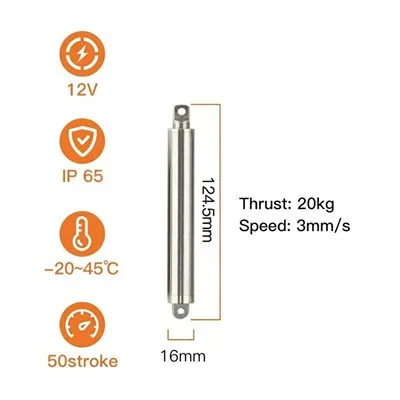
KT1610 Series: Outer Diameter 16mm, Inner Diameter 10mm. Supports custom strokes up to 150mm, balancing high load capacity with spatial adaptation.
KT0805 Series: OD 8mm, ID 5mm. Extremely slim, meeting the demand for long strokes (up to 150mm) in ultra-narrow spaces.
KT0905 Series: OD 9mm, ID 5mm. Custom stroke limit of 60mm.
II. Safety Protection: External Overcurrent Limit Protector
Distinguished from traditional built-in limit switch solutions, the KABASI micro series utilizes an external overcurrent limit protector, enhancing system fault tolerance through current monitoring logic:
Overcurrent/Overload Protection Principle: This solution monitors the motor current in real-time to achieve limiting. When the actuator reaches its endpoints (fully extended/retracted) or encounters unexpected resistance leading to a stall, the protector senses the current peak and immediately cuts off power for an automatic stop.
Full-Stroke Protection: This "non-contact" limiting solution not only resolves the issues of mechanical switches being fragile and sensitive to vibration in micro-spaces but also provides stall protection throughout the entire stroke, effectively preventing the motor coil from burning out due to abnormal heating.
III. Intermittent Duty Cycle & Environmental Resistance
Intermittent Duty Cycle: Due to the heat dissipation characteristics of DC brushed motors, after completing one full cycle (one extension + one retraction), a 15-second interval is mandatory for sufficient cooling. This product is designed for "on-demand" low-frequency tasks and is not recommended for high-frequency continuous industrial cycles.
Two-Point Control Logic: The system determines stop positions based on current thresholds and does not provide mm-level real-time position feedback. It is recommended for scenarios with clear "fully open/fully closed" logic.
Temperature Adaptability: Operating temperature range is -20°C to 45°C. This ensures that from freezing outdoor environments to confined high-temperature compartments, the physical properties of the metal components remain within stable operating ranges.
IP Protection Rating: The 1610 series features an IP65 rating (dust/spray-proof); the 0805/0905 series features an IP56 rating.
IV. Industry Scenarios
Leveraging linear transmission and spatial adaptation, KABASI micro-actuators have deeply penetrated nine core areas:
Medical/Biotech: Pulsed syringes, testing instruments, rehabilitation assistance equipment.
New Energy/Drones: Charging pile locking mechanisms, integrated cabinet ventilation, UAV landing gear retraction.
Smart Home: Electric luggage, automatic window/door openers, smart robotic vacuum lifts.
Industrial/Fire Safety: Automated ventilation systems, precision instrument material lifting, automotive auxiliary transmission parts.
V. B2B Procurement FAQ
Q1: Why does KABASI insist on using 304 stainless steel + copper alloy instead of lower-cost engineering plastics?
A: Under temperature fluctuations from -20°C to 45°C, plastic parts are prone to embrittlement, deformation, and significant changes in friction coefficients. The metal transmission combination ensures consistent mechanical strength across the entire temperature range, providing robust quality assurance and impact resistance for the brand's end product.
Q2: What are the practical benefits of an external overcurrent protector compared to built-in limit switches for my system integration?
A: Built-in switches in micro-spaces are difficult to repair and prone to false triggers caused by vibration. An external overcurrent protector not only achieves endpoint limiting but also provides "stall protection" (e.g., stopping automatically if luggage is jammed by an object), significantly reducing the risk of motor burnout and lowering post-maintenance costs.
Q3: If my application requires frequent movement, can the "15-second interval" be shortened?
A: The 15-second interval is a recommended value based on thermal balance. If the load is extremely light, the interval can be optimized accordingly. However, to protect the core lifespan of the motor, we advise reserving sufficient thermal redundancy in the logic design to avoid challenging the motor's thermal limits under non-essential conditions.
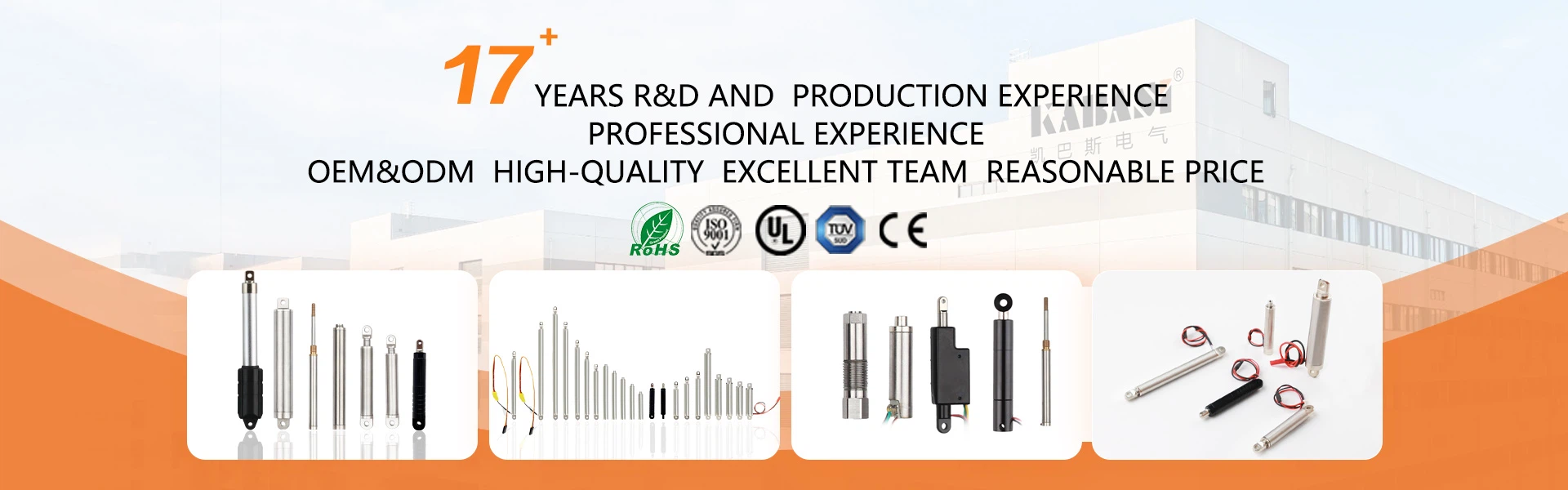
Technical Statement: The above content is provided by the KABASI Electric Actuator Division. As a national high-tech enterprise, we are committed to providing the most reliable linear drive solutions for confined spaces.