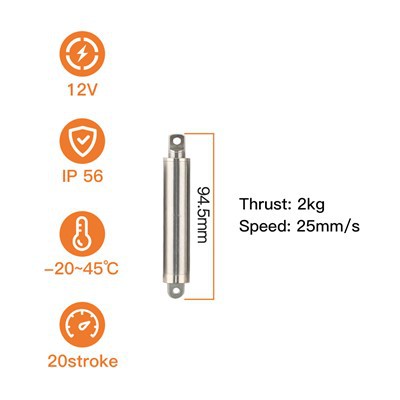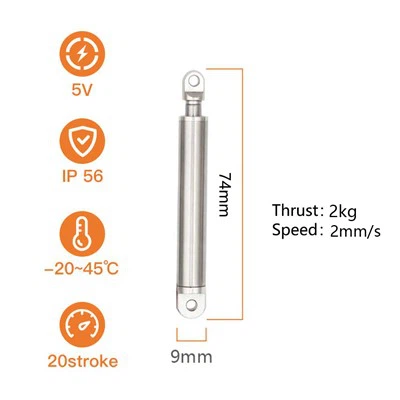
Hey there! As a supplier of 12V actuator motors, I often get asked about how these nifty little devices work. So, I thought I'd take the time to break it down for you in a way that's easy to understand.
First off, let's talk about what an actuator motor is. In simple terms, an actuator motor is a device that converts energy into motion. Specifically, a 12V actuator motor is designed to operate on a 12-volt power supply, which is commonly used in a variety of applications, from automotive to home automation.
The Basics of Electric Motors
At the heart of a 12V actuator motor is an electric motor. Electric motors work based on the principle of electromagnetism. When an electric current flows through a wire, it creates a magnetic field around the wire. By arranging multiple wires in a specific way and placing them in a magnetic field, we can create a force that causes the motor to rotate.
Most 12V actuator motors are DC (direct current) motors. DC motors have two main parts: the stator and the rotor. The stator is the stationary part of the motor, and it contains the permanent magnets or electromagnets that create the magnetic field. The rotor is the rotating part of the motor, and it consists of a coil of wire that is connected to the power supply.

When the power is turned on, an electric current flows through the coil in the rotor. This current creates a magnetic field around the coil, which interacts with the magnetic field of the stator. According to the laws of electromagnetism, the interaction between these two magnetic fields creates a force that causes the rotor to rotate.
How Actuators Add Functionality
Now, an actuator motor isn't just a regular electric motor. It's designed to perform a specific task, which is usually to move an object in a linear or rotary motion. To do this, actuators typically have some additional components that work in conjunction with the electric motor.
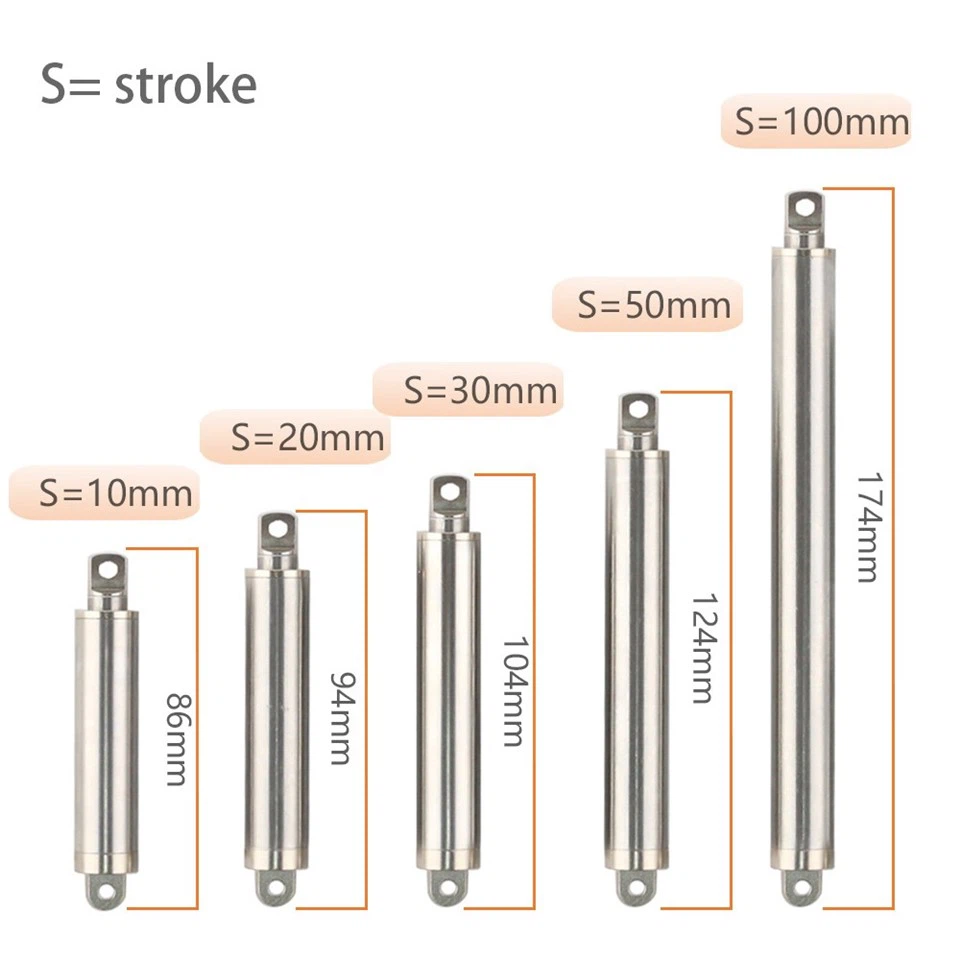
One common type of 12V actuator is the linear actuator. A Micro Linear Actuator 12V is a compact device that can move an object in a straight line. These actuators usually have a screw mechanism that converts the rotary motion of the motor into linear motion.
The screw is attached to the rotor of the motor, and as the motor rotates, the screw turns. A nut is threaded onto the screw, and as the screw turns, the nut moves along the length of the screw. This movement of the nut is what creates the linear motion of the actuator. The object that needs to be moved is attached to the nut, so as the nut moves, the object moves with it.
Another type of actuator is the rotary actuator. A rotary actuator is designed to rotate an object around an axis. These actuators are often used in applications where a precise angular movement is required, such as in robotics or industrial automation.
Control and Feedback
In addition to the basic mechanical components, many 12V actuator motors also have control and feedback systems. These systems allow the user to control the speed, direction, and position of the actuator.
For example, a control system might use a potentiometer or a encoder to measure the position of the actuator. The potentiometer is a variable resistor that changes its resistance based on the position of the actuator. The encoder is a device that generates electrical pulses as the actuator moves, and these pulses can be used to determine the position and speed of the actuator.
Based on the feedback from these sensors, the control system can adjust the power supplied to the motor to achieve the desired speed and position. This allows for precise control of the actuator, which is essential in many applications.
Applications of 12V Actuator Motors
12V actuator motors are used in a wide range of applications. In the automotive industry, they are used for things like power windows, seat adjustment, and door locks. In home automation, they can be used to control blinds, curtains, and garage doors. In industrial applications, they are used in robotics, conveyor systems, and automated machinery.
The 12V Actuator Motor is also popular in the hobbyist and DIY community. Many people use these motors in their projects, such as building remote-controlled cars, drones, and robotic arms.
Advantages of 12V Actuator Motors
There are several advantages to using 12V actuator motors. First of all, they are relatively low voltage, which makes them safe to use in many applications. They are also compact and lightweight, which makes them easy to install and integrate into different systems.
Another advantage is that they are energy-efficient. DC motors are generally more efficient than AC motors, especially at low voltages. This means that 12V actuator motors can operate for longer periods of time on a single battery charge, which is important in applications where power is limited.
Conclusion
So, there you have it! That's the working principle of a 12V actuator motor in a nutshell. Whether you're looking for a Micro Linear Actuator 12V, a 12V Actuator Motor, or a Linear Motor 12V, I hope this article has given you a better understanding of how these devices work.
If you're interested in purchasing 12V actuator motors for your project, I'd love to chat with you. We have a wide range of high-quality products that are suitable for various applications. Just reach out to us, and we'll be happy to help you find the right solution for your needs.
References
- "Electric Motors and Drives: Fundamentals, Types and Applications" by Austin Hughes and Bill Drury
- "Actuators: Fundamentals, Modeling, and Control" by Richard C. Dorf and Robert H. Bishop