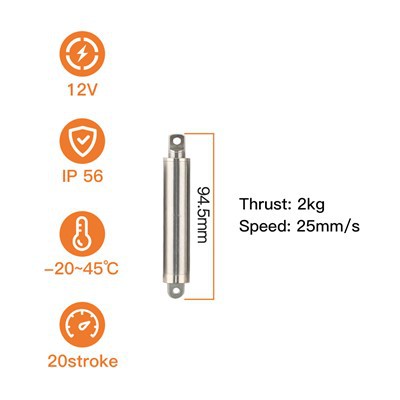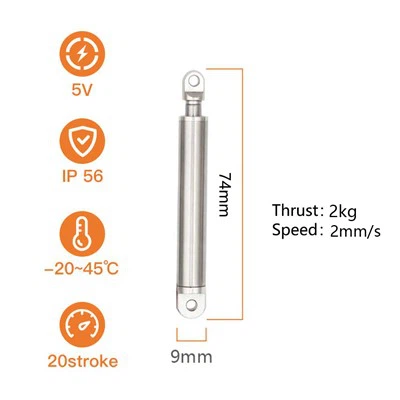
Hey there! As a supplier of 6V electric actuators, I often get asked about the current-to-torque ratio of these nifty devices. It's a crucial aspect, especially for those who are looking to use our Dc Brush Electric Actuator, Electric Cylinder 6V, or Fast Electric Actuator in their projects. So, let's dive right in and break it down.
First off, what exactly is the current-to-torque ratio? Well, in simple terms, it's a measure of how much torque an electric actuator can produce for a given amount of current. Torque is the rotational force that makes the actuator move, and current is the flow of electric charge that powers it. Understanding this ratio helps you figure out how efficiently the actuator converts electrical energy into mechanical work.
For a 6V electric actuator, the current-to-torque ratio isn't a fixed number. It can vary depending on several factors. One of the main factors is the design of the actuator itself. Different types of motors, gearboxes, and mechanical components can all affect how much torque is generated for a specific current.
Let's start with the motor. Most 6V electric actuators use DC motors. These motors come in different sizes and configurations, and each has its own characteristics. For example, a brushed DC motor has a relatively simple design. It uses brushes to transfer electrical current to the rotating part of the motor, called the armature. The torque produced by a brushed DC motor is roughly proportional to the current flowing through it. However, there are losses due to friction in the brushes and other mechanical parts, which can reduce the overall efficiency.
On the other hand, brushless DC motors are becoming more popular in electric actuators. They offer several advantages, such as higher efficiency, longer lifespan, and better control. In a brushless DC motor, the current is controlled electronically, which allows for more precise regulation of the torque. The current-to-torque relationship in a brushless DC motor is also more linear, meaning that as the current increases, the torque increases in a more predictable way.


The gearbox is another important component that affects the current-to-torque ratio. A gearbox is used to increase the torque output of the motor. By using a series of gears with different sizes, the gearbox can multiply the torque while reducing the speed of the actuator. However, the gearbox also introduces some losses due to friction between the gears. These losses can reduce the overall efficiency of the actuator and change the current-to-torque ratio.
The load on the actuator also plays a significant role. If the actuator is working against a heavy load, it will need to produce more torque. To do this, it will draw more current. However, if the load is too heavy, the actuator may stall, which means it can no longer move. In this case, the current will increase significantly, but the torque will not increase proportionally. This is because the motor reaches its maximum capacity and can't generate any more torque.
So, how do you calculate the current-to-torque ratio for a 6V electric actuator? Well, it's not always straightforward. In most cases, the manufacturer will provide some specifications that can give you an idea of the ratio. These specifications may include the rated torque, the rated current, and the maximum current. The rated torque is the amount of torque the actuator can produce continuously under normal operating conditions, while the rated current is the corresponding current.
You can calculate a rough estimate of the current-to-torque ratio by dividing the rated torque by the rated current. For example, if an actuator has a rated torque of 10 Nm and a rated current of 2 A, the current-to-torque ratio would be 5 Nm/A. However, keep in mind that this is just an estimate, and the actual ratio may vary depending on the factors we discussed earlier.
In real-world applications, it's often necessary to test the actuator under different conditions to get a more accurate understanding of the current-to-torque ratio. You can use a torque sensor and a current meter to measure the torque and current simultaneously while the actuator is operating. By collecting data at different loads and speeds, you can create a graph that shows the relationship between the current and the torque. This graph can be very useful for optimizing the performance of the actuator in your specific application.
Now, let's talk about why the current-to-torque ratio is important. For one thing, it helps you choose the right actuator for your project. If you need an actuator that can produce a high torque with a low current, you'll want to look for an actuator with a high current-to-torque ratio. This can save you energy and reduce the size of the power supply you need.
In addition, understanding the current-to-torque ratio can help you troubleshoot problems with the actuator. If you notice that the actuator is drawing too much current for the amount of torque it's producing, it could indicate a problem with the motor, the gearbox, or the load. By analyzing the current-to-torque ratio, you can identify the source of the problem and take appropriate action.
As a supplier of 6V electric actuators, we're committed to providing our customers with high-quality products and accurate information. We have a wide range of Dc Brush Electric Actuator, Electric Cylinder 6V, and Fast Electric Actuator options to choose from, each with its own unique characteristics and current-to-torque ratios.
If you're in the market for a 6V electric actuator and want to learn more about the current-to-torque ratio or any other aspect of our products, don't hesitate to get in touch. We're here to help you find the perfect actuator for your needs and answer any questions you may have. Whether you're working on a small DIY project or a large industrial application, we have the expertise and the products to support you.
In conclusion, the current-to-torque ratio of a 6V electric actuator is a complex but important concept. It's affected by many factors, including the motor design, the gearbox, and the load. By understanding this ratio, you can make more informed decisions when choosing an actuator and ensure that it performs optimally in your application. So, if you're interested in our 6V electric actuators, reach out to us, and let's start a conversation about how we can work together to meet your requirements.
References
- Electric Actuator Handbook
- DC Motor Fundamentals
- Gearbox Design and Application Guide