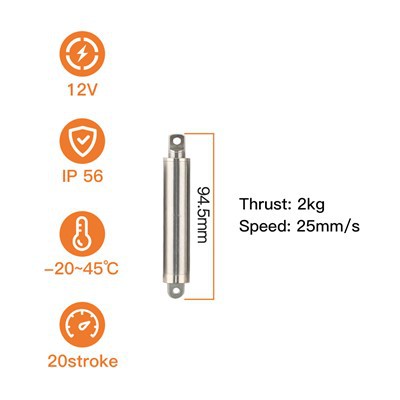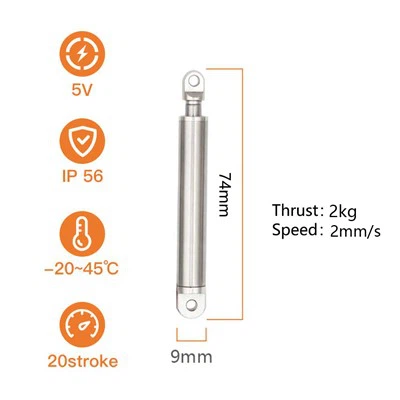
Hey there! As a supplier of Linear Motor 12V, I've seen my fair share of issues with over - current in these motors. Over - current can not only damage the motor but also reduce its lifespan, so it's super important to know how to protect your 12V linear motor from it. In this blog, I'll share some tips and tricks that I've picked up over the years.
Understanding Over - Current in 12V Linear Motors
Before we dive into the protection methods, let's first understand what over - current is. Simply put, over - current occurs when the current flowing through the motor exceeds its rated value. There are several reasons why this might happen.
One common cause is mechanical overload. If the motor is trying to move a load that's too heavy for it, it has to work harder, which in turn draws more current. For example, if you're using a 12 Volt Dc Actuator to lift a weight that's beyond its capacity, the motor will struggle, and the current will spike.
Another reason could be a short circuit in the motor's windings or the wiring connected to it. A short circuit provides a low - resistance path for the current, allowing a large amount of current to flow through the motor. This can be extremely dangerous as it can quickly overheat the motor and cause permanent damage.
Fuses and Circuit Breakers
One of the simplest and most effective ways to protect a 12V linear motor from over - current is by using fuses or circuit breakers. These are basically safety devices that interrupt the electrical circuit when the current exceeds a certain level.
Fuses are one - time use devices. They contain a thin wire that melts when the current is too high, breaking the circuit. You need to choose a fuse with a rating slightly higher than the normal operating current of your motor. For example, if your 12V Actuator Motor has a normal operating current of 2 amps, you might choose a 2.5 - amp fuse.
Circuit breakers, on the other hand, can be reset after they trip. They work on the principle of a bimetallic strip or an electromagnetic coil. When the current exceeds the rated value, the bimetallic strip bends or the electromagnetic coil activates, opening the circuit. Once the problem is fixed, you can simply reset the circuit breaker and resume normal operation.
Current - Limiting Resistors
Another option is to use current - limiting resistors. These resistors are connected in series with the motor and limit the amount of current flowing through it. The value of the resistor depends on the motor's characteristics and the desired current limit.
However, there's a drawback to using current - limiting resistors. They dissipate power in the form of heat, which can reduce the overall efficiency of the system. So, you need to make sure that the resistor can handle the power dissipation without overheating.
Over - Current Protection Circuits
For more sophisticated protection, you can use over - current protection circuits. These circuits monitor the current flowing through the motor and take action when the current exceeds a preset limit.
One common type of over - current protection circuit uses a current - sensing resistor and an operational amplifier. The current - sensing resistor converts the current into a voltage, which is then compared to a reference voltage by the operational amplifier. If the voltage exceeds the reference voltage, the amplifier triggers a switch to disconnect the motor from the power supply.
There are also integrated circuits available that are specifically designed for over - current protection. These ICs are easy to use and can provide reliable protection for your 12V linear motor.
Monitoring and Maintenance
Regular monitoring and maintenance are also crucial for protecting your motor from over - current. You should keep an eye on the motor's operating temperature, current draw, and performance. If you notice any unusual behavior, such as excessive heat or a sudden increase in current, it could be a sign of an over - current problem.
Make sure to inspect the motor and its wiring regularly for any signs of damage or wear. Check for loose connections, frayed wires, or any other issues that could cause a short circuit. If you find any problems, fix them immediately to prevent over - current from occurring.
Choosing the Right Motor
Last but not least, choosing the right motor for your application is essential. Make sure that the motor's rated power, torque, and current are suitable for the load you're going to put on it. If you're not sure which motor to choose, don't hesitate to reach out to us. As a Linear Motor 12V supplier, we have the expertise to help you select the right motor for your specific needs.
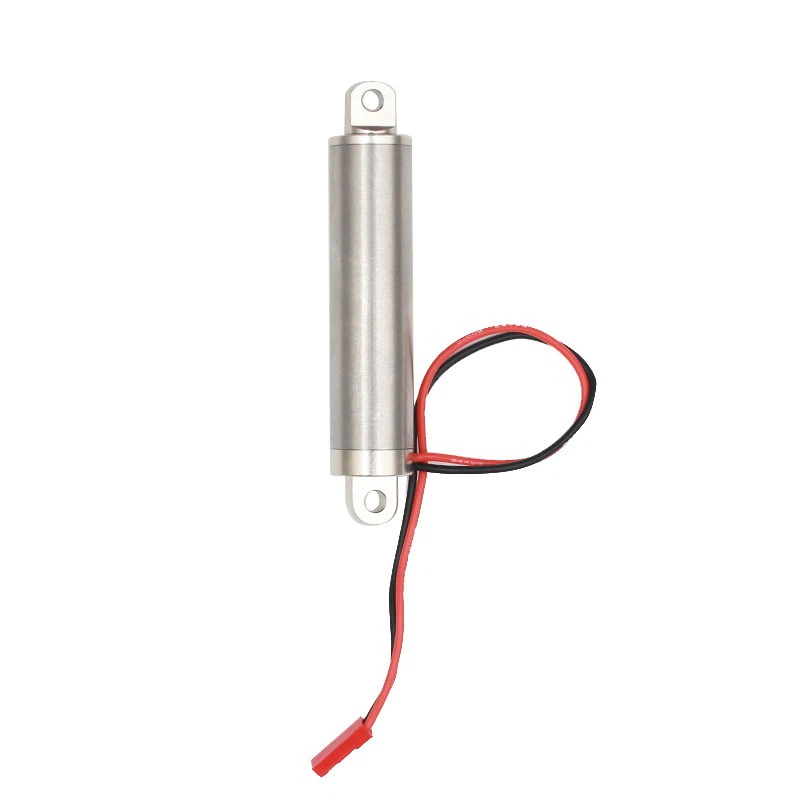

In conclusion, protecting a 12V linear motor from over - current is a multi - faceted task. By using fuses or circuit breakers, current - limiting resistors, over - current protection circuits, and by performing regular monitoring and maintenance, you can ensure that your motor operates safely and efficiently.
If you're interested in purchasing 12V linear motors or need more information about over - current protection, feel free to contact us. We're here to help you find the best solutions for your applications.
References
- "Electric Motors and Drives: Fundamentals, Types, and Applications" by Austin Hughes
- "Power Electronics: Converters, Applications, and Design" by Ned Mohan