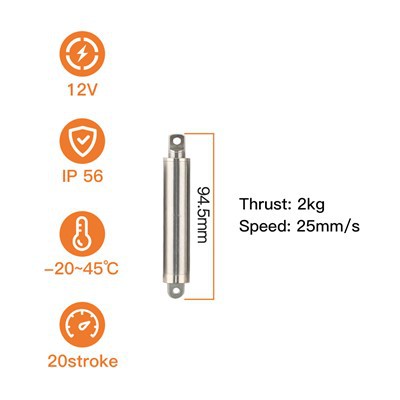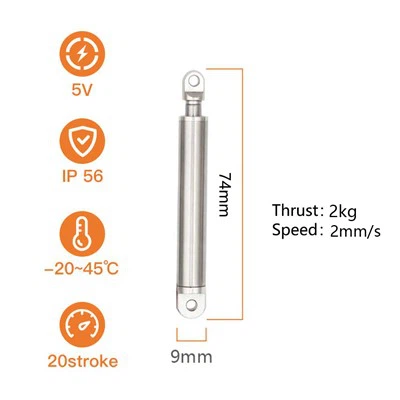
As a supplier of 12V actuator motors, I've encountered numerous inquiries regarding the simultaneous control of multiple such motors. This process, while complex, is achievable with the right approach and equipment. In this blog, I'll share some effective methods and considerations for controlling multiple 12V actuator motors at once.
Understanding 12V Actuator Motors
Before delving into the control methods, it's essential to understand what 12V actuator motors are. These motors are designed to convert electrical energy into mechanical motion, typically linear. They are widely used in various applications, such as automotive, industrial automation, and home appliances, due to their compact size, efficiency, and ease of use.
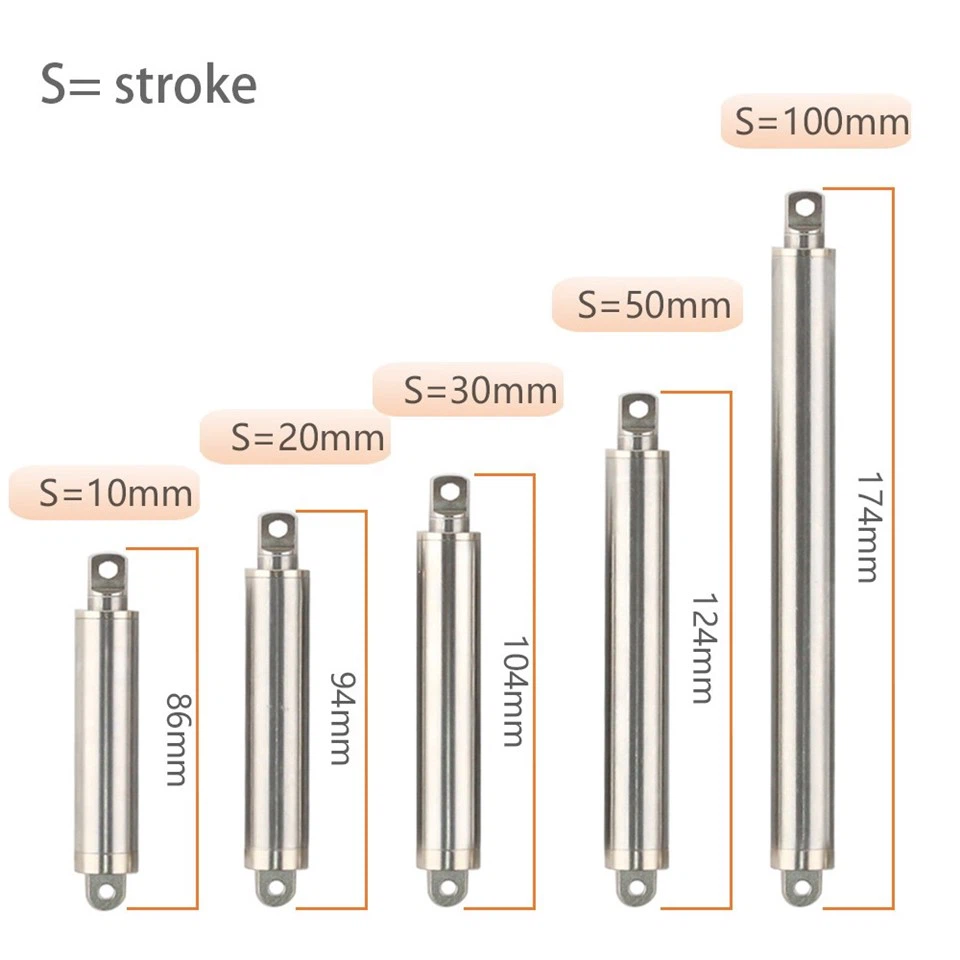
Our 12V Actuator Motor range offers high - performance and reliable solutions. These motors are engineered to provide precise linear movement, making them suitable for applications that require accurate positioning. Additionally, our Micro Linear Actuator 12V is ideal for space - constrained environments, offering the same functionality in a smaller package. And for those who need remote control capabilities, our 12 Volt Linear Actuator with Remote provides convenient operation from a distance.
Control Methods for Multiple 12V Actuator Motors
1. Using a Motor Driver Board
One of the most common ways to control multiple 12V actuator motors simultaneously is by using a motor driver board. A motor driver board acts as an interface between the control signal source (such as a microcontroller) and the motors. It can handle the high current requirements of the motors and provide the necessary voltage and current control.
There are various types of motor driver boards available in the market. Some can control two motors, while others can manage four or more. When choosing a motor driver board, consider the following factors:
- Motor Compatibility: Ensure that the motor driver board is compatible with 12V actuator motors in terms of voltage and current ratings.
- Control Interface: Look for a board with a suitable control interface, such as PWM (Pulse Width Modulation), which allows for precise speed and direction control of the motors.
- Number of Motors: Select a board that can accommodate the number of motors you need to control.
Once you have chosen a suitable motor driver board, connect the motors to the appropriate output pins of the board. Then, connect the control input pins of the board to the output pins of a microcontroller. The microcontroller can then send control signals to the motor driver board, which will in turn control the motors.
2. Using a Relay Module
Another option for controlling multiple 12V actuator motors is by using a relay module. A relay is an electrically - operated switch that can control a high - power circuit using a low - power signal. Relay modules typically consist of multiple relays, allowing you to control multiple motors independently.
To use a relay module to control 12V actuator motors, connect the motors to the output terminals of the relays. Then, connect the input terminals of the relays to a control signal source, such as a microcontroller or a switch. When the control signal is sent to the relay, the relay will close, allowing current to flow through the motor and activate it.
The advantage of using a relay module is its simplicity and ability to handle high - current loads. However, relays have a limited lifespan and may produce electrical noise when switching.
3. Using a Programmable Logic Controller (PLC)
For more complex applications that require advanced control algorithms and synchronization, a Programmable Logic Controller (PLC) can be used. A PLC is a specialized computer used for automation control in industrial environments. It can be programmed to control multiple 12V actuator motors based on various input signals and conditions.

To use a PLC to control 12V actuator motors, connect the motors to the output modules of the PLC. Then, program the PLC using a programming language such as ladder logic. The PLC can then monitor input signals from sensors and other devices and control the motors accordingly.
PLCs offer high reliability, flexibility, and the ability to handle complex control tasks. However, they are more expensive and require specialized programming knowledge.
Considerations for Simultaneous Motor Control
1. Power Supply
When controlling multiple 12V actuator motors simultaneously, it's crucial to ensure that the power supply can provide enough current to all the motors. Calculate the total current requirements of all the motors and choose a power supply with a sufficient current rating. Additionally, use appropriate wiring and connectors to minimize voltage drop and ensure stable power delivery.
2. Synchronization
If the motors need to move in a coordinated manner, synchronization is essential. This can be achieved by using a common control signal source or by programming the control system to ensure that the motors start and stop at the same time. For example, when using a microcontroller, you can use timers and interrupts to synchronize the control signals sent to the motors.
3. Overload Protection
To prevent damage to the motors and the control system, it's important to implement overload protection. This can be done by using fuses, circuit breakers, or current - sensing resistors. These devices can detect excessive current flow and automatically cut off the power to the motors.
Conclusion
Controlling multiple 12V actuator motors simultaneously is a challenging but achievable task. By choosing the right control method, considering power supply requirements, synchronization, and overload protection, you can ensure reliable and efficient operation of your motors.
As a supplier of high - quality 12V actuator motors, we are committed to providing our customers with the best products and technical support. If you have any questions about controlling multiple 12V actuator motors or need assistance in choosing the right products for your application, please feel free to contact us for procurement and further discussions.
References
- Dorf, R. C., & Bishop, R. H. (2016). Modern Control Systems. Pearson.
- Kuo, B. C. (2002). Automatic Control Systems. Prentice Hall.
- Madhavan, R. (2015). Practical Motor Control with Arduino. Elsevier.