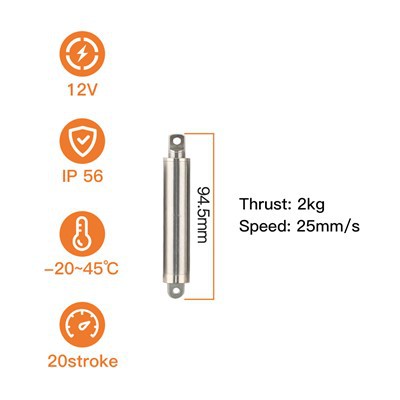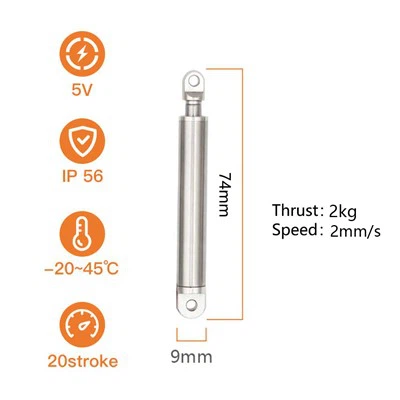
In the realm of industrial automation and precision motion control, linear motor actuators have emerged as a cornerstone technology. These devices are renowned for their ability to convert electrical energy into linear motion with high precision, speed, and efficiency. As a leading supplier of linear motor actuators, I've witnessed firsthand the critical role that load capacity plays in determining the performance of these remarkable devices. In this blog post, I'll delve into the intricate relationship between load capacity and the performance of linear motor actuators, exploring how different load scenarios can impact various aspects of their operation.
Understanding Load Capacity in Linear Motor Actuators
Before we explore the impact of load capacity on performance, it's essential to understand what load capacity means in the context of linear motor actuators. Load capacity refers to the maximum amount of force or weight that an actuator can safely and effectively move or support. This capacity is typically specified by the manufacturer and is a crucial factor to consider when selecting an actuator for a particular application.
Load capacity can be categorized into two main types: static load capacity and dynamic load capacity. Static load capacity refers to the maximum load that an actuator can support when it is stationary. This is important for applications where the actuator needs to hold a load in a fixed position, such as in a clamping or holding mechanism. Dynamic load capacity, on the other hand, refers to the maximum load that an actuator can move while in motion. This is crucial for applications where the actuator needs to accelerate, decelerate, or maintain a constant speed while carrying a load, such as in a conveyor system or a robotic arm.
Impact on Speed and Acceleration
One of the most significant ways in which load capacity affects the performance of a linear motor actuator is through its impact on speed and acceleration. As the load on an actuator increases, the motor has to work harder to move the load, which can result in a decrease in speed and acceleration. This is because the motor has to generate more force to overcome the inertia of the load and to maintain the desired motion.
For example, let's consider a Fast Linear Actuator that is designed to operate at a maximum speed of 1000 mm/s with a light load. If we increase the load on the actuator, the motor will have to generate more torque to move the load, which will result in a decrease in speed. In some cases, the actuator may not be able to reach its maximum speed at all, or it may take longer to accelerate to the desired speed.
Similarly, acceleration is also affected by load capacity. As the load increases, the motor has to generate more force to accelerate the load, which can result in a decrease in acceleration. This can be a significant issue in applications where rapid acceleration and deceleration are required, such as in high-speed pick-and-place operations.
Impact on Precision and Repeatability
Another important aspect of linear motor actuator performance is precision and repeatability. Precision refers to the ability of the actuator to move to a specific position accurately, while repeatability refers to the ability of the actuator to return to the same position repeatedly. Load capacity can have a significant impact on both precision and repeatability.
As the load on an actuator increases, the motor has to generate more force to move the load, which can result in increased wear and tear on the actuator's components. This can lead to a decrease in precision and repeatability over time. Additionally, the increased load can cause the actuator to deflect or deform, which can also affect its ability to move to a specific position accurately.
For example, let's consider a 6 Volt Linear Actuator with Remoteactuators that is used in a precision positioning application. If the load on the actuator exceeds its rated capacity, the actuator may not be able to move to the desired position accurately, or it may experience significant variations in position from one cycle to the next. This can be a critical issue in applications where high precision and repeatability are required, such as in semiconductor manufacturing or medical device assembly.
Impact on Power Consumption
Load capacity also has a direct impact on the power consumption of a linear motor actuator. As the load on an actuator increases, the motor has to generate more force to move the load, which requires more electrical energy. This can result in an increase in power consumption, which can have a significant impact on the operating costs of the system.
In addition to the increased power consumption, the increased load can also cause the motor to overheat, which can reduce its lifespan and reliability. This is because the motor has to work harder to generate the additional force, which can cause it to dissipate more heat. To prevent overheating, it may be necessary to use a larger motor or to implement additional cooling measures, which can increase the cost and complexity of the system.
Impact on Lifespan and Reliability
Finally, load capacity can have a significant impact on the lifespan and reliability of a linear motor actuator. As the load on an actuator increases, the motor and other components have to work harder to move the load, which can result in increased wear and tear. This can lead to a decrease in the lifespan of the actuator and an increase in the likelihood of failure.
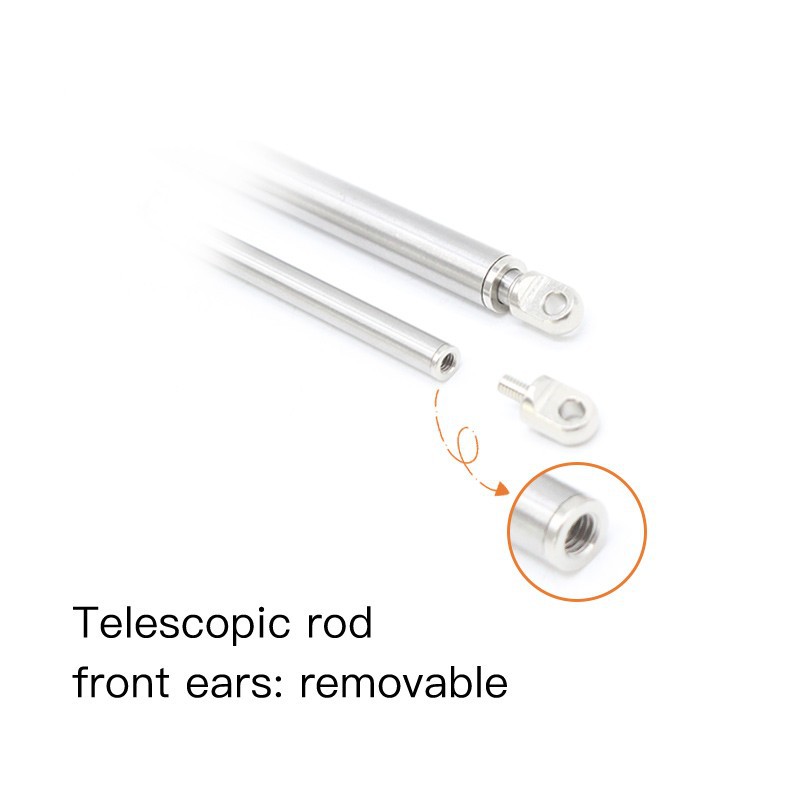
For example, let's consider a Stainless Steel Linear Actuator that is used in a harsh industrial environment. If the load on the actuator exceeds its rated capacity, the actuator may experience premature wear and tear on its components, such as the bearings, seals, and motor windings. This can lead to a decrease in the lifespan of the actuator and an increase in the frequency of maintenance and repair.

Selecting the Right Actuator for Your Application
Given the significant impact that load capacity can have on the performance of a linear motor actuator, it's crucial to select the right actuator for your application. When selecting an actuator, it's important to consider the following factors:
- Load requirements: Determine the maximum static and dynamic loads that the actuator will need to support. Make sure to select an actuator with a load capacity that exceeds the maximum expected load to ensure reliable operation.
- Speed and acceleration requirements: Consider the required speed and acceleration of the actuator. If rapid acceleration and deceleration are required, make sure to select an actuator with a high dynamic load capacity.
- Precision and repeatability requirements: If high precision and repeatability are required, make sure to select an actuator with a high accuracy rating and a low backlash.
- Power consumption requirements: Consider the power consumption of the actuator and make sure to select an actuator that is energy-efficient. This can help to reduce the operating costs of the system.
- Environmental requirements: Consider the environmental conditions in which the actuator will be operating, such as temperature, humidity, and dust. Make sure to select an actuator that is suitable for the environment to ensure reliable operation.
Conclusion
In conclusion, load capacity is a critical factor that affects the performance of a linear motor actuator. As the load on an actuator increases, it can have a significant impact on speed, acceleration, precision, repeatability, power consumption, lifespan, and reliability. By understanding the relationship between load capacity and performance, you can select the right actuator for your application and ensure reliable and efficient operation.
If you're in the market for a linear motor actuator and need assistance in selecting the right product for your application, please don't hesitate to contact us. Our team of experts is available to provide you with personalized advice and support to help you find the perfect solution for your needs.
References
- "Linear Actuators: Principles, Design, and Applications" by John J. Catania
- "Motion Control Handbook" by Peter Nachtwey
- "Industrial Automation: A Comprehensive Guide" by Thomas R. Kurfess