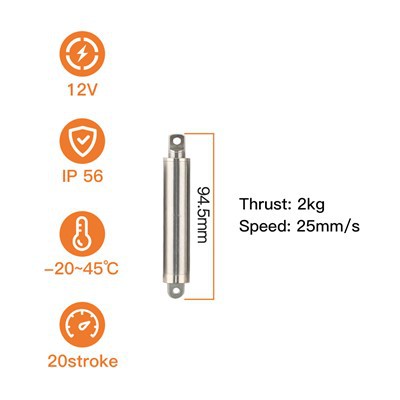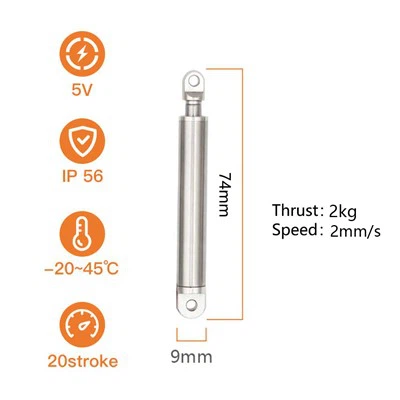
Hey there! As a supplier of Miniature Linear Motors, I've seen firsthand how load capacity can have a huge impact on these little powerhouses. In this blog, I'm gonna break down how load capacity affects Miniature Linear Motors, and why it's so important to get it right.


Understanding Miniature Linear Motors
First off, let's quickly go over what Miniature Linear Motors are. These are compact motors that convert electrical energy into linear motion. They're used in a wide range of applications, from medical devices and robotics to aerospace and automotive systems. What makes them so great is their high precision, fast response times, and small size.
The Basics of Load Capacity
Load capacity refers to the maximum amount of weight or force that a Miniature Linear Motor can handle while still operating effectively. It's a crucial factor because if you exceed the load capacity, the motor can experience all sorts of problems, like reduced performance, overheating, and even premature failure.
How Load Capacity Affects Performance
Speed and Acceleration
One of the most noticeable effects of load capacity on a Miniature Linear Motor is its impact on speed and acceleration. When you increase the load on the motor, it has to work harder to move that extra weight. This means it can't reach its maximum speed as quickly, and its acceleration is also reduced.
For example, let's say you have a Miniature Linear Motor that's designed to move a light load at a high speed. If you suddenly attach a much heavier load to it, the motor will struggle to maintain its normal speed. It might start to slow down, and it could take longer to reach its destination. This can be a big problem in applications where speed and precision are critical, like in semiconductor manufacturing or high-speed pick-and-place robots.
Precision and Accuracy
Load capacity also plays a key role in the precision and accuracy of a Miniature Linear Motor. When a motor is operating within its load capacity, it can move with a high degree of accuracy. But when the load is too heavy, the motor can experience vibrations and mechanical stress, which can cause it to deviate from its intended path.
In applications like medical imaging or optical inspection, where even the slightest deviation can lead to inaccurate results, this loss of precision can be a deal-breaker. So, it's essential to choose a Miniature Linear Motor with a load capacity that matches the requirements of your application.
Heat Generation
Another important factor to consider is heat generation. When a Miniature Linear Motor is under a heavy load, it has to consume more power to move the load. This increased power consumption leads to more heat being generated within the motor.
Excessive heat can have a negative impact on the motor's performance and lifespan. It can cause the motor's components to expand, which can lead to mechanical misalignments and increased wear and tear. Over time, this can reduce the motor's efficiency and reliability. To prevent this, it's important to ensure that the motor has adequate cooling and that it's not operating beyond its load capacity.
Choosing the Right Load Capacity
So, how do you choose the right load capacity for your Miniature Linear Motor? Well, it all starts with understanding the requirements of your application. Here are some steps to help you make the right decision:
Determine the Load
The first step is to determine the weight or force that the motor will need to move. This includes not only the weight of the object being moved but also any additional forces, like friction or inertia. Make sure to account for any dynamic loads that might occur during operation, such as sudden starts or stops.
Consider the Operating Conditions
Next, consider the operating conditions of your application. Factors like temperature, humidity, and vibration can all affect the performance of the motor. If the motor will be operating in a harsh environment, you might need to choose a motor with a higher load capacity to ensure its reliability.
Look at the Motor's Specifications
Once you have a clear understanding of the load and operating conditions, it's time to look at the motor's specifications. Most Miniature Linear Motors come with a rated load capacity, which is the maximum load that the motor can handle under normal operating conditions. Make sure to choose a motor with a load capacity that is slightly higher than your calculated load to provide a safety margin.
Our Product Offerings
At our company, we offer a wide range of Miniature Linear Motors with different load capacities to meet the needs of various applications. Whether you're looking for a motor to power a small medical device or a high-performance industrial robot, we've got you covered.
We also offer 12V Actuator Linear, 24 Volt Actuator, and 12V Dc Linear Actuator, which are all designed to provide reliable and efficient linear motion. Our actuators are available in different sizes and load capacities, so you can choose the one that's right for your application.
Conclusion
In conclusion, load capacity is a critical factor that can have a significant impact on the performance and reliability of a Miniature Linear Motor. By understanding how load capacity affects speed, precision, and heat generation, you can choose the right motor for your application and ensure its optimal performance.
If you're in the market for a Miniature Linear Motor or any of our other products, we'd love to hear from you. Feel free to reach out to us to discuss your specific requirements and get a quote. We're here to help you find the perfect solution for your needs.
References
- Some basic textbooks on electric motors and their applications.
- Industry reports on the use of Miniature Linear Motors in different sectors.