The exploration of underwater environments has always been a fascinating and challenging endeavor for humanity. From scientific research to industrial applications, the demand for advanced technologies that can operate effectively underwater is on the rise. In recent years, micro actuators have emerged as a promising technology with the potential to revolutionize underwater applications. As a leading micro actuator supplier, I am excited to delve into the question: Can micro actuators be used in underwater applications?
Understanding Micro Actuators
Before we explore their potential in underwater settings, let's first understand what micro actuators are. Micro actuators are devices that can convert various forms of energy into mechanical motion on a small scale. They come in different types, including piezoelectric, electromagnetic, and thermal actuators, each with its own unique characteristics and advantages. These tiny yet powerful devices have found applications in a wide range of fields, such as robotics, medical devices, and aerospace.
Advantages of Micro Actuators for Underwater Applications
Micro actuators offer several advantages that make them well - suited for underwater applications:
Size and Flexibility
One of the most significant advantages of micro actuators is their small size. In underwater environments, space is often limited, especially in applications such as underwater robots and sensors. Micro actuators can be easily integrated into compact devices without adding excessive weight or bulk. Their small size also allows for greater flexibility in design, enabling the creation of more complex and precise underwater systems.
High Precision
Underwater operations often require high levels of precision, whether it's for sampling, mapping, or manipulating objects. Micro actuators can provide accurate and repeatable motion control, making them ideal for tasks that demand fine - tuned movements. For example, in underwater microscopy, micro actuators can be used to adjust the position of the lens with sub - micron precision, allowing for detailed imaging of underwater specimens.
Low Power Consumption
Power is a precious resource in underwater applications, as it is often difficult to recharge or replace batteries. Micro actuators typically consume less power compared to larger actuators, which is a crucial factor for long - term underwater missions. Their energy - efficient operation can extend the battery life of underwater devices, reducing the need for frequent maintenance and replacement.
Specific Underwater Applications of Micro Actuators
Underwater Robotics
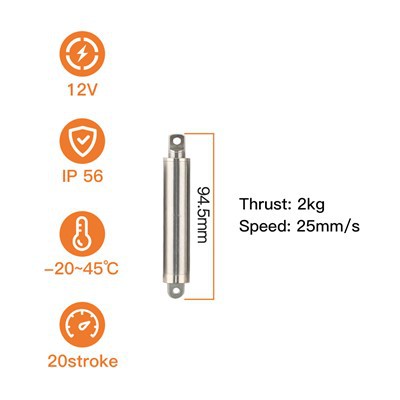
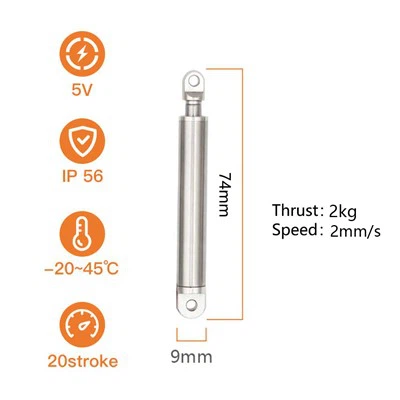
Underwater robots, also known as autonomous underwater vehicles (AUVs) and remotely operated vehicles (ROVs), play a vital role in underwater exploration and research. Micro actuators can be used in various parts of these robots, such as the joints of robotic arms, the fins for propulsion control, and the sensors for environmental monitoring. For instance, Micro Linear Actuator 6V can be used to control the movement of a robotic arm, allowing it to pick up and manipulate small objects on the ocean floor.
Underwater Sensors
Underwater sensors are essential for collecting data on water quality, temperature, pressure, and other environmental parameters. Micro actuators can be integrated into these sensors to improve their performance. For example, in a water sampling sensor, a micro actuator can be used to open and close the sampling valve precisely, ensuring accurate and representative water samples. Additionally, micro actuators can be used to adjust the position of the sensor head, optimizing its exposure to the target parameter.
Underwater Communication Systems
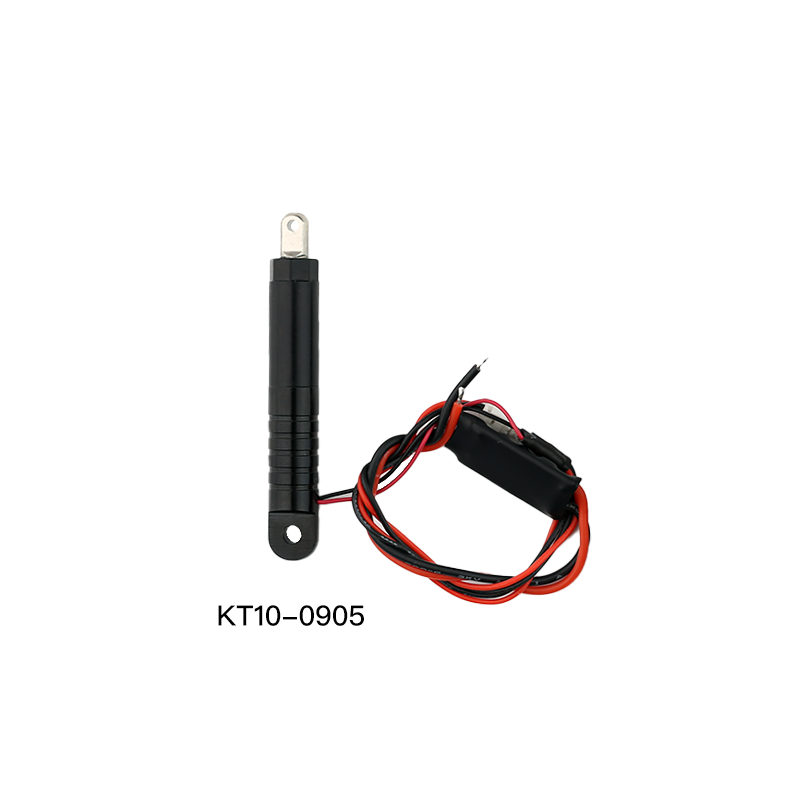
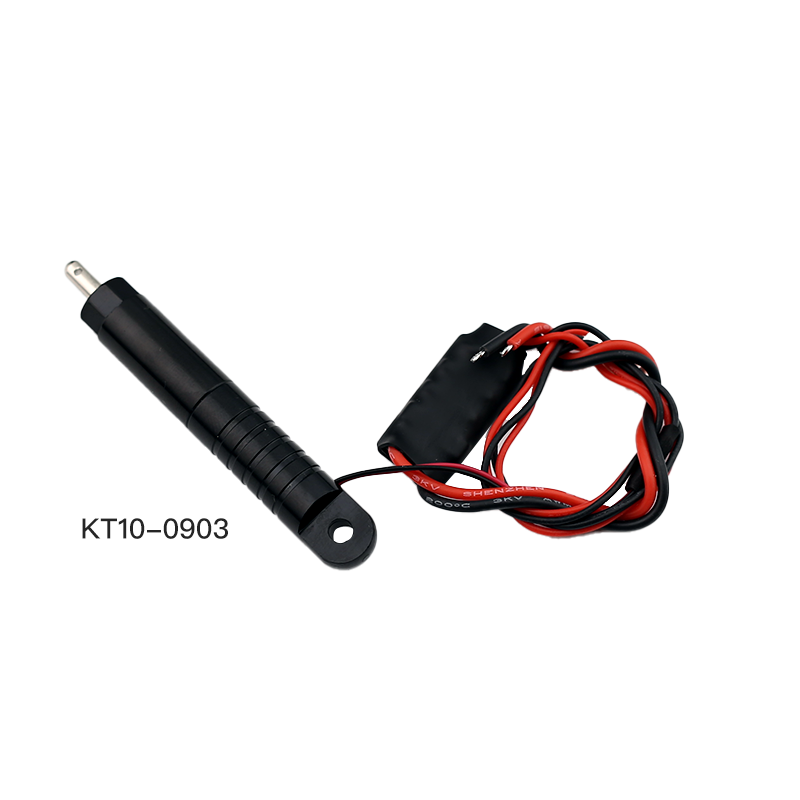
Underwater communication is a challenging task due to the high attenuation of electromagnetic waves in water. Acoustic communication is the most commonly used method, but it also has limitations. Micro actuators can be used to improve the performance of underwater acoustic transducers. They can be used to adjust the shape and position of the transducer elements, enhancing the directivity and efficiency of the acoustic signals. Linear Micro Actuators can provide the necessary precision for these adjustments.
Challenges and Solutions in Using Micro Actuators Underwater
Corrosion and Sealing
One of the main challenges of using micro actuators underwater is the corrosive nature of seawater. The metal components of micro actuators can be easily corroded, leading to reduced performance and reliability. To address this issue, special materials and coatings can be used. For example, stainless steel and titanium are corrosion - resistant materials that can be used for the housing and moving parts of micro actuators. Additionally, proper sealing techniques, such as using O - rings and epoxy resins, can prevent water from entering the actuator and causing damage.
Pressure Resistance
Underwater environments are characterized by high pressure, especially at greater depths. Micro actuators need to be designed to withstand these high pressures without losing their functionality. This requires careful selection of materials and structural design. For instance, the housing of the micro actuator can be designed to have a strong and rigid structure to resist deformation under pressure. Some micro actuators are also filled with a pressure - compensating fluid to balance the external pressure.
Compatibility with Underwater Fluids
Micro actuators may come into contact with various underwater fluids, such as seawater, oil, and hydraulic fluids. These fluids can have different viscosities, chemical compositions, and temperatures, which can affect the performance of the actuator. It is important to ensure that the materials used in the micro actuator are compatible with the underwater fluids. For example, the lubricants used in the actuator should be resistant to water and chemicals, and the seals should not swell or degrade when exposed to the fluids.
Our Micro Actuator Solutions for Underwater Applications
As a micro actuator supplier, we offer a wide range of products that are suitable for underwater applications. Our Micro Linear Motor is designed with high - precision components and advanced control algorithms, providing accurate and stable motion control. It is also made of corrosion - resistant materials and can be customized to meet the specific requirements of underwater environments.
In addition, our team of experts can provide technical support and consultation services to help customers select the most appropriate micro actuators for their underwater projects. We can assist with the design and integration of the actuators into the overall system, ensuring optimal performance and reliability.
Conclusion
In conclusion, micro actuators have great potential for use in underwater applications. Their small size, high precision, and low power consumption make them well - suited for the unique challenges of underwater environments. Although there are some challenges to overcome, such as corrosion, pressure resistance, and fluid compatibility, with the right design and materials, these challenges can be effectively addressed.
If you are involved in underwater research, robotics, or any other underwater applications and are interested in using micro actuators, we invite you to contact us for more information. Our team is ready to work with you to find the best micro actuator solutions for your specific needs. Let's explore the underwater world together with the power of micro actuators!
References
- "Underwater Robotics: Technology and Applications" by X. Yun and J. B. Curcio
- "Microactuators: Principles, Design, and Fabrication" by K. Najafi and J. G. Korvink
- "Underwater Acoustic Communication" by J. Proakis and M. Salehi