Linear Actuator 12V
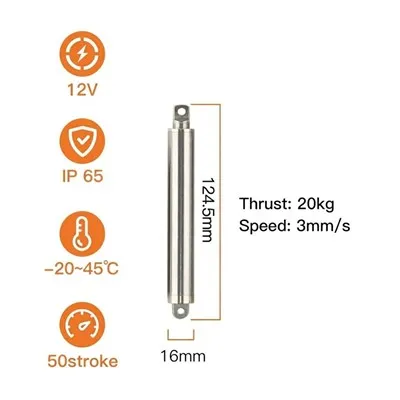
A linear actuator 12V is a device that converts the rotational motion of an electric motor into linear motion, so named because it operates on a 12V direct current (DC) power supply. Below is a detailed introduction to it:
Working Principle
A 12V linear actuator uses a 12V power supply to drive the motor shaft. The rotational motion of the motor is then converted into linear reciprocating motion via gears or a lead screw, thereby achieving linear pushing or pulling actions.
Features
Low Voltage: Designed with a low 12V voltage, it is compatible with 12V batteries and power supplies. It is suitable for mobile devices and scenarios with low power requirements, and offers high safety.
High Cost-Effectiveness: It is relatively affordable while featuring versatility and reliability, providing excellent cost performance in industries such as automotive, home automation, medical care, and industrial automation.
Precise Control: It enables accurate motion control and can meet application scenarios that require high positional accuracy, such as the positioning of medical equipment and the material handling in industrial automation.
Easy Integration: With a compact size, light weight, and a streamlined structure, it is easy to install and integrate into various systems, and can be flexibly configured according to different application needs.
Application Fields
Automotive Electronics: Commonly used in functions such as power windows, sunroofs, and seat adjustment, providing passengers with a more comfortable and convenient riding experience.
Home Automation: Plays a role in height-adjustable desks, beds, as well as electric curtains and door/window openers, realizing the intelligent control of household equipment.
Medical Equipment: An essential component of hospital beds, patient lifts, and rehabilitation equipment. It can adjust the height of the bed, the position of the backrest, and the leg support, facilitating use by patients and operation by nursing staff.
Industrial Automation: Applied in the precise material handling of conveyor systems, the fluid regulation of valve control, and the lifting, tilting, pushing, and pulling actions of various material handling equipment.