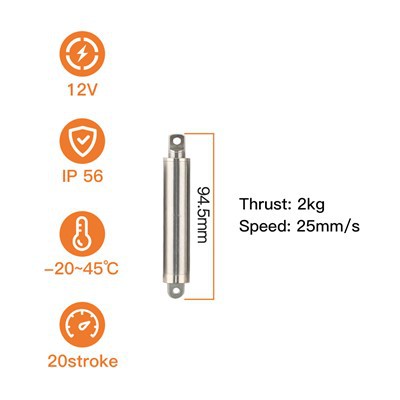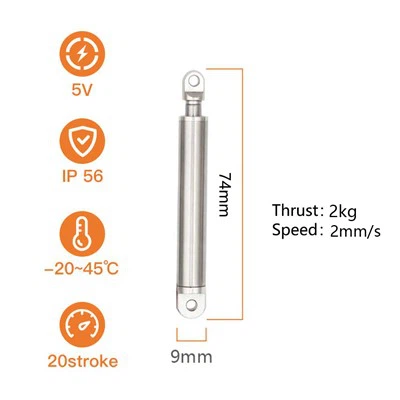
When it comes to electric actuators, one of the most common questions that arises is about the differences between 6V and 12V models. As a supplier of Electric Actuator 6V, I've had the opportunity to work closely with both types and understand their unique characteristics. In this blog post, I'll delve into the key differences between 6V and 12V electric actuators, helping you make an informed decision for your specific application.
Voltage and Power
The most obvious difference between a 6V and 12V electric actuator is the voltage they operate on. Voltage is a measure of the electrical potential difference between two points in a circuit, and it plays a crucial role in determining the actuator's power output. A 12V actuator operates at twice the voltage of a 6V actuator, which means it can deliver more power.
Power in an electric actuator is directly related to the force it can generate and the speed at which it can move. Generally, a 12V actuator can produce more force and move faster than a 6V actuator. This makes 12V actuators suitable for applications that require high force or rapid movement, such as industrial machinery, automotive systems, and heavy-duty equipment.
On the other hand, 6V actuators are designed for applications where lower power is sufficient. They are often used in small-scale projects, consumer electronics, and applications where energy efficiency is a priority. For example, a 6V actuator might be used in a robotic arm for a hobbyist project or in a small home automation device.


Current and Energy Consumption
Another important aspect to consider is the current draw and energy consumption of the actuators. According to Ohm's Law (V = IR, where V is voltage, I is current, and R is resistance), for a given load (resistance), a lower voltage actuator will draw more current to achieve the same power output as a higher voltage actuator.
A 6V actuator typically draws more current than a 12V actuator to produce the same amount of force. This means that 6V actuators may consume more energy over time, especially if they are used in applications that require continuous operation. However, in some cases, the lower voltage can also be an advantage. For example, in battery-powered applications, a 6V actuator may be more suitable because it can operate on a lower voltage battery, which can be smaller and lighter.
Size and Weight
The voltage of an electric actuator can also affect its size and weight. Generally, 12V actuators are larger and heavier than 6V actuators. This is because they need to be designed to handle the higher voltage and power, which often requires larger components and more robust construction.
The larger size and weight of 12V actuators can be a disadvantage in applications where space and weight are limited. In contrast, 6V actuators are often more compact and lightweight, making them ideal for applications where size and weight are critical factors, such as in drones, wearable devices, and portable equipment.
Safety
Safety is always a concern when working with electrical equipment. Lower voltage actuators, such as 6V models, are generally considered safer than higher voltage actuators. The lower voltage reduces the risk of electrical shock and makes the actuator easier to handle and install.
In addition, 6V actuators are less likely to cause damage to other components in a system due to electrical interference or overvoltage. This makes them a good choice for applications where safety and reliability are paramount, such as in medical devices and home automation systems.
Cost
Cost is another factor to consider when choosing between a 6V and 12V electric actuator. Generally, 6V actuators are less expensive than 12V actuators. This is because they require less complex components and less sophisticated manufacturing processes.
However, the cost of an actuator is not just determined by its voltage. Other factors, such as the brand, quality, and features of the actuator, also play a role in its price. When comparing the cost of 6V and 12V actuators, it's important to consider the overall value and performance of the actuator for your specific application.
Applications
The choice between a 6V and 12V electric actuator ultimately depends on the specific application requirements. Here are some examples of applications where each type of actuator might be preferred:
6V Actuator Applications
- Hobbyist Projects: 6V actuators are popular among hobbyists because they are affordable, easy to use, and suitable for small-scale projects. For example, they can be used in robotic arms, model trains, and remote-controlled vehicles.
- Consumer Electronics: Many consumer electronics devices, such as smartphones, tablets, and cameras, use 6V actuators for functions like autofocus, zoom, and vibration feedback.
- Home Automation: 6V actuators are commonly used in home automation systems for tasks like opening and closing curtains, adjusting blinds, and controlling small appliances.
12V Actuator Applications
- Industrial Machinery: 12V actuators are widely used in industrial machinery for applications such as conveyor belt systems, packaging equipment, and assembly lines. They can provide the high force and speed required for these heavy-duty applications.
- Automotive Systems: In the automotive industry, 12V actuators are used in various systems, including power windows, door locks, and seat adjustment mechanisms.
- Marine and Aerospace: 12V actuators are suitable for marine and aerospace applications because they can withstand harsh environments and provide reliable performance. They are used in applications such as boat steering systems and aircraft control surfaces.
Conclusion
In conclusion, the differences between a 6V and 12V electric actuator are significant and can have a major impact on the performance, cost, and suitability of the actuator for a particular application. As a supplier of Electric Actuator 6V, I understand the unique requirements of different customers and can provide expert advice on choosing the right actuator for your needs.
If you are looking for high-quality Actuators Electric or Electric Motor Linear Actuator, I encourage you to contact me to discuss your specific requirements. Whether you need a 6V actuator for a small project or a 12V actuator for a heavy-duty application, I can help you find the perfect solution.
References
- Ohm, G. S. (1827). Die galvanische Kette, mathematisch bearbeitet. Berlin: T. H. Riemann.
- Grob, B., & Weber, C. (2006). Basic Electronics. McGraw-Hill Education.
- Dorf, R. C., & Bishop, R. H. (2016). Modern Control Systems. Pearson.