Hey there! As a supplier of Actuators Electric, I've seen firsthand how crucial it is to pick the right gearbox for an electric actuator. It's not just about slapping on any old gearbox and hoping for the best. The right match can make your electric actuator perform like a champ, while the wrong one can lead to all sorts of headaches. So, let's dive into how you can select the perfect gearbox for your electric actuator.
Understanding the Basics of Electric Actuators and Gearboxes
First things first, let's quickly go over what electric actuators and gearboxes are. An electric actuator is a device that converts electrical energy into mechanical motion. It's used in a wide range of applications, from industrial machinery to home automation. On the other hand, a gearbox is a mechanical device that modifies the speed, torque, and direction of power transmitted from the electric motor to the actuator.
The main job of a gearbox is to increase the torque output of the electric motor while reducing its speed. This is important because most electric motors operate at high speeds but produce relatively low torque. By using a gearbox, you can get the high torque needed to move heavy loads at a more manageable speed.
Factors to Consider When Selecting a Gearbox
Torque Requirements
One of the most important factors to consider when selecting a gearbox is the torque requirements of your application. You need to know how much torque is needed to move the load. This can be calculated based on the weight of the load, the distance it needs to be moved, and the speed at which it needs to move.
If you choose a gearbox with too low of a torque rating, the actuator won't be able to move the load properly. On the other hand, if you choose a gearbox with too high of a torque rating, you'll end up with a more expensive and heavier setup than you need. So, it's crucial to get this right.
Speed Requirements
Another important factor is the speed at which the actuator needs to operate. Different gearboxes have different gear ratios, which determine the output speed of the actuator. A higher gear ratio will result in a lower output speed but a higher torque, while a lower gear ratio will result in a higher output speed but a lower torque.


You need to find a balance between speed and torque based on your application. For example, if you need the actuator to move quickly, you might choose a gearbox with a lower gear ratio. But if you need to move a heavy load, you'll probably want a gearbox with a higher gear ratio.
Efficiency
The efficiency of the gearbox is also an important consideration. A more efficient gearbox will waste less energy and generate less heat, which can lead to longer lifespan and lower operating costs. Look for gearboxes with high efficiency ratings, especially if your application requires continuous operation.
Size and Mounting
The size and mounting requirements of the gearbox are also important. You need to make sure that the gearbox will fit in the available space and that it can be easily mounted to the actuator. Some gearboxes come with standard mounting options, while others may require custom mounting brackets.
Cost
Of course, cost is always a factor. You need to find a gearbox that fits your budget without sacrificing performance. Keep in mind that the cheapest option may not always be the best in the long run. A higher-quality gearbox may cost more upfront but can save you money in the long term by reducing maintenance and replacement costs.
Types of Gearboxes for Electric Actuators
Planetary Gearboxes
Planetary gearboxes are a popular choice for electric actuators because they offer high torque density, compact size, and high efficiency. They consist of a central sun gear, multiple planet gears, and an outer ring gear. The planet gears rotate around the sun gear and mesh with the ring gear, which provides the output motion.
Planetary gearboxes are known for their smooth operation and high precision. They're often used in applications where high torque and accurate positioning are required, such as robotics and automation.
Worm Gearboxes
Worm gearboxes are another common type of gearbox for electric actuators. They consist of a worm gear (a screw-like gear) and a worm wheel (a gear with teeth that mesh with the worm gear). Worm gearboxes offer high reduction ratios and can provide self-locking capabilities, which means they can hold the load in place without the need for a brake.
Worm gearboxes are relatively simple and inexpensive, but they're not as efficient as planetary gearboxes. They're often used in applications where low speed and high torque are required, such as gate and valve actuators.
Helical Gearboxes
Helical gearboxes are similar to spur gearboxes but have teeth that are cut at an angle. This design allows for smoother and quieter operation compared to spur gearboxes. Helical gearboxes offer high efficiency and can handle high loads.
Helical gearboxes are often used in applications where high speed and high torque are required, such as conveyor systems and machine tools.
Our Product Recommendations
As a supplier of Actuators Electric, we offer a wide range of gearboxes to suit different applications. Here are some of our popular products:
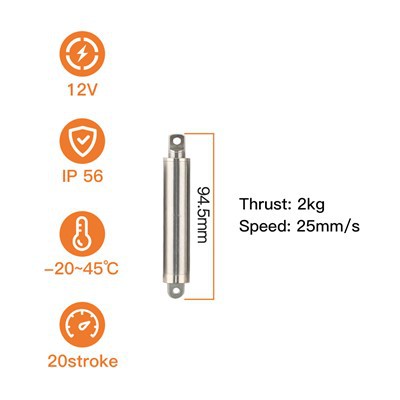
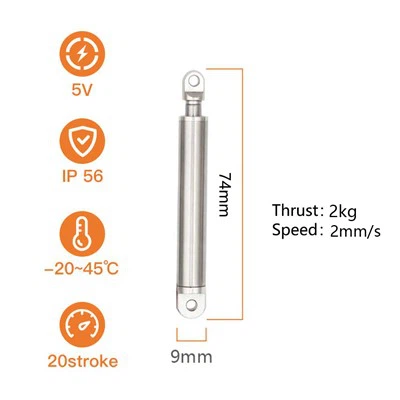
- Electric Cylinder 6V: This electric cylinder is a great choice for applications that require linear motion. It comes with a high-quality gearbox that provides smooth and reliable operation.
- Dc Brush Electric Actuator: Our DC brush electric actuator is designed for applications that require high torque and precise control. It's equipped with a gearbox that offers high efficiency and long lifespan.
- Electric Linear Actuator 6V: This electric linear actuator is perfect for applications that require linear motion at a low voltage. It comes with a gearbox that provides high torque and smooth operation.
Conclusion
Selecting the right gearbox for an electric actuator is a crucial decision that can have a big impact on the performance and reliability of your application. By considering factors such as torque requirements, speed requirements, efficiency, size, and cost, you can find the perfect gearbox for your needs.
If you're still not sure which gearbox is right for you, don't hesitate to reach out to us. We have a team of experts who can help you choose the best gearbox for your application. Whether you're a small business or a large industrial company, we're here to provide you with the best products and services.
So, if you're in the market for an electric actuator and need help selecting the right gearbox, contact us today. Let's work together to find the perfect solution for your needs.
References
- Johnson, R. (2018). Electric Actuators: Principles, Design, and Applications. Wiley.
- Smith, J. (2019). Gearbox Design Handbook. McGraw-Hill.