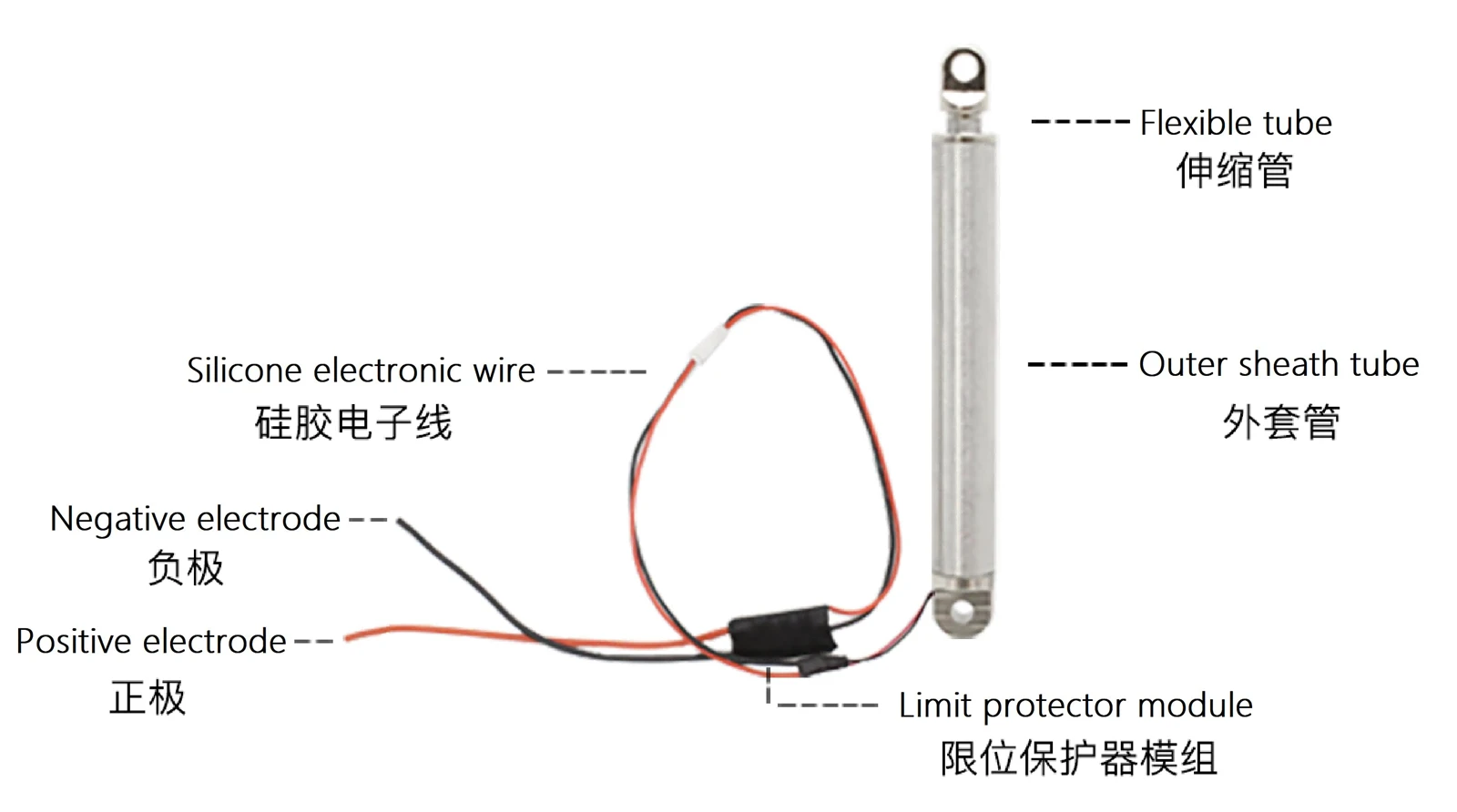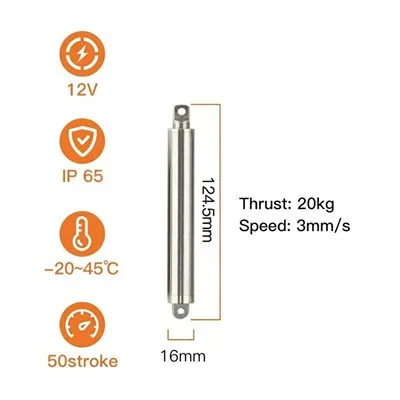
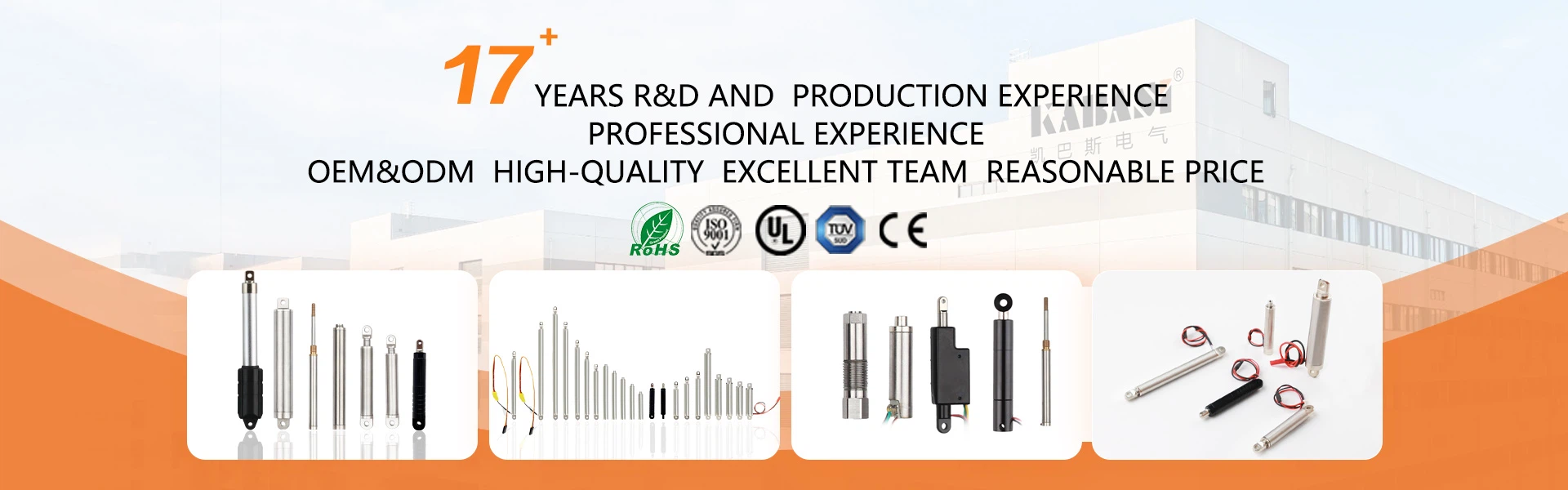
For LEGO enthusiasts, micro linear actuators are no strangers to LEGO models. They're not only perfectly compatible with LEGO models, but also crucial components in LEGO MOC (Mobile Build Construction) creations, transcending static limitations and imbuing models with dynamic life. From basic mechanical structures to complex bionic creations, they're used in a wide range of creative scenarios, enabling unprecedented dynamic expression through building block combinations.
The practicality of micro linear actuators is fully demonstrated in LEGO Technic MOC creations. Many maker-created heavy-duty truck models incorporate small electric linear actuators in the side doors and cargo bed. When powered on, the actuators precisely extend and retract, allowing the side doors to open and close smoothly, replacing traditional manual push operations. The stable linear force also enables the lifting and tilting of the cargo bed, simulating the loading and unloading of real trucks and significantly enhancing the fidelity of the models. In addition to vehicle models, they can also be used in conjunction with gear mechanisms in construction machinery creations like LEGO cranes and excavators to control boom extension and retraction, and bucket tilting, making mechanical movements more coherent and closer to the operational logic of real equipment.
In the field of biomimetic and creative MOCs, micro linear actuators have become a core support for "anthropomorphic" and "skeuomorphic" design. Some players have combined them with LEGO technical components to create highly realistic robots. In the neck structure, the coordinated operation of two or three micro actuators enables six-degree-of-freedom movement of the robot's head-pitch, tilt, and rotation-and even simulates subtle human movements like nodding and shaking. In animal models like the LEGO elephant, actuators can be hidden within the torso to control the curling and extension of the trunk, giving the static building blocks an instant "breathing" feel.
The key to the seamless integration of these actuators into LEGO models lies in their three key advantages: First, their compact size. Common micro electric actuators are only 5-10 cm long, easily fitting into the gaps between LEGO bricks without disrupting the overall appearance of the model. Second, their precise control: by adjusting the current or using a simple controller, the extension and retraction distance and speed can be precisely controlled to avoid lag or excessive extension. Third, their ease of integration: no cutting, drilling, or other modifications to LEGO parts are required; the actuators can be fixed within the model simply by leveraging the interconnecting nature of the bricks, making them quickly accessible to even novice builders.
From enabling mechanical functions to enhancing creative forms, micro linear actuators open up new creative dimensions for LEGO models. They imbue previously static bricks with "moving joints," freeing enthusiasts' creativity from the constraints of static structures and truly achieving a breakthrough from "building to moving."