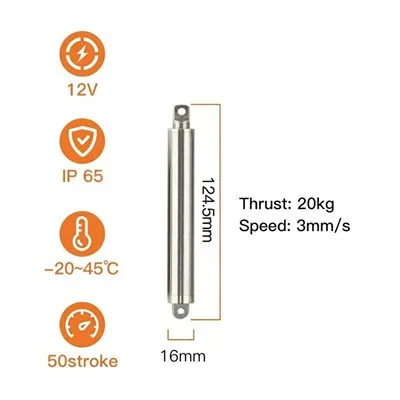
The 1610 electric linear actuator, a versatile transmission component suitable for a wide range of applications, has a base design that directly impacts ease of installation, wiring stability, and operational adaptability. The standard side-mounted round hole base and the side-mounted slotted base are two core base accessories for this model. Although both are designed for side wiring, they differ significantly in structural design, functional suitability, and user experience. The following provides a detailed comparison from multiple perspectives to assist in selection.
In terms of structural design, the core difference between the two bases lies in the wiring area. The standard side-mounted round hole base uses an integrated round hole structure. The hole diameter precisely matches the cable size of the 1610 actuator, and the edges of the outlet are rounded to effectively prevent cable wear. The overall structure of the base is compact, the force distribution is even, the mounting surface fits well, and there are no unnecessary hollow designs, resulting in greater structural stability. The side-mounted slotted base uses a long slot design. The slot width is slightly larger than the cable diameter, and protective chamfers are provided on the edges of the slot. The slot can also be slightly adjusted to accommodate the cable routing, offering greater wiring flexibility compared to the round hole base.
In terms of application scenarios and installation experience, each base has its own strengths. The standard side-mounted round hole base is more suitable for scenarios where the cable routing is fixed and the working conditions are stable, such as automation equipment racks and medical equipment operating tables. Its round hole structure provides precise cable positioning, reducing cable movement during equipment operation and lowering the risk of poor contact. Installation is efficient as no cable angle adjustment is required; simply align and fix the base.
The side-mounted slotted base is more suitable for scenarios where cable routing needs to be flexibly adjusted, installation space is limited, or cable maintenance is required later, such as smart doors and windows, and warehouse shelving lifting mechanisms. The slotted design allows the cable to be moved or adjusted within a certain range, avoiding cable pulling and bending problems during installation. Furthermore, during later maintenance, the base does not need to be disassembled; the cable can be directly removed from the slot, significantly improving maintenance convenience. However, it should be noted that the slotted base structure has a slightly greater impact on the overall load-bearing capacity of the base than the round-hole base, and is not suitable for high-frequency, heavy-load, or severely vibrating working conditions.
Overall, both base designs can meet the basic installation and wiring requirements of the 1610 electric actuator. When selecting a base, if structural stability, cable restraint, and heavy-load compatibility are prioritized, the conventional side-mounted round-hole base is recommended; if installation flexibility, ease of maintenance, and adaptability to complex scenarios are more important, the side-slotted base is more advantageous. The final choice should be made based on actual working conditions, cable routing, and maintenance requirements.