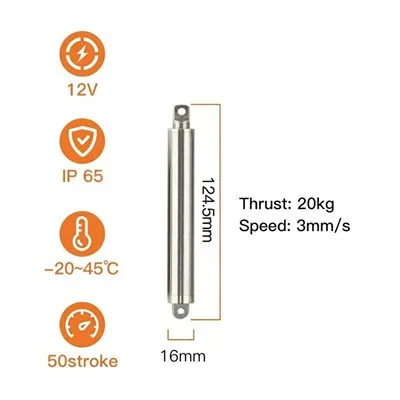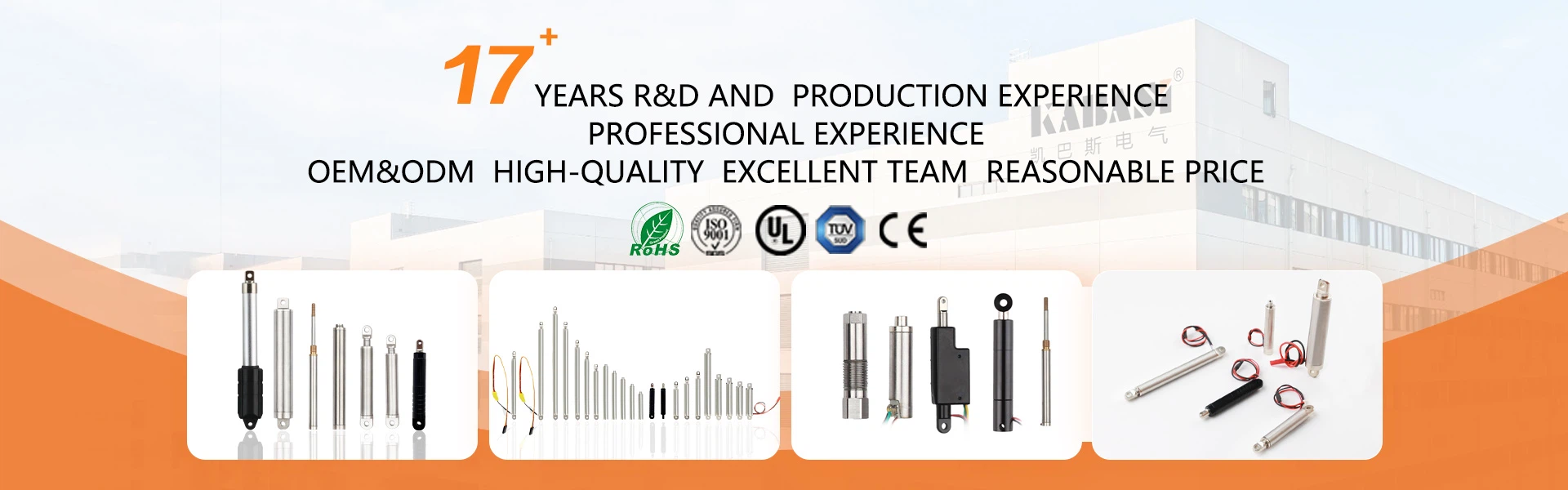
Have you ever seen underwater electric actuator?
Working Principle
Underwater electric actuators are powered by a motor. A reduction gearbox typically converts the motor's high-speed, low-torque output into a low-speed, high-torque output, which then drives the lead screw-nut transmission mechanism. As the lead screw rotates, the nut moves on it, driving the actuator connected to the nut in linear reciprocating motion, extending and retracting the actuator, thereby completing the push and retraction of the target.
Structural Components
Power Section: Primarily a motor, such as a high-torque DC motor, provides power for the actuator.
Transmission Section: Comprises the reduction gearbox, lead screw, and nut. The reduction gearbox reduces motor speed and increases torque. The lead screw and nut form the lead screw-nut transmission mechanism, converting the motor's rotational motion into linear motion for the actuator.
Seal Section: A sealed space formed by the base, gasket, and top cover is filled with insulating oil to prevent water from entering and causing short circuits or corrosion. O-rings are installed at the contact points between the actuator and the base, and between the synchronous rod and the base, to further enhance sealing.
Control Section: Includes electrical connectors, limit switches, and other components. The electrical connector is used to connect to an external control system, receive commands, and transmit current. An external limit protector (not waterproof) is included to prevent internal mechanical collisions during operation.
Features
Excellent Sealing Performance: A well-sealed structure typically utilizes a multi-layered sealing design, such as rubber gaskets and O-rings. Combined with insulating oil filling the sealed space, this effectively prevents water intrusion, ensuring safe and reliable operation in underwater environments.
Corrosion Resistance: The housing and key components of underwater electric actuators are typically made of corrosion-resistant materials such as stainless steel and high-strength aluminum alloys, or feature special surface treatments such as anti-corrosion coatings to resist corrosion from corrosive media such as seawater and salt spray.
High Reliability: Utilizing high-quality materials and advanced manufacturing processes, this system offers excellent mechanical strength and stability, enabling long-term, stable operation in harsh underwater environments and reducing the likelihood of failure.
Applications
Shipbuilding and Offshore Engineering: Used in shipboard waveguide systems, adjusting the waveguide angle corrects the ship's hull's posture during navigation, improving navigation efficiency and passenger comfort. Applications include hatch opening and closing, anchor windlass control, and marine cranes. Underwater Robots and Diving Equipment: Powers the robotic arms and sampling devices of underwater robots, enabling actions like grabbing and sampling. In diving equipment, it can be used to control the buoyancy control devices of diving suits and the raising and lowering of underwater lighting equipment.
Marine Research: Powers the raising, lowering, and translation of various detection instruments in ocean observation platforms and underwater experimental equipment to acquire ocean data at various depths and locations.
Aquaculture: Powers the raising and lowering of aquaculture cages and the control of feeding equipment, enabling automated aquaculture management and improving aquaculture efficiency and quality.