There are many misconceptions and outdated claims about the 3 fixed actuator systems: pneumatic, hydraulic, and electric. In the past, you may have thought that the actuator application needs of a specific industry were limited to a single actuator system, but with the advancement of technology, the range of actuator systems that can be used in various industries has become wider, and there may be more than one actuator system to choose from for your project plan.
3 Types of Actuator Systems:
Pneumatic
Pneumatic actuators consist of a simple piston in a hollow cylinder and are widely used in automation systems because of their low purchase cost. Pneumatic actuator systems require a manual pump or external compressor to move the piston in the cylinder housing. When pressure increases, the cylinder moves along the piston axis to generate the required linear movement force. The actuator can be returned to its original retracted position by rebound force or by adding fluid opposite the piston.
Hydraulic
Similar to pneumatic actuators, hydraulic actuators use a pump to supply incompressible fluid instead of compressed air to move the cylinder in a linear motion. Hydraulic actuators consist of two basic parts: control hardware, such as a variable throttle valve (a sliding gate with a nozzle or a paired sliding valve with initial axial clearance), and actuator accessories, such as a piston or control valve slide. Hydraulic actuators have the advantages of high load and long stroke, but the disadvantage is that they cannot be programmed.
Electric
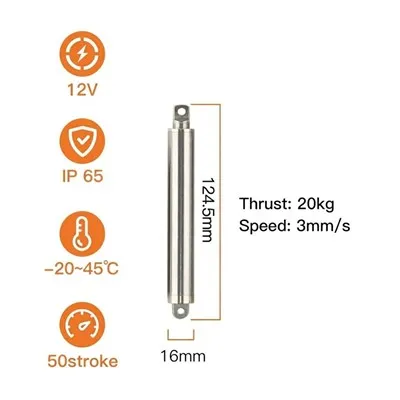
Electric linear actuators are compact and programmable, capable of high speed, high load, and some can be customized with precise control and acceleration/deceleration settings. Electric actuators use the rotational force (electricity) of a motor to convert linear movement (torque). The motor rotates the actuator's screw, and the core moves up and down in a straight line, creating a push/pull effect on the load. Compared to hydraulic and pneumatic actuators, electric actuators are the most reliable and require almost no maintenance.
Advantages and Disadvantages


Each type of actuator system is necessary for the application it is suitable for. Each system has its advantages and disadvantages. Before deciding on the actuator that is right for your project, please weigh the important characteristics that your project needs to meet.
It is very important to determine the necessary characteristics of the actuator system at the beginning, and you should evaluate and select the required actuator system based on these requirements. You may also want to consider the cost of the system. Costs include: initial purchase, maintenance and repair costs.
Jul 16, 2025
Leave a message
3 Types of Actuator Systems
Send Inquiry