As a leading supplier of fast linear actuators, I often encounter inquiries from potential customers regarding the maximum power consumption of these devices. Understanding the power consumption of a fast linear actuator is crucial for various applications, as it directly impacts energy efficiency, operational costs, and system design. In this blog post, I will delve into the factors that influence the maximum power consumption of a fast linear actuator and provide insights to help you make informed decisions for your projects.
Understanding Fast Linear Actuators
Before we discuss power consumption, let's briefly review what fast linear actuators are. Fast linear actuators are mechanical devices that convert rotational motion into linear motion at a relatively high speed. They are commonly used in applications where rapid movement and precise positioning are required, such as in industrial automation, robotics, medical equipment, and automotive systems.
Fast linear actuators come in various types, including electric, hydraulic, and pneumatic. Electric linear actuators are the most popular choice due to their ease of use, high precision, and energy efficiency. They are powered by an electric motor, which drives a lead screw, ball screw, or belt drive to produce linear motion.
Factors Affecting Power Consumption
The maximum power consumption of a fast linear actuator is influenced by several factors, including:
- Load Capacity: The amount of force required to move the load is one of the primary factors affecting power consumption. Higher load capacities generally require more power to operate the actuator. When selecting an actuator, it is important to choose one with a load capacity that matches your application requirements to avoid overloading the actuator and increasing power consumption.
- Speed: The speed at which the actuator moves the load also affects power consumption. Faster speeds typically require more power to overcome inertia and friction. However, some actuators are designed to operate at high speeds with relatively low power consumption, thanks to advanced motor and drive technologies.
- Duty Cycle: The duty cycle refers to the ratio of the time the actuator is in operation to the total time of a cycle. Actuators with a high duty cycle require more power over time, as they are constantly in use. It is important to consider the duty cycle of your application when selecting an actuator to ensure that it can handle the required workload without overheating or consuming excessive power.
- Efficiency: The efficiency of the actuator's motor and drive system plays a significant role in power consumption. Higher efficiency actuators convert more electrical energy into mechanical energy, resulting in lower power consumption. When comparing actuators, look for models with high efficiency ratings to reduce energy costs and improve overall system performance.
- Control Method: The control method used to operate the actuator can also affect power consumption. Some actuators use simple on/off control, while others use more advanced control methods, such as proportional or servo control. Advanced control methods can optimize power consumption by adjusting the actuator's speed and force based on the load requirements.
Calculating Power Consumption
To calculate the maximum power consumption of a fast linear actuator, you need to consider the following formula:
Power (Watts) = Force (Newtons) x Speed (Meters per Second)
However, this formula provides a basic estimate and does not take into account other factors, such as efficiency, friction, and inertia. In practice, the actual power consumption of an actuator may be higher than the calculated value.
To get a more accurate estimate of power consumption, it is recommended to consult the manufacturer's specifications or use a power meter to measure the actual power consumption of the actuator under your specific operating conditions.
Energy-Efficient Solutions
As a supplier of fast linear actuators, we are committed to providing energy-efficient solutions that help our customers reduce their energy costs and environmental impact. Our actuators are designed with advanced motor and drive technologies to maximize efficiency and minimize power consumption.
For example, our 6 Volt Linear Actuator with Remoteactuators is a compact and lightweight actuator that operates on a low voltage of 6 volts, making it ideal for battery-powered applications. This actuator is designed to provide high performance with low power consumption, thanks to its efficient motor and drive system.
Another energy-efficient option is our Electric Lift Cylinder, which is designed for heavy-duty applications. This actuator uses a high-efficiency motor and a ball screw drive system to provide smooth and precise linear motion with minimal power consumption.
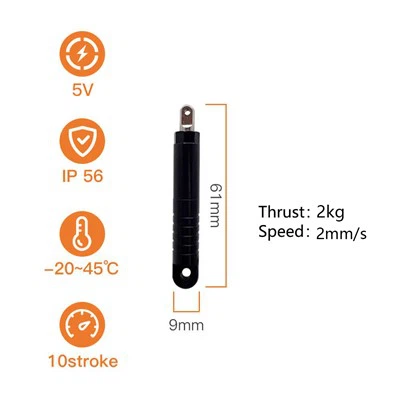
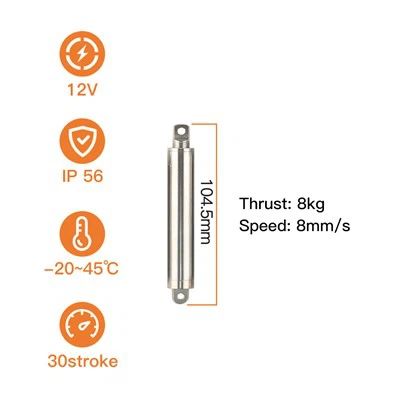
If you are looking for a small and lightweight actuator for your project, our Tiny Linear Actuator is a great choice. This actuator is designed to operate on a low voltage of 12 volts and provides high performance with low power consumption.
Tips for Reducing Power Consumption
In addition to selecting an energy-efficient actuator, there are several other tips you can follow to reduce power consumption in your application:
- Optimize the Load: Minimize the weight and size of the load to reduce the amount of force required to move it. This can significantly reduce power consumption.
- Use a Properly Sized Actuator: Select an actuator with a load capacity and speed that match your application requirements. Avoid overloading the actuator, as this can increase power consumption and reduce the lifespan of the actuator.
- Implement Energy-Saving Controls: Use advanced control methods, such as proportional or servo control, to optimize the actuator's speed and force based on the load requirements. This can help reduce power consumption and improve system performance.
- Maintain the Actuator: Regularly maintain the actuator to ensure that it is operating at peak efficiency. This includes lubricating the moving parts, checking the alignment, and replacing worn-out components.
- Consider Regenerative Braking: Some actuators are equipped with regenerative braking systems, which can convert the kinetic energy of the moving load into electrical energy and feed it back into the power supply. This can significantly reduce power consumption and improve energy efficiency.
Conclusion
The maximum power consumption of a fast linear actuator is influenced by several factors, including load capacity, speed, duty cycle, efficiency, and control method. By understanding these factors and selecting an energy-efficient actuator, you can reduce your energy costs and improve the performance of your application.
As a supplier of fast linear actuators, we are dedicated to providing high-quality products and solutions that meet the needs of our customers. Our actuators are designed to operate with low power consumption, thanks to advanced motor and drive technologies. If you have any questions or need assistance in selecting the right actuator for your application, please do not hesitate to contact us. We look forward to working with you to help you achieve your project goals.


References
- Manufacturer's specifications for fast linear actuators
- Industry standards and guidelines for energy efficiency in linear actuators
- Technical papers and research studies on power consumption in linear actuators