What is the dynamic performance of a Miniature Linear Motor?
As a supplier of miniature linear motors, I've witnessed firsthand the growing demand for these compact yet powerful devices across various industries. Miniature linear motors have revolutionized many applications with their unique capabilities, and understanding their dynamic performance is crucial for both engineers and end - users.
Basic Principles of Miniature Linear Motors
Before delving into dynamic performance, it's essential to understand the basic principles of miniature linear motors. Unlike traditional rotary motors that convert electrical energy into rotational motion, linear motors directly produce linear motion. This direct conversion eliminates the need for conversion mechanisms such as gears, belts, or lead screws, which often introduce backlash, friction, and wear.
Miniature linear motors typically operate based on electromagnetic principles. There are different types, including moving - coil and moving - magnet designs. In a moving - coil linear motor, the coil is the moving part, and it experiences a force when an electric current passes through it in the presence of a magnetic field. In a moving - magnet design, the magnet moves while the coil remains stationary.
Key Aspects of Dynamic Performance
Speed
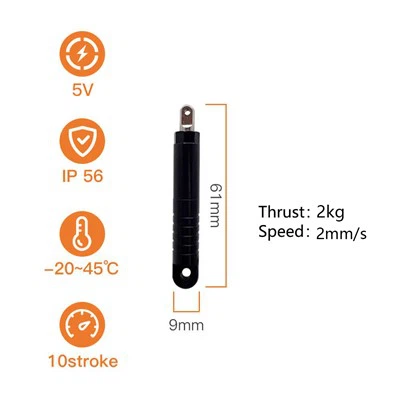
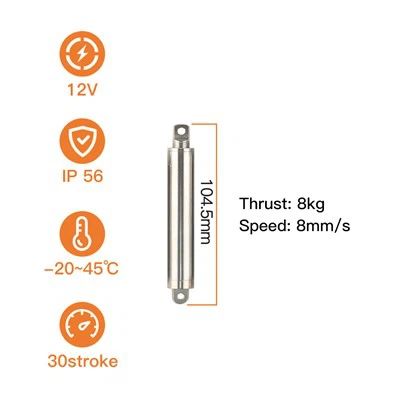
One of the most significant aspects of dynamic performance is speed. Miniature linear motors can achieve high speeds, which is a major advantage in applications where rapid movement is required. For example, in pick - and - place operations in the electronics manufacturing industry, the ability to move quickly between different positions can significantly increase production efficiency.
The speed of a miniature linear motor is determined by several factors. The applied voltage and the magnetic field strength play crucial roles. A higher voltage generally results in a greater force being exerted on the moving part, which in turn leads to higher speeds. Additionally, the design of the motor, including the number of turns in the coil and the mass of the moving part, also affects speed.
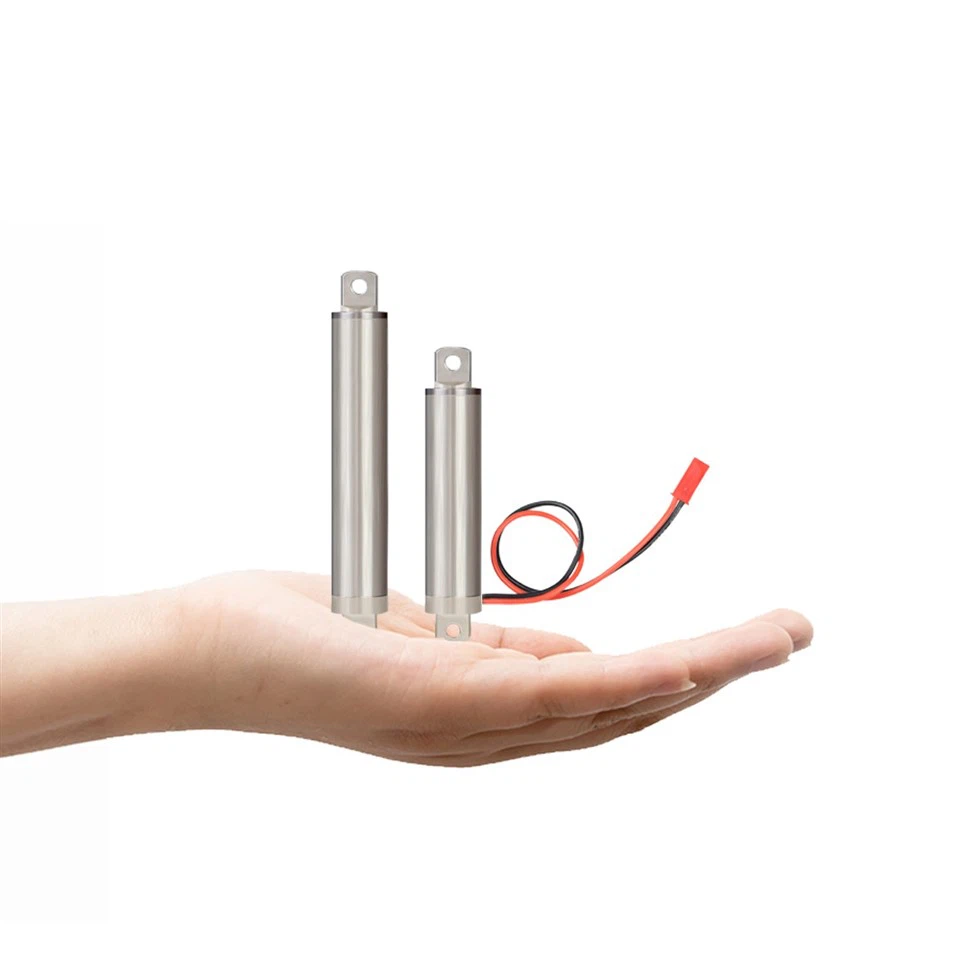

However, it's important to note that achieving high speeds also comes with challenges. At high speeds, issues such as heat generation and mechanical vibrations can become more prominent. Heat can reduce the efficiency of the motor and may even damage the components over time. Vibrations can affect the accuracy of the movement and may cause noise, which is undesirable in many applications.
Acceleration
Acceleration is another critical factor in dynamic performance. Miniature linear motors can provide high acceleration rates, allowing them to quickly reach the desired speed. This is particularly useful in applications where rapid starts and stops are necessary, such as in robotics and automated testing equipment.
The acceleration of a linear motor is related to the force it can generate and the mass of the moving part. According to Newton's second law (F = ma), a larger force will result in a higher acceleration for a given mass. Miniature linear motors are designed to maximize the force - to - mass ratio, enabling them to achieve high acceleration rates.
In some high - precision applications, smooth acceleration is also important. Sudden changes in acceleration can cause overshoot or undershoot, which can affect the accuracy of the positioning. Therefore, advanced control algorithms are often used to ensure smooth and precise acceleration.
Positioning Accuracy
Positioning accuracy is a key performance metric for miniature linear motors, especially in applications such as microscopy, semiconductor manufacturing, and optical inspection. These applications require the motor to move to a specific position with high precision.
The positioning accuracy of a linear motor is influenced by several factors. The control system plays a vital role. Closed - loop control systems, which use feedback sensors such as encoders or linear scales, can significantly improve positioning accuracy. These sensors provide real - time information about the position of the moving part, allowing the control system to make adjustments to ensure accurate positioning.
The mechanical design of the motor also affects accuracy. Factors such as the straightness of the guide rails, the stiffness of the structure, and the backlash in any mechanical components can all impact the final positioning accuracy.
Repeatability
Repeatability is closely related to positioning accuracy. It refers to the ability of the motor to return to the same position repeatedly. High repeatability is essential in applications where the same movement needs to be performed multiple times, such as in assembly lines.
Miniature linear motors can achieve excellent repeatability due to their direct - drive nature and the use of high - quality control systems. The absence of mechanical conversion components reduces the sources of error, and the feedback sensors help to ensure that the motor returns to the same position within a very small tolerance.
Applications and the Importance of Dynamic Performance
The dynamic performance of miniature linear motors makes them suitable for a wide range of applications.
In the medical field, for example, miniature linear motors are used in devices such as syringe pumps and endoscopic cameras. In syringe pumps, the ability to accurately control the speed and flow rate of the fluid is crucial. The high positioning accuracy and repeatability of the linear motor ensure that the correct amount of medication is delivered to the patient. In endoscopic cameras, the motor's high - speed movement and smooth acceleration are used to adjust the position of the camera for better visualization.
In the aerospace industry, miniature linear motors are used in various control systems. Their high - speed and high - acceleration capabilities are used to actuate control surfaces, such as flaps and ailerons, in small aircraft and unmanned aerial vehicles (UAVs). The precise positioning accuracy is also important for maintaining the stability and control of the aircraft.
In the consumer electronics industry, miniature linear motors are used in devices such as smartphones and tablets. They are used for functions such as haptic feedback, where the motor's ability to provide quick and precise vibrations enhances the user experience.
Product Recommendations
If you are looking for specific miniature linear motor products, we offer a variety of options. For applications that require a 24V power supply, our 24V Actuator is a great choice. It provides excellent dynamic performance in terms of speed, acceleration, and positioning accuracy.
Our 24Vdc Linear Actuator is another reliable option. It is designed for high - precision applications and offers smooth and stable operation.
For applications that require a lower voltage, our Micro Linear Actuator 12V is ideal. It is compact in size but still provides good dynamic performance, making it suitable for small - scale devices.
Contact Us for Purchase and Consultation
If you are interested in our miniature linear motors and want to learn more about their dynamic performance or discuss your specific application requirements, we encourage you to contact us. Our team of experts is ready to provide you with detailed information and help you select the most suitable product for your needs. Whether you are an engineer working on a new project or a business looking to upgrade your existing equipment, we can offer the support you need.
References
- "Linear Motors: Principles, Design, and Applications" by Peter Lawrenson.
- "Electromagnetic Actuators for Mechatronics" by Jiri Homola.
- Industry reports on miniature linear motor applications in medical, aerospace, and consumer electronics industries.