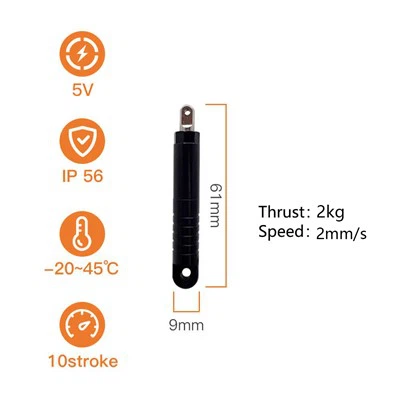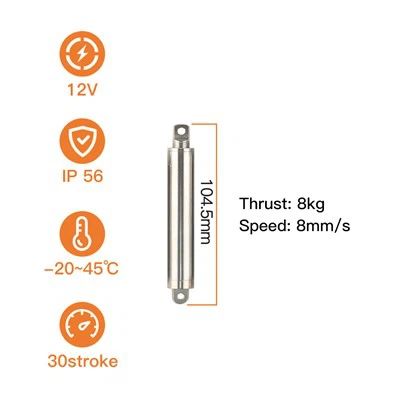
In the realm of automation and mechanical control systems, 12 Volt DC actuators play a pivotal role. As a dedicated supplier of 12 Volt DC actuators, I've witnessed firsthand the diverse applications and unique characteristics of these remarkable devices. This blog post aims to explore the different types of 12 Volt DC actuators, shedding light on their features, applications, and advantages.
Linear Actuators
Linear actuators are among the most common types of 12 Volt DC actuators. They convert rotational motion into linear motion, making them ideal for applications where straight-line movement is required. These actuators are widely used in various industries, including automotive, aerospace, and home automation.
Screw-Driven Linear Actuators
Screw-driven linear actuators use a screw mechanism to convert the rotational motion of a motor into linear motion. The screw is typically a lead screw or a ball screw, which provides high precision and efficiency. Screw-driven linear actuators are known for their ability to provide high force and accurate positioning, making them suitable for applications such as industrial machinery, robotics, and medical equipment.
One of the key advantages of screw-driven linear actuators is their high load capacity. They can handle heavy loads with ease, making them ideal for applications where large forces are required. Additionally, screw-driven linear actuators offer excellent repeatability, ensuring consistent performance over time.
Belt-Driven Linear Actuators
Belt-driven linear actuators use a belt to transfer the rotational motion of a motor to a linear slide. The belt is typically made of a high-strength material such as polyurethane or rubber, which provides smooth and quiet operation. Belt-driven linear actuators are known for their high speed and long stroke length, making them suitable for applications such as packaging machinery, conveyor systems, and pick-and-place robots.
One of the main advantages of belt-driven linear actuators is their high speed. They can achieve rapid linear motion, making them ideal for applications where fast cycle times are required. Additionally, belt-driven linear actuators offer a long stroke length, allowing for greater flexibility in design.
Rotary Actuators
Rotary actuators are another type of 12 Volt DC actuator that converts electrical energy into rotational motion. They are commonly used in applications where angular movement is required, such as valve control, robotic joints, and camera positioning.
Gear-Driven Rotary Actuators
Gear-driven rotary actuators use a gear mechanism to transfer the rotational motion of a motor to an output shaft. The gears are typically made of metal or plastic, which provides high torque and durability. Gear-driven rotary actuators are known for their ability to provide high torque and precise positioning, making them suitable for applications such as industrial automation, automotive systems, and aerospace equipment.
One of the key advantages of gear-driven rotary actuators is their high torque output. They can generate large amounts of torque, making them ideal for applications where high forces are required. Additionally, gear-driven rotary actuators offer excellent precision, ensuring accurate positioning of the output shaft.
Vane Rotary Actuators
Vane rotary actuators use a vane mechanism to convert the pressure of a fluid (such as air or hydraulic oil) into rotational motion. The vane is typically made of a flexible material such as rubber or plastic, which provides smooth and efficient operation. Vane rotary actuators are known for their compact size and high power density, making them suitable for applications such as pneumatic systems, hydraulic systems, and small-scale automation.
One of the main advantages of vane rotary actuators is their compact size. They can be easily integrated into tight spaces, making them ideal for applications where space is limited. Additionally, vane rotary actuators offer high power density, allowing for efficient use of energy.
Solenoid Actuators
Solenoid actuators are a type of 12 Volt DC actuator that uses an electromagnetic field to generate linear or rotary motion. They are commonly used in applications where fast and reliable actuation is required, such as door locks, valves, and relays.
Linear Solenoid Actuators
Linear solenoid actuators use a solenoid coil to generate a magnetic field, which attracts a plunger or armature. The plunger or armature is connected to a rod or shaft, which moves in a linear direction when the solenoid is energized. Linear solenoid actuators are known for their fast response time and high force output, making them suitable for applications such as automotive systems, industrial automation, and consumer electronics.
One of the key advantages of linear solenoid actuators is their fast response time. They can achieve rapid actuation, making them ideal for applications where quick action is required. Additionally, linear solenoid actuators offer high force output, allowing for reliable operation in demanding environments.
Rotary Solenoid Actuators
Rotary solenoid actuators use a solenoid coil to generate a magnetic field, which rotates an armature or rotor. The armature or rotor is connected to an output shaft, which rotates when the solenoid is energized. Rotary solenoid actuators are known for their compact size and high torque output, making them suitable for applications such as robotics, medical equipment, and aerospace systems.
One of the main advantages of rotary solenoid actuators is their compact size. They can be easily integrated into small spaces, making them ideal for applications where space is limited. Additionally, rotary solenoid actuators offer high torque output, allowing for efficient operation in demanding applications.
Applications of 12 Volt DC Actuators
The versatility of 12 Volt DC actuators makes them suitable for a wide range of applications across various industries. Some of the common applications include:
- Automotive Industry: 12 Volt DC actuators are used in automotive systems such as power windows, door locks, and seat adjustment mechanisms. They provide reliable and efficient actuation, enhancing the comfort and convenience of vehicle occupants.
- Home Automation: 12 Volt DC actuators are used in home automation systems to control various devices such as blinds, curtains, and garage doors. They allow for remote operation and automation, making homes more energy-efficient and convenient.
- Industrial Automation: 12 Volt DC actuators are used in industrial automation systems to control machinery and equipment. They provide precise and reliable actuation, improving the efficiency and productivity of industrial processes.
- Medical Equipment: 12 Volt DC actuators are used in medical equipment such as hospital beds, surgical tables, and diagnostic devices. They provide accurate and reliable actuation, ensuring the safety and comfort of patients.
- Robotics: 12 Volt DC actuators are used in robotics to control the movement of robotic arms, joints, and grippers. They provide high torque and precise positioning, enabling robots to perform complex tasks with accuracy and efficiency.
Advantages of Choosing Our 12 Volt DC Actuators
As a leading supplier of 12 Volt DC actuators, we offer a wide range of products that are designed to meet the diverse needs of our customers. Here are some of the advantages of choosing our 12 Volt DC actuators:
- High Quality: Our 12 Volt DC actuators are manufactured using high-quality materials and advanced manufacturing processes. They are rigorously tested to ensure reliability and performance, meeting the highest industry standards.
- Customization: We understand that every application is unique, which is why we offer customization options for our 12 Volt DC actuators. Our team of engineers can work with you to design and develop custom actuators that meet your specific requirements.
- Competitive Pricing: We strive to offer our customers the best value for their money. Our 12 Volt DC actuators are priced competitively, making them an affordable solution for a wide range of applications.
- Technical Support: Our team of technical experts is available to provide you with technical support and assistance. Whether you have questions about product selection, installation, or maintenance, we are here to help.
Conclusion
In conclusion, 12 Volt DC actuators are versatile and reliable devices that play a crucial role in various industries. From linear actuators to rotary actuators and solenoid actuators, there are different types of 12 Volt DC actuators available to meet the diverse needs of different applications. As a supplier of 12 Volt DC actuators, we are committed to providing our customers with high-quality products, customization options, competitive pricing, and excellent technical support.
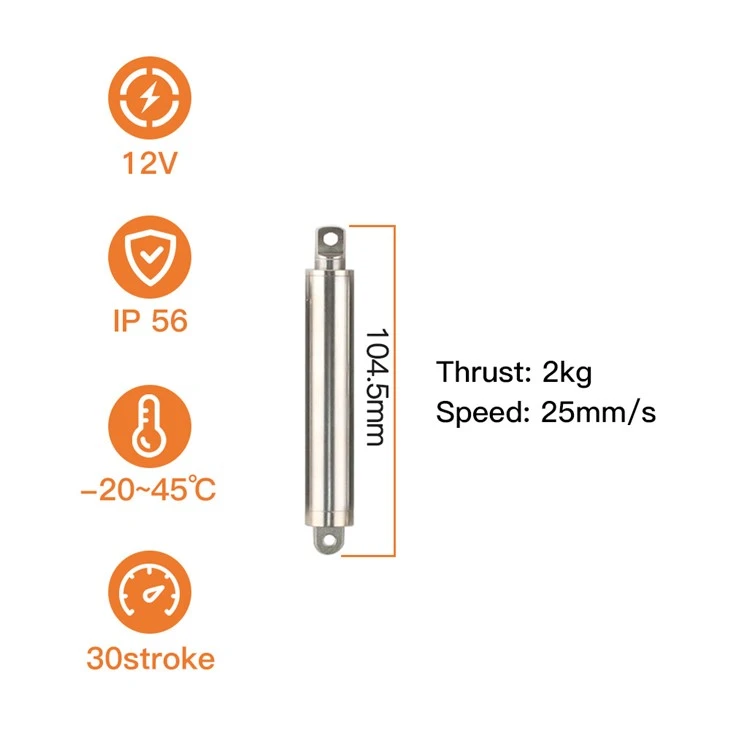

If you are interested in learning more about our 12 Volt DC actuators or have any questions about our products, please feel free to [contact us for procurement and negotiation]. We look forward to working with you to find the perfect actuator solution for your application.
References
- "Actuators: Principles and Applications" by John J. Catania
- "Linear Actuators: Design and Applications" by David A. Swanson
- "Rotary Actuators: Theory and Practice" by Robert C. Dorf