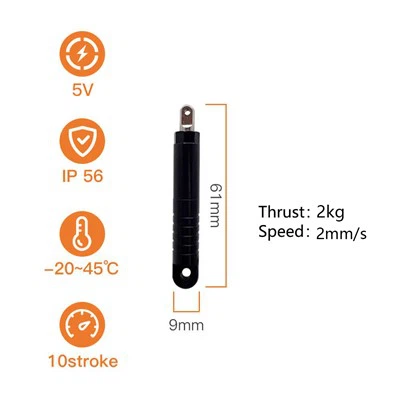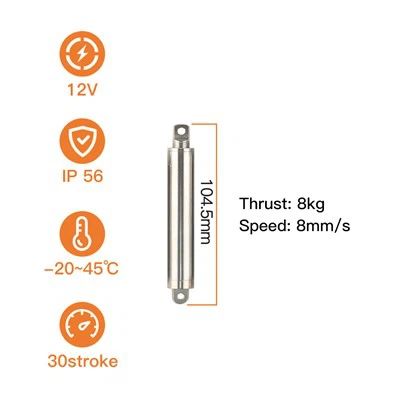
Testing the performance of linear micro actuators is crucial for ensuring they meet the required standards and perform well in various applications. As a supplier of Linear Micro Actuators, I've got a fair bit of experience in this area. In this blog, I'll share some practical ways to test these nifty little devices.
Understanding the Basics
Before we jump into the testing methods, let's quickly go over what linear micro actuators are. These are small devices that convert energy into linear motion. They're used in a wide range of applications, from medical devices to DIY projects. For example, Micro Electric Actuator is a type of linear micro actuator that uses electrical energy to create linear movement.
Key Performance Metrics
There are several key performance metrics that we need to consider when testing linear micro actuators. These include force output, stroke length, speed, accuracy, and repeatability.
Force Output
The force output of a linear micro actuator is the amount of force it can exert. To test this, we can use a force gauge. First, mount the actuator securely. Then, attach the force gauge to the moving part of the actuator. Activate the actuator and measure the force it applies. Compare the measured force with the manufacturer's specifications. If the force output is significantly lower, there might be an issue with the actuator.
Stroke Length
The stroke length is the distance the actuator can move. This can be measured using a ruler or a displacement sensor. Make sure the actuator is in its initial position. Then, activate it and measure the distance it travels. The measured stroke length should match the specified value. Any deviation could indicate a problem with the actuator's internal components.
Speed
The speed of the actuator refers to how fast it can move. To measure the speed, we can use a stopwatch and measure the time it takes for the actuator to complete a full stroke. Divide the stroke length by the time to get the speed. Keep in mind that the speed might vary depending on the load applied to the actuator.
Accuracy
Accuracy is about how closely the actuator can reach a specific position. We can test accuracy by setting the actuator to move to a predefined position and then measuring the actual position using a displacement sensor. Calculate the difference between the set position and the actual position. A small difference indicates high accuracy.
Repeatability
Repeatability is the ability of the actuator to return to the same position repeatedly. To test this, run the actuator through multiple cycles. Measure the position it reaches in each cycle. Calculate the variation in the positions. A low variation means the actuator has good repeatability.
Testing Equipment
In addition to the basic tools like force gauges, rulers, and stopwatches, there are some more advanced testing equipment that can provide more accurate and detailed results.
Load Cells
Load cells are used to measure the force applied by the actuator more precisely. They can be connected to a data acquisition system to record the force data over time. This is especially useful when testing the actuator under different loads.
Displacement Sensors
Displacement sensors can measure the position of the actuator with high accuracy. They come in different types, such as linear variable differential transformers (LVDTs) and optical encoders. These sensors can provide real - time position data, which is essential for testing accuracy and repeatability.
Data Acquisition Systems
Data acquisition systems can collect and analyze data from various sensors. They can display the data in graphs and tables, making it easier to understand the actuator's performance. For example, we can use a data acquisition system to record the force output, speed, and position data simultaneously.
Environmental Testing
Linear micro actuators are often used in different environments. So, it's important to test their performance under various environmental conditions.
Temperature Testing
Temperature can affect the performance of the actuator. To test the actuator's performance at different temperatures, we can place it in a temperature - controlled chamber. Measure the key performance metrics at different temperatures, such as room temperature, high temperature, and low temperature. Compare the results to see how temperature affects the actuator.
Humidity Testing
Humidity can also have an impact on the actuator. We can use a humidity chamber to test the actuator's performance at different humidity levels. High humidity can cause corrosion and electrical problems, so it's important to ensure the actuator can still perform well in humid conditions.
Testing in Real - World Applications
Testing the actuator in a real - world application is the best way to evaluate its performance. For example, if the actuator is intended for a DIY project like an Actuator Linear For Diy Model, install it in the model and see how it performs. Observe how it interacts with other components and whether it can meet the requirements of the application.
Troubleshooting
If the test results don't meet the expected standards, there are some common issues that could be causing the problem.
Electrical Issues
Check the power supply. Make sure the voltage and current are within the specified range. A low voltage or high current can cause the actuator to malfunction. Also, inspect the wiring for any loose connections or damage.
Mechanical Issues
Look for any signs of wear and tear on the actuator's mechanical components. Check the gears, bearings, and shafts for damage. Lubrication can also affect the performance. If the actuator is not properly lubricated, it might experience increased friction and reduced efficiency.
Conclusion
Testing the performance of linear micro actuators is essential for ensuring their quality and reliability. By testing key performance metrics like force output, stroke length, speed, accuracy, and repeatability, we can identify any issues with the actuator. Using the right testing equipment and conducting environmental and real - world tests can provide a more comprehensive evaluation.
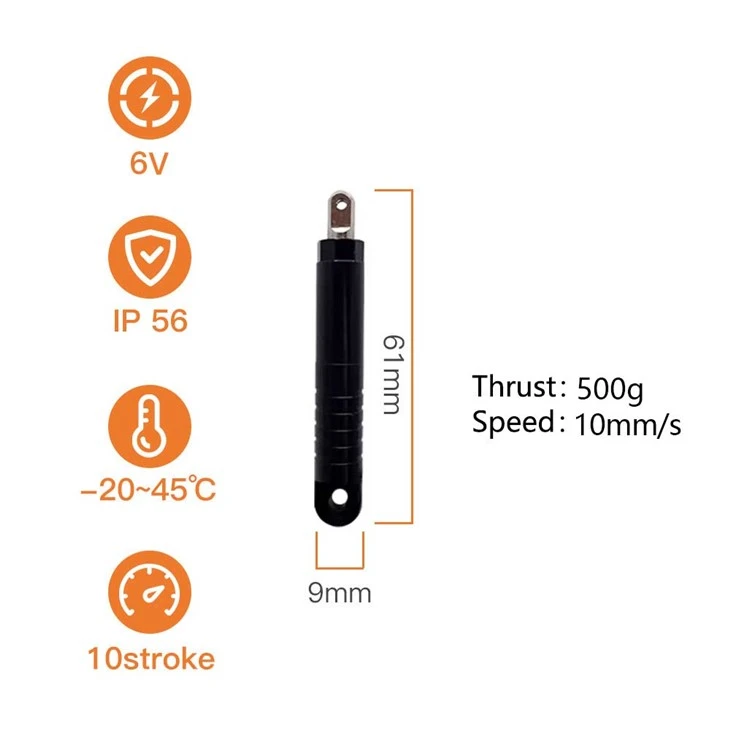

If you're in the market for high - quality linear micro actuators or need more information about testing and using them, feel free to reach out for a procurement discussion. We're here to help you find the best solutions for your needs.
References
- "Motion Control Handbook" by Peter Nachtwey
- "Actuators: Fundamentals, Models, and Control" by Michael P. Karnopp