Can electric actuators be used in robotic applications?
In the dynamic and ever - evolving field of robotics, the choice of components is crucial for achieving optimal performance. One such component that has gained significant attention is the electric actuator. As a proud supplier of high - quality electric actuators, I am excited to explore the potential of electric actuators in robotic applications.
Understanding Electric Actuators
Electric actuators are devices that convert electrical energy into mechanical motion. They come in various types, including linear and rotary actuators. Linear electric actuators move in a straight line, while rotary electric actuators rotate around an axis. These actuators offer several advantages over other types of actuators, such as hydraulic and pneumatic ones.
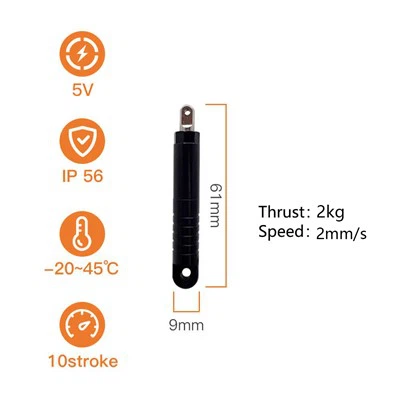
One of the key benefits of electric actuators is their precision. They can be controlled with high accuracy, allowing for very fine adjustments in position, speed, and force. This precision is essential in robotic applications where tasks often require exact movements. For example, in a robotic arm used for pick - and - place operations in a manufacturing setting, the ability to precisely position the end - effector is critical. An Electric Actuator 6V can be an excellent choice for smaller robotic systems that require a low - voltage power source and precise control.
Another advantage is their energy efficiency. Electric actuators only consume power when they are in operation, unlike hydraulic actuators which often require a continuous power supply to maintain pressure. This energy - saving feature not only reduces operating costs but also makes electric actuators more environmentally friendly.
Applications of Electric Actuators in Robotics
Industrial Robotics
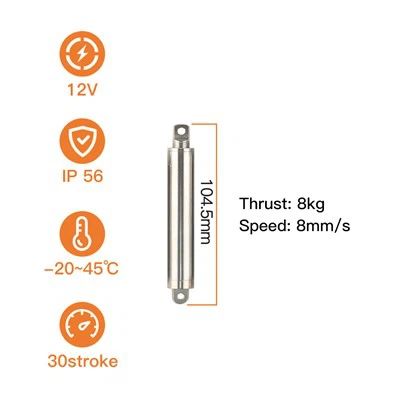
In industrial settings, robots are used for a wide range of tasks, from welding and painting to assembly and material handling. Electric actuators play a vital role in these applications. For instance, in a robotic welding system, electric actuators are used to control the movement of the welding torch. The Long Stroke Electric Linear Actuator can provide the necessary long - distance movement with high precision, ensuring accurate welds.
In robotic assembly lines, electric actuators enable the precise positioning of components. They can be used to control the movement of grippers, which pick up and place parts with great accuracy. This results in higher quality products and increased production efficiency.
Service Robotics
Service robots are designed to perform tasks for humans in non - industrial environments, such as in homes, hospitals, and warehouses. Electric actuators are well - suited for these applications due to their quiet operation and ease of control.
In a home - cleaning robot, electric actuators can be used to control the movement of the cleaning brushes and the navigation system. The ability to precisely control the speed and direction of these components ensures thorough cleaning. In a hospital service robot, which may be used to transport medical supplies, electric actuators can provide smooth and stable movement, reducing the risk of damage to the transported items.
Medical Robotics
Medical robotics is a rapidly growing field, and electric actuators are playing an increasingly important role. In minimally invasive surgical robots, electric actuators are used to control the movement of surgical instruments. Their high precision allows surgeons to perform delicate procedures with greater accuracy, reducing the risk of complications and improving patient outcomes.


In rehabilitation robots, electric actuators can be used to assist patients in regaining movement. They can provide controlled resistance and support, helping patients to strengthen their muscles and improve their mobility.
Electric Actuator Control in Robotic Systems
Proper control of electric actuators is essential for the successful operation of robotic systems. Electric Actuator Control systems allow for the precise adjustment of actuator parameters such as position, speed, and force.
There are several types of control methods available for electric actuators in robotic applications. One common method is proportional - integral - derivative (PID) control. PID controllers continuously adjust the actuator's output based on the difference between the desired and actual values of the controlled variable. This ensures that the actuator operates accurately and stably.
Another control method is servo control. Servo systems use feedback from sensors to precisely control the position and movement of the actuator. They are particularly useful in applications where high - precision control is required, such as in robotic arms used for microsurgery.
Challenges and Considerations
While electric actuators offer many advantages in robotic applications, there are also some challenges and considerations to keep in mind.
One challenge is the initial cost. Electric actuators can be more expensive than hydraulic or pneumatic actuators, especially those with high - precision and advanced control features. However, the long - term savings in energy costs and maintenance can often offset the initial investment.
Another consideration is the need for proper maintenance. Electric actuators have electronic components that can be sensitive to environmental factors such as dust, moisture, and temperature. Regular maintenance, including cleaning and inspection, is required to ensure their reliable operation.
Conclusion
In conclusion, electric actuators have significant potential in robotic applications. Their precision, energy efficiency, and ease of control make them a suitable choice for a wide range of robotic systems, from industrial robots to medical robots. As a supplier of electric actuators, we are committed to providing high - quality products and solutions to meet the diverse needs of the robotics industry.
If you are interested in exploring the use of electric actuators in your robotic applications or have any questions about our products, we encourage you to contact us for a detailed discussion and to start a procurement negotiation. We look forward to working with you to find the best electric actuator solutions for your robotic projects.
References
- Craig, J. J. (2005). Introduction to Robotics: Mechanics and Control. Pearson Prentice Hall.
- Siciliano, B., & Khatib, O. (Eds.). (2016). Springer Handbook of Robotics. Springer.
- Spong, M. W., Hutchinson, S., & Vidyasagar, M. (2006). Robot Modeling and Control. Wiley.