Can a Linear Motor Actuator Be Used in a High - Temperature Environment?
As a reputable supplier of linear motor actuators, I am often asked whether our products can be used in high - temperature environments. This is a crucial question, especially for industries such as aerospace, automotive manufacturing, and metallurgy, where high - temperature conditions are common. In this blog post, I will explore the feasibility of using linear motor actuators in high - temperature settings, discuss the challenges involved, and highlight the solutions we offer.
Understanding Linear Motor Actuators
Before delving into the high - temperature aspect, let's briefly understand what linear motor actuators are. A linear motor actuator is a device that converts electrical energy into linear motion. It offers several advantages over traditional rotary motors, including high precision, high speed, and direct drive without the need for mechanical transmissions such as gears or belts. These features make linear motor actuators ideal for applications that require accurate and rapid linear movement.
Challenges of Using Linear Motor Actuators in High - Temperature Environments
When it comes to high - temperature environments, linear motor actuators face several challenges.


-
Magnetic Material Degradation: Most linear motor actuators use permanent magnets to generate the magnetic field required for motion. High temperatures can cause the magnetic properties of these materials to degrade. As the temperature rises, the coercivity (the ability of the magnet to resist demagnetization) of the permanent magnet decreases, which can lead to a reduction in the motor's performance and efficiency. For example, neodymium - iron - boron (NdFeB) magnets, which are commonly used in linear motors, start to lose their magnetic strength at temperatures above 80 - 100°C, and significant degradation can occur at higher temperatures.
-
Insulation Breakdown: The electrical insulation materials used in the motor windings are also sensitive to high temperatures. Excessive heat can cause the insulation to break down, leading to short - circuits and motor failure. The insulation class of a motor determines its maximum operating temperature. For instance, Class B insulation has a maximum continuous operating temperature of 130°C, while Class H insulation can withstand up to 180°C. In high - temperature environments, the insulation may be subjected to temperatures beyond its rated limit, increasing the risk of failure.
-
Thermal Expansion: All materials expand when heated, and linear motor actuators are no exception. The different components of the actuator, such as the motor housing, shaft, and magnetic components, may expand at different rates due to their different coefficients of thermal expansion. This can lead to mechanical stress, misalignment, and increased friction, which can affect the smooth operation of the actuator and even cause damage over time.
-
Lubrication Issues: If the linear motor actuator uses lubricants to reduce friction between moving parts, high temperatures can cause the lubricants to degrade. The viscosity of the lubricant may change, reducing its ability to provide adequate lubrication. In some cases, the lubricant may evaporate or oxidize, leaving behind deposits that can further increase friction and wear.
Solutions for Using Linear Motor Actuators in High - Temperature Environments
Despite these challenges, there are several solutions that allow linear motor actuators to be used effectively in high - temperature environments.
- High - Temperature Magnetic Materials: We offer linear motor actuators that use high - temperature - resistant magnetic materials. For example, samarium - cobalt (SmCo) magnets have a much higher Curie temperature (the temperature at which a magnet loses its magnetic properties) compared to NdFeB magnets. SmCo magnets can maintain their magnetic strength at temperatures up to 300 - 350°C, making them suitable for high - temperature applications.
- Advanced Insulation Materials: Our actuators are equipped with high - quality insulation materials with a high temperature rating. Class H or even Class C insulation can be used to ensure that the motor windings can withstand high temperatures without breakdown. These advanced insulation materials provide reliable electrical insulation and protect the motor from short - circuits.
- Thermal Management Systems: To address the issue of thermal expansion and overheating, we incorporate thermal management systems into our linear motor actuators. These systems can include heat sinks, cooling fins, and forced - air or liquid cooling mechanisms. Heat sinks and cooling fins increase the surface area of the motor housing, allowing for better heat dissipation. Forced - air cooling uses fans to blow air over the motor, while liquid cooling circulates a coolant through channels in the motor housing to remove heat more efficiently.
- High - Temperature Lubricants: We use special high - temperature lubricants in our actuators. These lubricants are formulated to maintain their viscosity and lubricating properties at high temperatures. They can withstand the thermal stress and prevent excessive friction and wear between moving parts.
Applications of Linear Motor Actuators in High - Temperature Environments
There are many industries where linear motor actuators are successfully used in high - temperature environments.
- Aerospace: In aerospace applications, linear motor actuators are used in aircraft engines, where they are exposed to high temperatures. They are used for tasks such as controlling the position of valves and flaps, where high precision and reliability are essential. Our high - temperature - resistant actuators can meet the demanding requirements of the aerospace industry.
- Automotive Manufacturing: In automotive manufacturing, linear motor actuators are used in processes such as welding and heat treatment, where high temperatures are present. They can be used to control the movement of robotic arms and other equipment, providing accurate and rapid linear motion.
- Metallurgy: The metallurgy industry involves high - temperature processes such as smelting and forging. Linear motor actuators can be used in equipment such as furnace doors and material handling systems. Our actuators can operate reliably in these harsh high - temperature environments, improving the efficiency and productivity of the metallurgical processes.
Our Product Range for High - Temperature Applications
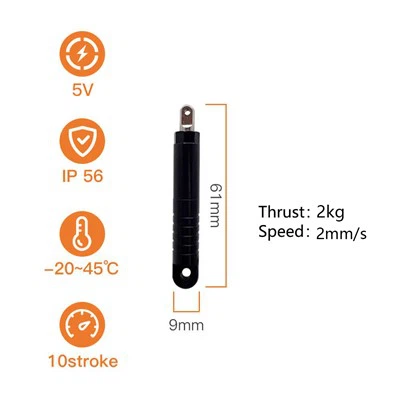
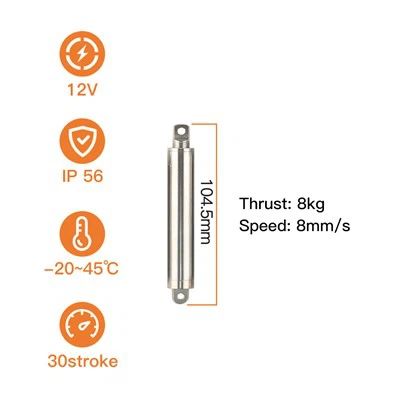
As a supplier, we offer a wide range of linear motor actuators suitable for high - temperature environments. Our Stainless Steel Linear Actuator is made of high - quality stainless steel, which provides excellent corrosion resistance and can withstand high temperatures. It is ideal for applications in harsh environments where both temperature and corrosion are concerns.
Our Fast Actuators Linear are designed for high - speed applications in high - temperature settings. They offer rapid linear motion with high precision, making them suitable for industries such as semiconductor manufacturing, where high - speed and accurate movement is required.
The Fast Linear Actuator is another product in our portfolio that combines high - speed performance with the ability to operate in high - temperature environments. It is a versatile actuator that can be used in a variety of applications, from industrial automation to medical equipment.
Conclusion
In conclusion, while using linear motor actuators in high - temperature environments presents several challenges, with the right technology and materials, it is entirely feasible. Our company, as a leading supplier of linear motor actuators, has developed solutions to overcome these challenges and provide reliable products for high - temperature applications. Whether you are in the aerospace, automotive, or metallurgy industry, our high - temperature - resistant linear motor actuators can meet your needs.
If you are interested in our products and would like to discuss your specific requirements, please feel free to contact us. We are ready to provide you with professional advice and high - quality products to help you achieve your goals in high - temperature applications.
References
- "Permanent Magnet Motors: Design and Application" by T. J. E. Miller
- "Electrical Insulation for Rotating Machines: Design, Evaluation, Aging, Testing, and Repair" by G. C. Stone, E. A. Boulter, I. Culbert, and H. D. M. West
- "Thermal Management of Electronic Systems" by Avram Bar - Cohen and Ali Boroushaki